
intentional approach to getting your money organised, and keeping it that way.
There is something quietly powerful about knowing exactly where you stand financially.
You know what is coming in.
You know what is going out.
Your bills are accounted for.
Your savings have a purpose.
Your goals have a plan.
And instead of constantly wondering, “Where did all my money go?”, you begin to feel something entirely different:
Clarity.
Financial organisation isn’t about becoming obsessed with every dollar you spend.
It isn’t about creating a restrictive budget that leaves no room for real life.
And it certainly isn’t about being financially perfect.
It’s about creating a system that makes your money easier to understand, easier to manage and more aligned with the life you want to create.
Because when your finances are organised, your money has somewhere to go, and so do you.
Welcome to The Ultimate Financial Organisation Guide.
What Does It Actually Mean to Be Financially Organised?
Being financially organised simply means having a clear system for managing your money.
You know:
- how much money you earn
- what your regular expenses are
- when your bills are due
- what subscriptions you’re paying for
- how much you’re spending
- what you’re saving for
- what debts you have
- what your financial goals are
- where important financial documents are stored
- and what you need to review regularly
It sounds simple.
But many people have pieces of this information scattered across bank accounts, apps, emails, bills, notes and spreadsheets.
The result?
Financial clutter.
And financial clutter can create unnecessary stress.
The solution isn’t necessarily to earn more, spend less or completely overhaul your life.
Sometimes, the first step is simply to get organised.
Tracking your spending can help you understand where your money is going, identify patterns and plan for upcoming expenses.
The Finance Strategy Approach
At Finance Strategy Co., we believe your finances should work around your life — not the other way around.
That’s why we created the Finance Strategy Method™:
KNOW → ORGANISE → PLAN → BUILD → THRIVE
Before you can build a strong financial future, you need to understand your current one.
So let’s begin.
01 - Know Your Numbers
Before organising your finances, you need a clear starting point.
Think of this as your financial snapshot.
You don’t need to change anything yet.
You simply need to know what is happening.
Start with your income
Write down every source of income you regularly receive.
This could include:
- salary or wages
- freelance income
- business income
- government payments
- investment income
- side income
- other regular income
If your income varies, use a realistic average or a conservative estimate when building your financial plan.
The goal is to understand what you actually have available to work with.
Then look at your expenses
Review your recent bank transactions, statements and bills.
Don’t rely on memory.
It’s surprisingly easy to forget annual subscriptions, quarterly bills, occasional expenses or small purchases that happen throughout the month.
Current Australian budgeting guidance recommends reviewing bank transactions and including both regular and less frequent expenses when creating a realistic picture of your finances.
Your financial snapshot should include:
Income
Essential expenses
Lifestyle spending
Debt repayments
Savings
Investments
Subscriptions
Irregular expenses
Financial goals
You aren’t judging the numbers.
You’re simply getting to know them.
02 - Organise Your Bank Accounts
Your bank accounts should make your financial life easier — not more confusing.
Take a moment to look at every account you currently have.
Ask:
- What is this account used for?
- Do I still need it?
- Is it costing me money in fees?
- Is the purpose clear?
- Could I simplify my accounts?
You may decide to separate your money into different purposes, such as:
Everyday
For everyday spending and purchases.
Bills
For regular household expenses and upcoming payments.
Savings
For your financial goals and emergency savings.
Future
For longer-term goals such as investing or other wealth-building objectives.
There isn’t one perfect account structure.
The best system is the one you can understand and maintain.
Australian government financial guidance also suggests that separate accounts can make budgeting easier, particularly when combined with regular transfers and automation.
The goal isn’t to have more accounts.
It’s to give the money you already have a clear purpose.
03 - Create A Billing System
One of the easiest ways to make your finances feel calmer is to know exactly what bills are coming.
Create a central list of your recurring expenses.
For each bill, record:
| Bill | Amount | Frequency | Due Date | Payment Method |
|---|---|---|---|---|
| Rent/Mortgage | $ | Weekly/Monthly | ||
| Electricity | $ | Quarterly | ||
| Internet | $ | Monthly | ||
| Insurance | $ | Monthly/Annual | ||
| Phone | $ | Monthly | ||
| Subscriptions | $ | Monthly/Annual |
Don’t forget expenses that don’t arrive every month.
Think:
- annual insurance
- car registration
- memberships
- school expenses
- medical costs
- gifts
- holidays
- car servicing
- pet expenses
- seasonal expenses
These expenses may not happen every month, but they are still part of your financial reality.
A bill calendar can help you see when money needs to leave your account rather than simply looking at how much you owe overall.

04 - Audit Your Subscriptions
Subscriptions have a way of becoming invisible.
A small monthly payment might not feel significant — until you realise you’re paying for several services you barely use.
Go through your bank and credit card transactions and create a subscription list.
Include:
- streaming services
- apps
- software
- memberships
- fitness subscriptions
- cloud storage
- newsletters
- meal or delivery services
- digital memberships
- annual memberships
Then ask:
Do I use it?
Do I love it?
Does it make my life better?
Would I buy it again today?
If the answer is no, it may be time to let it go.
This isn’t about cutting everything.
It’s about making sure your recurring spending reflects your current life, not a collection of past decisions.
05 - Create A Budget That Reflects Real Life
Now that you understand your money, you can create a budget.
But let’s redefine what a budget actually is.
A budget isn’t a punishment.
It’s a plan.
It gives your money direction before the month begins.
A useful budget should account for:
Essentials
Housing, groceries, utilities, transport, insurance and other necessities.
Financial commitments
Debt repayments and other obligations.
Lifestyle
Dining out, entertainment, shopping, hobbies, travel and experiences.
Savings
Emergency savings and short- or medium-term goals.
Future wealth
Long-term financial goals and investing.
Your categories should reflect your life.
There is no universal budget that works perfectly for everyone.
Your income, priorities, responsibilities, lifestyle and goals are unique.
Your budget should be too.
06 - Track Your Spending
Your budget tells you what you plan to spend.
Your spending tracker tells you what actually happened.
That difference is incredibly valuable.
For a few weeks or a month, track your spending.
You can use:
- a spreadsheet
- budgeting software
- your banking app
- a notebook
- an expense tracker
The method matters less than consistency.
Categorise your purchases so you can identify patterns.
For example:
HOME
FOOD
TRANSPORT
HEALTH
PERSONAL
SHOPPING
ENTERTAINMENT
TRAVEL
SUBSCRIPTIONS
OTHER
The purpose isn’t to judge your spending.
It’s to understand it.
As Moneysmart explains, tracking spending can help reveal patterns, subscriptions and smaller expenses that may otherwise be easy to overlook.
07 - Find Your Money Leaks
Once you’ve tracked your spending, look for the areas where money is quietly disappearing.
These are your money leaks.
They might include:
- unused subscriptions
- frequent convenience purchases
- impulse shopping
- excessive delivery fees
- forgotten memberships
- unnecessary bank fees
- duplicate services
- spending triggered by boredom
- purchases that don’t actually add value to your life
But here’s the important part:
Not every unnecessary expense needs to be eliminated.
Ask a better question:
Is this spending worth it to me?
If your morning coffee genuinely brings you joy, keep it.
If you love your weekly dinner with friends, budget for it.
If a subscription makes your life easier and you use it constantly, it may be worth keeping.
Financial organisation isn’t about removing everything enjoyable.
It’s about making your spending intentional.
08 - Create A System For Irregular Expenses
One of the biggest reasons budgets fail is because people budget for the month — but life happens across the entire year.
That’s where sinking funds can help.
A sinking fund is money you gradually set aside for a future expense.
For example:
Car Fund
For registration, servicing and repairs.
Christmas Fund
For gifts, food and celebrations.
Travel Fund
For upcoming holidays.
Home Fund
For maintenance and larger household purchases.
Medical Fund
For anticipated healthcare expenses.
Annual Bills Fund
For expenses that arrive once or twice a year.
Instead of allowing these expenses to become financial surprises, you can plan for them ahead of time.
Organisation turns future expenses into planned expenses.
09 - Organise Your Savings
Saving becomes much easier when your savings have a purpose.
Instead of simply having a generic “savings” account, consider naming your goals.
For example:
Emergency Fund
Holiday
Home
Car
Future
Freedom
Your savings goals should connect to something meaningful.
Ask:
What am I actually saving for?
Maybe it’s security.
Maybe it’s a home.
Maybe it’s travel.
Maybe it’s having more choices.
Maybe it’s simply wanting to feel financially prepared.
Whatever your reason, give your savings a purpose.
10 - Get Clear On Your Debt
Financial organisation also means knowing exactly what you owe.
Create a simple debt list containing:
- creditor
- balance
- interest rate
- minimum repayment
- repayment frequency
- due date
Seeing everything in one place can make debt feel less mysterious.
You can then decide what strategy makes sense for your circumstances.
The important first step is clarity.
You cannot create a meaningful debt strategy if you don’t know what you’re working with.
11 - Create A Financial Document System
Financial organisation isn’t only about your bank account.
It’s also about your paperwork.
Create a secure digital folder for important financial documents.
You might organise it into:
Banking
Statements and account information.
Bills
Utilities and recurring expenses.
Insurance
Policies and renewal information.
Tax
Tax documents and relevant records.
Debt
Loan and repayment information.
Investments
Investment records and statements.
Property
Mortgage and property documents.
Personal
Other important financial records.
Keep sensitive documents securely stored and protected.
The objective is simple:
When you need something, you know exactly where to find it.
12 - Automate What You Can
Your financial system shouldn’t rely entirely on motivation.
Automation can help turn good intentions into consistent actions.
Depending on your circumstances, you may choose to automate:
- savings transfers
- bill payments
- debt repayments
- regular transfers between accounts
- investment contributions
The idea is to make your financial priorities happen with less effort.
For example:
PAYDAY
↓
Income arrives
↓
Bills money is allocated
↓
Savings transfer occurs
↓
Other financial goals are funded
↓
Remaining money is available for everyday spending
The exact structure will depend on your income and financial commitments.
But the principle is powerful:
Build a system that works even when you’re busy.
13 - Create A Weekly Money Check-In
You don’t need to spend hours analysing your finances every week.
A simple 10–15 minute check-in can be enough to stay connected.
Your Weekly Money Check-In
1. Check your balances
What is currently available?
2. Review recent spending
Does anything look unusual?
3. Check upcoming bills
What’s due before your next payday?
4. Check your budget
Are you roughly where you expected to be?
5. Check your goals
Did you make progress?
6. Make adjustments
Does anything need to change?
This is the philosophy behind our Sunday Money Reset:
A small weekly ritual can prevent financial clutter from becoming financial overwhelm.
14 - Create A Monthly Money Date
Once a month, go a little deeper.
Think of this as your personal financial meeting.
Make a coffee.
Open your budget.
Put your phone aside.
And spend some intentional time with your money.
Review:
Income
Did anything change?
Expenses
Were there any unexpected costs?
Spending
Where did your money actually go?
Savings
Did you make progress?
Debt
Did your balances change?
Goals
Are you still working toward what matters?
Upcoming
What’s coming next month?
Then ask yourself:
What does my money need from me next month?
That question shifts your relationship with money from reactive to intentional.
15 - Do A Quarterly Financial Reset
Every few months, step back and look at the bigger picture.
Your life changes.
Your income can change.
Your priorities can change.
Your expenses can change.
Your goals can change.
Your financial system should be allowed to change too.
During your quarterly reset, review:
- budget
- spending
- savings
- debt
- subscriptions
- financial goals
- bank accounts
- upcoming expenses
- net worth
- lifestyle priorities
Don’t be afraid to change your system if it no longer works.
A financial system isn’t successful because it never changes.
It’s successful because it adapts with you.

What If Your Finances Feel Completely Disorganised?
Start smaller than you think.
You don’t need to fix your entire financial life today.
Start with one thing.
Open your bank account.
Then look.
No judgement.
No guilt.
No dramatic financial makeover.
Just information.
Next, write down your bills.
Then your income.
Then your spending.
Then your savings.
Then your debts.
One piece at a time.
Financial organisation is not about creating a perfect financial life overnight.
It’s about creating clarity where there was confusion.
And once you have clarity, you can create a strategy.
The 30-Minute Financial Organisation Reset
Short on time?
Start here.
MINUTES 1–5: Check your accounts
Look at your current balances.
MINUTES 6–10: Review recent transactions
Look for anything unusual, unnecessary or forgotten.
MINUTES 11–15: Check your upcoming bills
Identify what needs to be paid before your next payday.
MINUTES 16–20: Review subscriptions
Cancel or reconsider anything you no longer use.
MINUTES 21–25: Check your goals
Are your savings and financial priorities still on track?
MINUTES 26–30: Choose your next action
Don’t create a list of twenty things.
Choose one financial action to complete next.
That’s enough.
The Luxury of Financial Organisation
We often associate luxury with things we can see.
Beautiful homes.
Beautiful clothes.
Beautiful travel.
But there is another kind of luxury that doesn’t need to be displayed.
Financial peace.
Knowing your bills are covered.
Knowing what you’re spending.
Having money set aside for the things you care about.
Being able to make decisions without constantly wondering whether you can afford them.
Having a financial plan that supports your lifestyle rather than restricting it.
That is a different kind of wealth.
And it begins with something incredibly simple:
Getting organised.
Your Money Doesn't Need More Rules. It Needs a Strategy.
There is no perfect budget.
There is no perfect financial system.
And there is no single formula that will work for everyone.
Your financial strategy should reflect your income, priorities, responsibilities, goals and the life you actually want to live.
That’s why the Finance Strategy Method™ begins with:
KNOW
Understand your financial reality.
ORGANISE
Create structure around your money.
PLAN
Give your money direction.
BUILD
Work toward greater financial security and long-term goals.
THRIVE
Use your financial progress to create more choice, confidence and freedom.
Because the ultimate goal isn’t simply to have organised finances.
It’s to create a financial life that supports the life you want.
Final Thoughts
Getting your finances organised may not feel particularly exciting at first.
But the impact can be significant.
Because organisation creates clarity.
Clarity creates confidence.
Confidence makes it easier to make intentional decisions.
And intentional decisions, repeated over time, can change the direction of your financial life.
You don’t need to become a completely different person.
You don’t need to stop enjoying your money.
You don’t need to chase perfection.
You simply need a system that helps your money work with you.
Know your money.
Organise your money.
Plan your money.
Build your future.
And create a life your money can support.
This is financial organisation, elevated.
Your money. Your strategy. Your future.
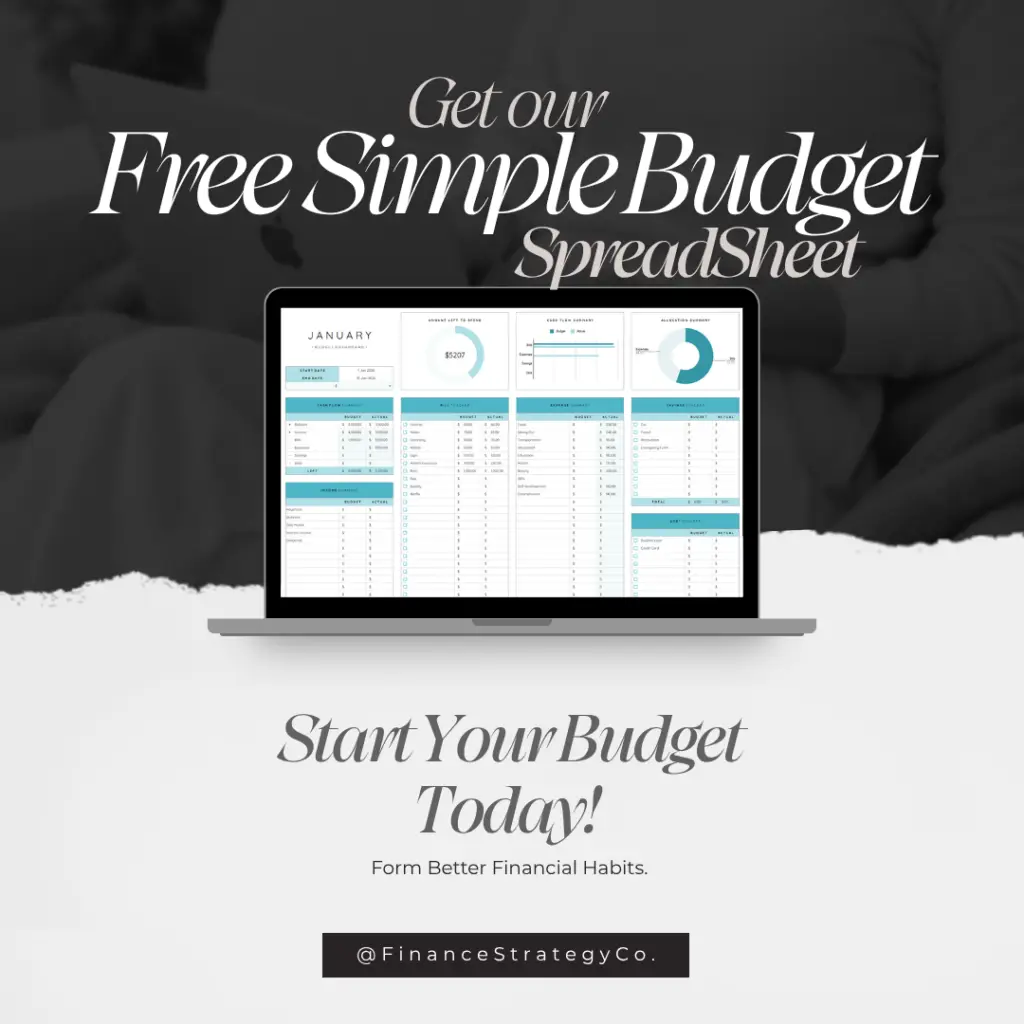
Ready to Make Your Money Feel More Organised?
Your budget is easier to maintain when your financial system is simple.
Explore Finance Strategy Co.'s thoughtfully designed budgeting and financial organisation tools to help you plan your spending, track your expenses, manage your goals and create a financial system that fits your life.
Your money deserves a strategy.