

A simple step-by-step guide to creating financial clarity, getting organised and building a money system that actually works for your life.
Maybe your finances feel a little… everywhere.
Bills are coming out of different accounts.
Subscriptions are quietly renewing.
Your savings don’t have a clear purpose.
You have a few different bank accounts, but you’re not entirely sure what each one is for.
Your budget hasn’t been updated in months.
And every time you think about getting organised, it feels like there’s simply too much to do.
If this sounds familiar, take a breath.
You don’t need to fix your entire financial life today.
You don’t need a perfect budget.
You don’t need five different spreadsheets.
And you certainly don’t need to feel ashamed about where you are starting.
You simply need a place to begin.
Organising your finances is about creating clarity around your money so you can make decisions with greater confidence.
A budget can help you see what money is coming in, where it is going and whether your income covers your expenses. It can also help you plan for savings and unexpected costs.
So let’s start from scratch.
What Does It Actually Mean to Have Your Finances Organised?
Being financially organised doesn’t mean knowing every financial term or having a complicated system.
It means you have a clear understanding of:
- What money is coming in
- What money is going out
- What bills you need to pay
- What subscriptions you have
- What debts you owe
- What you’re saving for
- What financial goals you’re working towards
- Where your important financial information is kept
Most importantly, you have a system that allows you to see all of this without feeling overwhelmed.
Think of it as creating a financial home.
Everything has a place.
Everything has a purpose.
And you know where to find it when you need it.

01 - Start With a Financial Snapshot
Before changing anything, understand where you are right now.
This is your financial snapshot.
Grab a notebook, spreadsheet or your favourite budgeting tool and write down:
INCOME
What money comes into your household?
Include:
- Salary or wages
- Business income
- Side income
- Government payments, where applicable
- Other regular income
If your income varies, look at several recent pay periods or months and use a realistic average rather than assuming every month will be your highest-earning month.
EXPENSES
Next, list what goes out.
Include:
- Housing
- Utilities
- Groceries
- Transport
- Insurance
- Healthcare
- Subscriptions
- Debt repayments
- Entertainment
- Shopping
- Personal expenses
- Savings
- Investments
- Irregular expenses
Don’t worry about creating the perfect categories yet.
The goal is visibility.
Official Australian guidance similarly recommends reviewing bank statements and transaction history when creating a budget because it helps capture regular, occasional and less obvious expenses.
02 - Review Your Bank Accounts
Now take a look at every account you have.
You may have:
- Everyday transaction accounts
- Savings accounts
- Joint accounts
- Old accounts you rarely use
- Credit card accounts
- Investment accounts
- Accounts created for specific goals
Ask yourself:
What is this account for?
If you can’t answer that question, that’s a sign your financial system could probably use some simplifying.
You don’t necessarily need to close accounts immediately.
First, understand what you have.
Create a simple list:
| Account | Purpose | Balance |
|---|---|---|
| Everyday | Daily spending | $___ |
| Bills | Regular expenses | $___ |
| Savings | Emergency fund | $___ |
| Goal | Holiday/home/etc. | $___ |
| Investment | Long-term | $___ |
The purpose isn’t to create more accounts.
It’s to create clarity.
03 - Find Every Bill
Bills have a habit of becoming financial background noise.
Until one arrives that you weren’t expecting.
Create a complete list of your regular bills.
Include:
- Rent or mortgage
- Electricity
- Gas
- Water
- Internet
- Phone
- Insurance
- Car registration
- Loan repayments
- Credit card payments
- School or childcare costs
- Memberships
- Subscriptions
Then record:
What it is
How much it costs
When it’s due
How often it’s paid
Don’t forget annual or quarterly expenses.
These are some of the easiest expenses to miss when you’re budgeting month-to-month.
Australian government financial guidance specifically recommends including irregular expenses such as annual bills, car costs and other less-frequent expenses when creating a realistic budget.
04 - Create a Bill Calendar
Once you’ve listed your bills, give them a home.
Create a simple calendar showing when they’re due.
For example:
1st – Rent
5th – Internet
10th – Insurance
15th – Electricity
20th – Phone
25th – Credit card
This gives you something incredibly valuable:
visibility.
You can see when money needs to leave your account instead of discovering expenses as they arrive.
You can also consider setting up reminders or automatic payments where appropriate.
The goal is to make your financial system work with you, rather than relying on memory.
05 - Audit Your Subscriptions
Now for one of the easiest places to create clarity.
Look through your bank and card transactions and find every recurring subscription.
You may discover:
- Streaming services
- Apps
- Fitness memberships
- Software
- Cloud storage
- Beauty subscriptions
- Meal services
- News subscriptions
- Memberships
For every subscription, ask:
Do I use this?
Do I still value it?
Would I sign up for it again today?
Does it fit into my current budget?
Keep the ones you genuinely value.
Cancel or reconsider the ones that no longer serve you.
This isn’t about cutting everything that isn’t essential.
It’s about making sure your recurring spending reflects your current life.
06 - Track Your Spending
Now it’s time to observe your day-to-day spending.
For at least a few weeks, record what you’re spending.
Include:
- Groceries
- Coffee
- Takeaway
- Dining out
- Fuel
- Shopping
- Entertainment
- Personal spending
- Online purchases
- Cash purchases
Don’t change your behaviour just yet.
Watch first.
Tracking spending can reveal patterns that aren’t obvious when you’re simply looking at your bank balance. It can also help identify subscriptions, fees and small purchases that add up over time.
Think of this stage as collecting information.
You aren’t judging your spending.
You’re learning from it.
07 - Create Your Core Budget
Now you have enough information to create a budget based on your real life.
Start with:
MONEY IN
Your realistic monthly income.
Then:
MONEY OUT
Your regular expenses.
Then:
MONEY FOR THE FUTURE
Your savings, debt reduction and other financial goals.
Then:
MONEY FOR LIFE
Your flexible spending and lifestyle expenses.
This is important.
Your budget should include room for living.
A budget that removes every enjoyable expense may look impressive on paper but become impossible to maintain in real life.
A good budget should be realistic enough to live with.
08 - Create a System for Irregular Expenses
Some expenses aren’t monthly.
But that doesn’t mean they aren’t predictable.
Think about:
- Car registration
- Insurance renewals
- Birthdays
- Christmas
- Holidays
- School expenses
- Medical costs
- Home maintenance
- Annual memberships
- Car servicing
These are perfect candidates for sinking funds.
For example, if you know an annual expense will cost $1,200, you could plan to set aside approximately $100 per month.
Now the expense doesn’t feel like a financial emergency when it arrives.
It becomes something you’ve already planned for.
That’s financial organisation in action.
09 - Give Your Savings a Purpose
Instead of having one vague savings goal called “Savings,” consider giving your money specific jobs.
You might have:
EMERGENCY FUND
For unexpected expenses and financial security.
HOLIDAY FUND
For future travel.
HOME FUND
For a deposit, renovations or household expenses.
CAR FUND
For registration, servicing or repairs.
LIFE FUND
For upcoming expenses that don’t fit neatly elsewhere.
You don’t need every category.
Choose the ones that reflect your life.
The point is to make saving feel intentional rather than abstract.
Even small, regular amounts can build over time, and Australian financial guidance recommends setting savings goals and making regular transfers where possible.
10 - Organise Your Debt
If you have debt, bring it into the system rather than allowing it to sit somewhere in the background.
Create a list of:
- Credit cards
- Personal loans
- Car loans
- Buy-now-pay-later balances
- Student debt
- Mortgage
- Other debts
For each one, record:
Balance
Interest rate
Minimum payment
Payment date
This isn’t about feeling bad about what you owe.
It’s about knowing the numbers.
Once everything is visible, you can start deciding how debt fits into your broader financial strategy.
11 - Create a Financial Document Folder
Financial organisation isn’t only about budgets.
It’s also about knowing where important information lives.
Create a secure digital folder for important financial documents.
Depending on your circumstances, this could include:
- Insurance documents
- Loan documents
- Tax records
- Superannuation information
- Investment records
- Property documents
- Important receipts
- Financial statements
Organise them into clearly named folders.
For example:
FINANCES
→ Banking
→ Bills
→ Insurance
→ Debt
→ Superannuation
→ Investments
→ Tax
→ Property
Choose a secure storage method and protect sensitive information appropriately.
The goal is simple:
When you need something, you know exactly where to find it.
12 - Simplify Your Financial System
Here’s something important:
More organisation doesn’t always mean more complexity.
In fact, the best financial system may be the simplest one you can consistently maintain.
You might decide to have:
ONE ACCOUNT
For everyday spending
ONE ACCOUNT
For bills
ONE ACCOUNT
For savings
And perhaps additional accounts where they genuinely serve a purpose.
Australian financial guidance notes that separate accounts can be useful for bills, spending and savings, and that automatic transfers can help make budgeting easier.
But don’t create seven accounts just because someone online told you that’s what financially organised people do.
Your system should fit your life.
13 - Automate What You Can
One of the easiest ways to make your financial system easier to maintain is to automate repeatable tasks.
Consider automating:
- Savings transfers
- Regular bill payments
- Debt repayments
- Investment contributions, where appropriate
- Transfers between accounts
The less you have to remember manually, the easier your system becomes to maintain.
But automation shouldn’t mean “set it and forget it.”
Review your automated payments regularly to make sure they still reflect your current circumstances.
14 - Create a Monthly Money Routine
Organisation isn’t something you do once.
It’s something you maintain.
Choose one day each month for a Monthly Money Reset.
Spend 30–45 minutes reviewing:
INCOME
Did anything change?
SPENDING
Where did your money actually go?
BILLS
Are upcoming expenses covered?
SAVINGS
Are you still contributing towards your goals?
DEBT
Are your repayments on track?
GOALS
Are your priorities still the same?
LIFE
Is anything coming up that needs to be planned for?
This routine keeps small financial problems from becoming big ones.
15 - Have a Weekly Money Check-In
Your monthly review is the bigger picture.
Your weekly check-in keeps you connected.
Once a week, take 10–15 minutes to ask:
What’s happening with my money right now?
Look at:
- Current balance
- Recent spending
- Upcoming bills
- Upcoming expenses
- Savings progress
- Anything unusual
This is the philosophy behind the Sunday Money Reset:
Pause. Check in. Organise. Plan. Move forward.
It doesn’t need to take hours.
It simply needs to happen consistently.
16 - Know Your Financial Numbers
Once your system is organised, there are a few numbers you should be able to find relatively easily.
Your monthly income
What comes in?
Your essential expenses
What must be paid?
Your average flexible spending
What do you typically spend on lifestyle expenses?
Your savings
What do you currently have set aside?
Your debt
What do you currently owe?
Your net worth
What you own minus what you owe.
Your financial goals
What are you currently working towards?
You don’t need to memorise every number.
You simply need to know where to find them.
Clarity creates confidence.

The 30-Minute Financial Organisation Reset
If you want to start today, here’s where I’d begin.
MINUTES 1–5
Write down your current income.
MINUTES 5–10
Write down your major monthly expenses.
MINUTES 10–15
Open your bank account and look through recent transactions.
MINUTES 15–20
Write down your bills and subscriptions.
MINUTES 20–25
Write down your current savings and debts.
MINUTES 25–30
Choose one financial priority for the next month.
That’s enough.
You don’t need to build the perfect financial system today.
You just need to create your first layer of clarity.
What If Your Finances Are a Mess?
First:
You’re not a failure.
Financial organisation is a skill.
And skills can be learned.
Maybe you’ve avoided your bank statements.
Maybe you’ve accumulated debt.
Maybe your budget hasn’t worked for you.
Maybe you haven’t saved as much as you’d like.
Maybe you’ve simply never been taught how to organise your finances.
None of that means you can’t start now.
And starting doesn’t require you to fix the past.
It requires you to understand the present.
Then make your next decision.
Then the next one.
You are allowed to begin again.
The Finance Strategy Method™
At Finance Strategy Co., we believe financial organisation is only the beginning.
It’s the foundation that allows you to create a bigger strategy for your money.
That’s why our approach follows five simple stages:
KNOW
Understand your current financial position.
ORGANISE
Create structure around your money.
PLAN
Give your money direction through meaningful goals.
BUILD
Strengthen your financial foundation and work towards your future.
THRIVE
Use your financial foundation to create more freedom, choice and opportunity.
Know → Organise → Plan → Build → Thrive.
Because the goal isn’t simply to have a tidy budget.
The goal is to create a financial life that supports you.
You Don't Need to Start With Everything
If your finances feel overwhelming right now, start with these five things:
1. Know your income.
2. Know your expenses.
3. Know your bills.
4. Know your savings and debt.
5. Know what you’re working towards.
Once you have those five pieces, you have something incredibly valuable:
a starting point.
And from there, you can build.
A More Organised Financial Life Starts Here
Financial organisation isn’t about having the most sophisticated spreadsheet.
It’s not about having twelve bank accounts.
It’s not about tracking every cent forever.
And it’s definitely not about becoming perfect with money.
It’s about creating enough clarity that you can make decisions with confidence.
Your money should have a place.
Your goals should have a purpose.
Your spending should reflect your priorities.
And your financial system should make your life easier—not more complicated.
So if your finances currently feel scattered, don’t try to fix everything at once.
Start with one account.
One statement.
One bill.
One goal.
One small system.
Then build from there.
Because financial clarity doesn’t happen overnight.
It happens when you decide to stop avoiding your money and start understanding it.
And once you know where you are, you can finally decide where you’re going.
Your money. Your strategy. Your future.
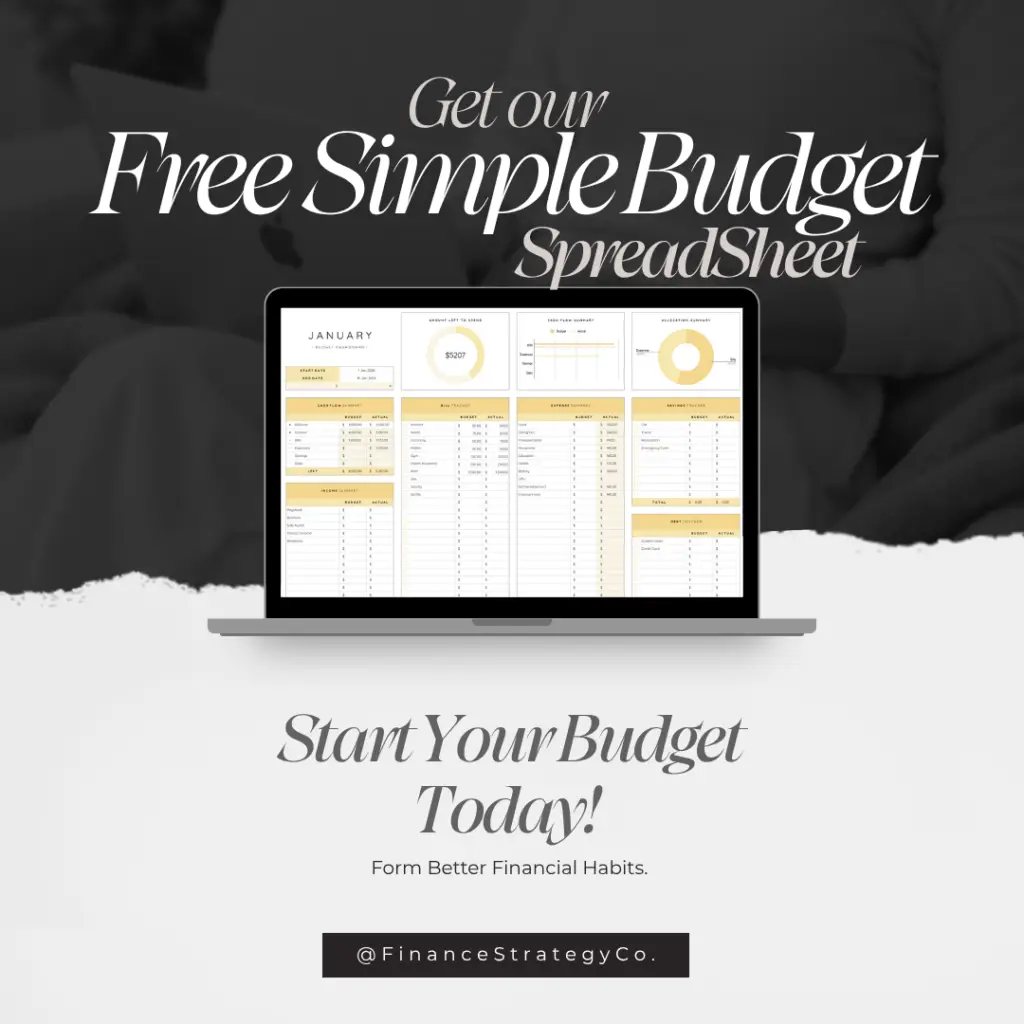
Ready to Take Control of Your Money?
At Finance Strategy Co., we believe budgeting should be simple, realistic, and achievable—no matter where you are starting from. Our budgeting spreadsheets are designed to help you organise your finances, track your spending, and work towards your goals.