

The small money habits that can create more clarity, confidence and control.
There is a lot of advice about what you should do with your money.
Spend less.
Save more.
Budget every dollar.
Stop buying coffee.
Invest more.
Pay off debt.
Build wealth.
And while much of that advice can be useful, it can also make managing money feel like an endless list of things you’re doing wrong.
At Finance Strategy Co., we believe financial progress doesn’t have to look like perfection.
It can look much simpler.
Small decisions. Repeated consistently. Over time.
The financial habits worth building aren’t necessarily the most complicated ones. They’re the habits that help you understand your money, make intentional decisions and create a financial system that supports the life you’re actually living.
Because your financial life isn’t built in one dramatic moment.
It’s built in the ordinary moments.
The weekly check-in.
The automatic transfer.
The decision to pause before buying.
The bill you pay on time.
The goal you keep working towards.
The budget you revisit when life changes.
These small habits may not feel particularly exciting.
But together, they can change the way you experience money.

01 - Know What Your Money Is Doing
One of the most valuable financial habits you can build is simply paying attention.
Not obsessively.
Not checking your bank account ten times a day.
Just staying connected to your money.
Do you know:
- How much money comes in each month?
- What your regular expenses are?
- How much you’re spending on flexible expenses?
- What subscriptions you’re paying for?
- How much you’re currently saving?
- What financial goals you’re working towards?
- What your current debts look like?
- Approximately how much you have in savings?
If some of those questions are difficult to answer, that’s okay.
Awareness is where financial strategy begins.
Looking at your recent transactions, bank statements and spending patterns can help you create a realistic picture of your financial life rather than relying on what you think you’re spending.
You can’t make intentional decisions about money you aren’t paying attention to.
02 - Check Your Money Regularly
You don’t need to spend hours every week analysing your finances.
In fact, creating a short, consistent money check-in may be much more sustainable.
Choose a day each week.
Perhaps Sunday morning.
Perhaps Friday afternoon.
Perhaps the day after payday.
Then spend 10–20 minutes reviewing:
Income
What’s coming in?
Spending
What’s gone out?
Bills
What’s due next?
Savings
Did you make your planned contribution?
Goals
Are you still moving in the right direction?
Life
Is anything coming up that your budget needs to accommodate?
This is one of the reasons we love the idea of a Sunday Money Reset.
It turns money management into a ritual rather than a reaction.
The goal isn’t to find something wrong every week.
Sometimes, the best outcome is simply:
“Everything is on track.”
That feeling matters too.
03 - Give Every Dollar a Purpose
A budget becomes much more powerful when it isn’t simply about limiting spending.
Instead of asking:
“How little can I spend?”
Try asking:
“What do I want my money to do?”
Your money might have several jobs.
It might:
- Pay for your home
- Feed you
- Support your lifestyle
- Create financial security
- Fund your next holiday
- Pay down debt
- Build an emergency fund
- Support long-term goals
- Create opportunities in the future
This doesn’t mean every dollar needs to be assigned to an extremely specific category.
It simply means your spending becomes more intentional.
A realistic budget can help you see whether your income is covering your expenses while still leaving room for saving and other priorities.
Your budget isn’t there to control you. It’s there to give your money direction.
04 - Make Saving Automatic
If you want to build savings, don’t rely entirely on motivation.
Motivation changes.
Systems are much more dependable.
Consider setting up an automatic transfer into a dedicated savings account after you receive your income.
The amount doesn’t need to be impressive.
It needs to be sustainable.
You might save:
$20 a week.
$50 a fortnight.
$100 a month.
Or whatever makes sense for your circumstances.
The important part is creating a repeatable behaviour.
Automatic transfers are one approach recommended by the Consumer Financial Protection Bureau because they can make saving more consistent and reduce the need to make the decision manually each time.
And remember:
Small doesn’t mean insignificant.
A small amount saved consistently can become a meaningful financial cushion over time.
05 - Build an Emergency Fund
An emergency fund is one of those financial habits that may not feel exciting.
Until you need it.
Unexpected expenses happen.
A car repair.
A broken appliance.
An unexpected medical expense.
A period without income.
An urgent trip.
Life rarely checks your budget before sending you a bill.
A dedicated emergency fund can help you handle unexpected costs without immediately turning to credit or loans. The amount you need depends on your circumstances, and even starting with a small amount can provide some additional financial resilience.
Rather than focusing immediately on an arbitrary number, start by asking:
What would make me feel more financially secure?
Then create a savings goal around that.
06 - Track Your Spending Without Judging It
Tracking your spending isn’t about proving that you’re “good” or “bad” with money.
It’s about gathering information.
Think of your spending tracker as a mirror.
It shows you:
- Where your money is going
- Which categories are growing
- Where you spend consistently
- Where you might be overspending
- Which purchases bring genuine value
- Which expenses you barely notice
And sometimes, what you discover may surprise you.
That’s okay.
Information isn’t criticism.
If your spending doesn’t align with your goals, you now have something you can change.
07 - Create a Habit of Pausing Before You Buy
Not every purchase needs a spreadsheet.
Sometimes you just need a moment.
Before making a non-essential purchase, try asking:
Do I actually want this?
Do I need this?
Will I still value it next week?
Does it fit within my current priorities?
Am I buying it because I genuinely want it, or because I’m bored, stressed, influenced or seeking a quick reward?
That pause can create enough space to make a more intentional decision.
And importantly, the answer isn’t always “don’t buy it.”
Sometimes the answer is:
Yes. I want this. I’ve budgeted for it. And I’m happy to spend the money.
That’s intentional spending too.
08 - Review Your Subscriptions Regularly
Recurring expenses have a unique ability to disappear into the background.
Once you’ve signed up, the payment happens automatically.
Which is exactly why it’s worth reviewing them.
Every few months, look through your subscriptions and ask:
Do I still use this?
Do I still value it?
Would I sign up for this again today?
Is there a better option?
Is this supporting my current lifestyle?
You don’t need to cancel everything.
You simply want your recurring expenses to reflect your current life rather than decisions you made six months or two years ago.
09 - Pay Bills on Time
This habit sounds simple.
And that’s the point.
Creating a reliable bill-paying system can reduce unnecessary stress and help you stay on top of your financial obligations.
Rather than relying on memory, consider creating a system.
You might use:
- Automatic payments
- Calendar reminders
- A bill tracker
- A dedicated account for regular expenses
- A monthly financial checklist
The specific system matters less than having one.
Good financial habits reduce the number of financial decisions you have to remember.
10 - Have a Financial Goal You're Working Towards
Saving without a purpose can sometimes feel abstract.
Saving for something can feel completely different.
Your goal could be:
- Building an emergency fund
- Paying off a debt
- Taking a holiday
- Buying a home
- Building an investment portfolio
- Starting a business
- Creating more financial flexibility
- Preparing for a major life change
Your goal doesn’t have to impress anyone.
It simply needs to matter to you.
Once you have a goal, your everyday financial decisions start to connect to something bigger.
You’re not simply saving $100.
You’re moving $100 closer to something you care about.

11 - Review Your Financial Goals Regularly
Setting a goal once and forgetting about it isn’t a strategy.
Your goals should evolve with your life.
Once a month, ask:
What am I working towards?
How much progress have I made?
Is this goal still important to me?
Do I need to change the amount I’m saving?
Has anything changed in my life that affects this goal?
And don’t be afraid to change your goals.
Changing direction isn’t failure.
Sometimes it’s simply evidence that your priorities have changed.
12 - Create a “Money Date” With Yourself
This might be one of the most underrated financial habits.
Once a month, sit down with your money.
Make it enjoyable.
Pour yourself a coffee.
Put on some music.
Open your budget.
Look at your accounts.
Review your progress.
Then ask yourself:
What went well?
What surprised me?
What needs attention?
What am I proud of?
What do I want to change next month?
Money doesn’t always have to be stressful.
Creating a positive routine around your finances can make it easier to stay engaged with them.
13 - Learn Something New About Money
You don’t need to become a financial expert.
But building your financial knowledge is a worthwhile long-term habit.
Learn about:
- Budgeting
- Saving
- Debt
- Investing
- Superannuation
- Taxes
- Insurance
- Net worth
- Financial planning
- Wealth building
Start with the areas that are relevant to your current life.
And remember that financial education doesn’t mean taking every piece of advice you see online.
Learn. Question. Research. Then decide what makes sense for you.
14 - Keep Your Financial Life Organised
Financial clutter creates unnecessary mental clutter.
Old accounts.
Forgotten subscriptions.
Random spreadsheets.
Unopened statements.
Unclear passwords.
Untracked expenses.
Bills scattered across different systems.
The more organised your financial life becomes, the easier it can be to see the bigger picture.
Create a simple home for your financial information.
You might keep track of:
- Bank accounts
- Bills
- Subscriptions
- Savings goals
- Debts
- Insurance
- Investments
- Important financial documents
Your system doesn’t need to be complicated.
It just needs to be easy enough that you’ll actually use it.
15 - Check Your Net Worth
Your income tells you how much money you’re earning.
Your budget tells you how you’re using it.
Your net worth gives you another perspective: a snapshot of what you own compared with what you owe.
The calculation is simple:
Assets − Liabilities = Net Worth
Assets might include things such as:
- Cash savings
- Investments
- Property
- Other valuable assets
Liabilities might include:
- Credit card balances
- Personal loans
- Car loans
- Mortgage debt
- Other debts
Your net worth isn’t a measure of your worth as a person.
It’s simply a financial measurement.
Checking it periodically can help you see whether your overall financial position is moving in the direction you want.
16 - Spend Money on What You Actually Value
One of the most important habits isn’t about spending less.
It’s about spending better.
What do you genuinely value?
Travel?
Your home?
Family?
Health?
Experiences?
Convenience?
Freedom?
Education?
Creativity?
Once you know your priorities, your budget becomes more personal.
You can spend confidently on the things that matter to you while becoming more intentional about the things that don’t.
That’s the heart of intentional spending.
Money should support your values, not someone else’s lifestyle.
17 - Give Yourself Room for Imperfection
This may be the most important habit of all.
You will overspend sometimes.
You’ll forget something.
You’ll have an unexpected expense.
You’ll make a financial decision you wouldn’t make today.
You’ll have months where saving feels easy and months where it doesn’t.
That’s life.
A financial system that only works when everything goes perfectly isn’t a very good system.
Build flexibility into your financial life.
Leave room for unexpected expenses.
Review your budget when circumstances change.
Adjust your goals when necessary.
And when you get off track?
Reset. Don’t quit.

The Financial Habits That Matter Most
You don’t need to start building all of these habits tomorrow.
Choose one or two.
Start there.
Perhaps your first habit is checking your money every Sunday.
Then you introduce automatic savings.
Then you create a monthly spending review.
Then you build an emergency fund.
Then you start working towards a bigger financial goal.
Over time, these small behaviours begin to work together.
And eventually, managing your money can become less about constantly making decisions and more about following a system you’ve intentionally created.
That’s the real goal.
Your Money Doesn't Need More Rules. It Needs a Strategy.
Financial habits aren’t about creating a life where every purchase needs to be justified.
They’re about creating a financial foundation that gives you more clarity and more choice.
The best habits are the ones that make your financial life easier, not more complicated.
Know what’s happening.
Organise what you have.
Plan for what matters.
Build towards the future.
And leave room to enjoy the life you’re living along the way.
That’s the philosophy behind the Finance Strategy Method™:
KNOW → ORGANISE → PLAN → BUILD → THRIVE
You don’t need to transform your finances overnight.
You simply need to start creating habits that support the direction you’re heading.
Because your financial future isn’t built by one perfect decision.
It’s built by the decisions you keep making.
A Final Thought
Being good with money isn’t about being perfect.
It’s about becoming more aware.
More intentional.
More confident.
And more connected to the decisions you’re making.
The financial habits worth building aren’t the ones that make your life feel smaller.
They’re the ones that help you create a life where your money has a clear purpose.
Your money. Your strategy. Your future.
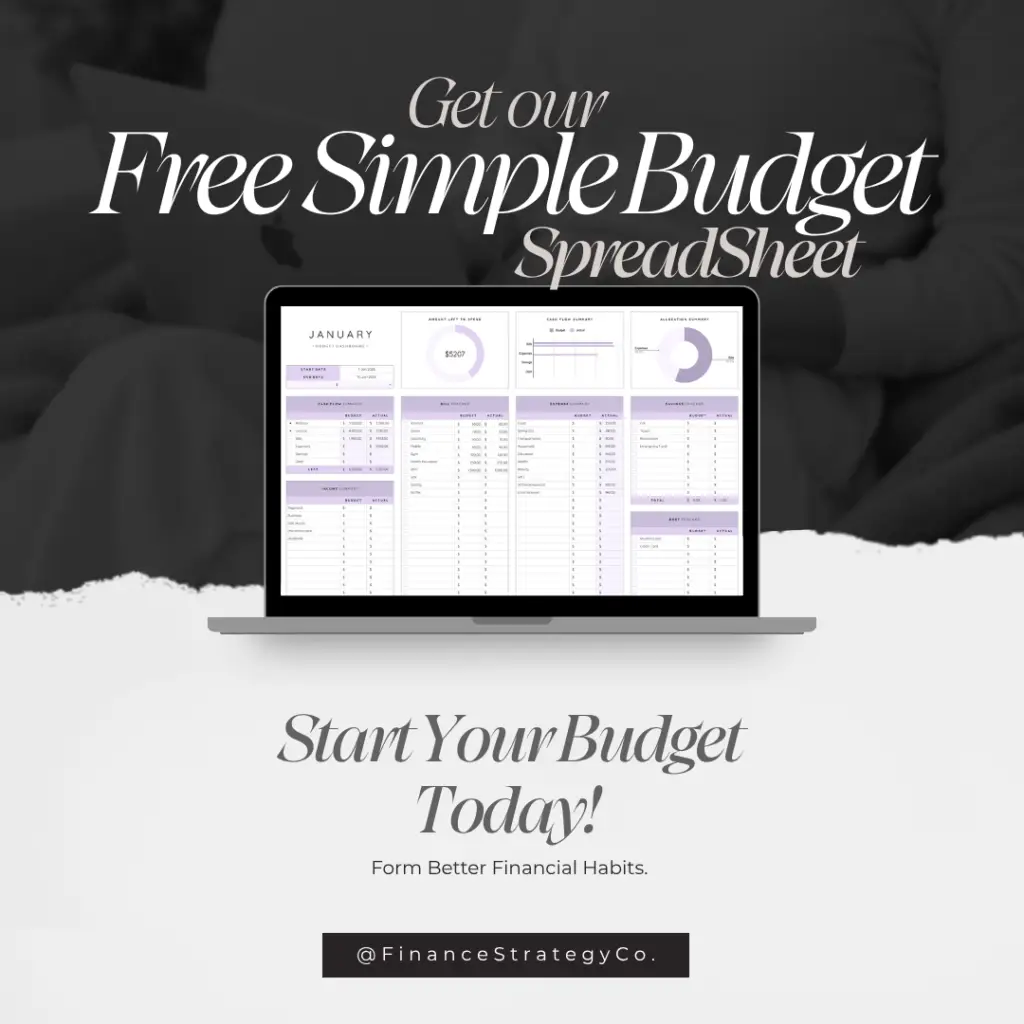
Ready to Make Your Money Feel More Organised?
Your budget is easier to maintain when your financial system is simple.
Explore Finance Strategy Co.'s thoughtfully designed budgeting and financial organisation tools to help you plan your spending, track your expenses, manage your goals and create a financial system that fits your life.
Your money deserves a strategy.