

A simple guide to understanding your spending, finding the patterns and taking back control, without the guilt.
Have you ever checked your bank account and thought:
“Where did all my money go?”
You know how much you earn. You know you have bills to pay. You may even have a budget sitting somewhere on your laptop.
And yet, somehow, the month ends and the money seems to have disappeared.
The problem isn’t necessarily that you’re spending too much.
Sometimes, you simply don’t have a clear picture of where your money is actually going.
And that’s an important distinction.
Before you can create a better budget, save more money or work towards bigger financial goals, you need to understand your current financial reality.
You can’t create a strategy for money you don’t understand.
The good news? You don’t need to overhaul your entire financial life.
You simply need to start paying attention.
The first step isn't cutting back. It's getting curious.
When people realise they’re spending more than they intended, the natural reaction is often to start cutting expenses.
Cancel the subscription.
Stop eating out.
Don’t buy that coffee.
Spend less.
But there’s a step that should come before all of that:
Look.
Look at your actual spending without trying to justify it, hide it or immediately change it.
The goal isn’t to create the “perfect” spending plan.
The goal is to understand the one you already have.
The Consumer Financial Protection Bureau recommends tracking spending over a period such as a week, two weeks or a month to build a realistic picture of spending patterns. It also recommends looking at several months where possible so less-frequent expenses aren’t overlooked.
Think of this as your financial starting point.
No judgement.
Just information.
01 - Look at where your money comes from
Before looking at where your money goes, establish how much money is coming in.
Write down your regular sources of income, including:
- Salary or wages
- Self-employment income
- Side income
- Government payments or benefits, where applicable
- Other recurring income
If your income changes from month to month, look at several months rather than relying on one unusually high or low month.
Your goal is to establish your realistic available income.
Once you know what is coming in, you can start looking at what is going out.

02 - Review your bank and credit card transactions
This is where things get interesting.
Open your bank account and credit card statements and go through your transactions.
Don’t just look at the biggest expenses.
Look at everything.
That $7 purchase.
The $14 lunch.
The subscription you forgot about.
The delivery fee.
The convenience purchase.
The online order that seemed insignificant at the time.
Individually, these transactions may not feel important.
Collectively, they tell a story.
The CFPB similarly recommends reviewing account and credit-card history and including expenses that may be easy to overlook when assessing spending.
Try looking back over the last 30 days.
For an even clearer picture, review three months if you can.
You may be surprised by what you find.
03 - Give every expense a category
Now it’s time to organise what you’ve found.
Create a handful of broad categories rather than trying to create dozens of tiny ones.
For example:
HOME
- Rent or mortgage
- Electricity
- Water
- Internet
- Household expenses
TRANSPORT
- Fuel
- Public transport
- Car payments
- Insurance
- Parking
FOOD
- Groceries
- Restaurants
- Takeaway
- Coffee
- Delivery
PERSONAL
- Clothing
- Beauty
- Personal care
- Hobbies
ENTERTAINMENT
- Streaming
- Events
- Movies
- Social activities
FINANCIAL
- Debt repayments
- Bank fees
- Savings
- Investments
LIFESTYLE
- Travel
- Shopping
- Experiences
- Gifts
Your categories don’t need to look like anyone else’s.
They simply need to make sense to you.
04 - Separate fixed expenses from flexible spending
Here’s where your spending starts becoming much easier to understand.
Your expenses can generally be divided into a few different groups.
Fixed expenses
These are expenses that tend to stay relatively consistent.
For example:
- Rent or mortgage
- Insurance
- Loan repayments
- Internet
- Certain subscriptions
Variable essentials
These are necessary expenses, but the amount can change.
For example:
- Groceries
- Electricity
- Fuel
- Medical expenses
Flexible spending
This is where you generally have more control.
For example:
- Dining out
- Entertainment
- Shopping
- Takeaway
- Hobbies
- Lifestyle purchases
Future-focused money
This includes money you’re directing toward your future:
- Emergency savings
- Sinking funds
- Investments
- Additional debt repayments
- Financial goals
Seeing your money in these groups can reveal something important:
Not all spending is created equal.
And the goal isn’t necessarily to eliminate flexible spending.
It’s to understand it.
05 - Look for the “small” expenses
This is where your financial detective work begins.
Look for purchases that happen frequently but don’t necessarily feel significant when you’re making them.
Maybe it’s:
$6 here.
$12 there.
$18 tomorrow.
None of these purchases might feel like a problem.
But repeated spending can become meaningful over time.
For example, spending $12 three times a week is around $144 a month.
That’s not about saying the spending is “bad.”
It’s about recognising the pattern.
Once you can see the pattern, you can decide whether you still want it.
That’s the power of tracking.
Awareness comes before change.
06 - Find your recurring expenses
Recurring expenses deserve their own audit.
Look through your statements for:
- Streaming services
- Apps
- Software
- Gym memberships
- Cloud storage
- Subscriptions
- Memberships
- Insurance
- Recurring delivery services
Ask yourself:
Do I use this?
Do I still value it?
Would I sign up for this again today?
Is there a cheaper option that still gives me what I need?
You don’t have to cancel everything.
The goal is simply to make sure your recurring expenses still reflect your current life.

07 - Look for spending patterns, not isolated purchases
One of the biggest benefits of tracking your money is that patterns begin to emerge.
Perhaps you notice that you spend more on weekends.
Or that takeaway increases when you’re busy.
Maybe online shopping happens when you’re stressed.
Perhaps your grocery spending is reasonable, but eating out has quietly grown.
Maybe your expenses increase significantly around birthdays, holidays or certain seasons.
These patterns are incredibly valuable.
Because now you’re moving beyond:
“I spend too much.”
and towards:
“I understand why my spending increases.”
That’s a much more useful place to be.
08 - Identify your money leaks
A “money leak” is an expense that quietly drains your finances without giving you enough value in return.
It could be:
- Unused subscriptions
- Frequent convenience purchases
- Forgotten memberships
- Delivery fees
- Bank fees
- Duplicate services
- Impulse purchases
- Paying for things you rarely use
- Spending that doesn’t align with your priorities
But here’s the important part:
Not every unnecessary expense needs to be eliminated.
If your morning coffee genuinely brings you joy and you’ve accounted for it in your budget, it isn’t necessarily a money leak.
If a subscription makes your life easier and you use it regularly, it may be money well spent.
The question isn’t:
“Can I eliminate this?”
The better question is:
“Is this worth my money?”
09 - Compare your spending with your values
This is where budgeting becomes more than mathematics.
Ask yourself:
What do I actually want my money to support?
Maybe you value:
- Travel
- Your home
- Family
- Health
- Experiences
- Creativity
- Education
- Freedom
- Security
- Building wealth
Now compare those values with your spending.
If you’re spending heavily in areas that don’t matter much to you while struggling to fund the things you genuinely care about, you’ve found an opportunity.
Not a failure.
An opportunity.
You can begin redirecting your money toward the life you actually want.
10 - Compare your spending with your income
Now bring everything together.
Add up your spending by category.
Then compare your total spending with your take-home income.
You want to know:
Income − Expenses = What remains
What remains may be going towards:
- Savings
- Debt repayment
- Investments
- Financial goals
- Extra spending
- Or simply sitting in your account
If the numbers don’t seem to match what you expected, that’s useful information too.
It may mean some expenses are missing from your budget.
It may mean your spending has changed.
Or it may mean your current budget doesn’t reflect your real life.
Don’t adjust the numbers to make the budget look better.
Let your actual spending tell you the truth first.
The CFPB specifically recommends creating an “as-is” picture of spending before deciding what should change.

The 30-Minute Money Audit
If the thought of analysing your finances feels overwhelming, start here.
Set aside 30 minutes.
MINUTES 1–5
Write down your monthly take-home income.
MINUTES 5–15
Review your recent bank and credit card transactions.
MINUTES 15–20
Sort your spending into broad categories.
MINUTES 20–25
Identify your three biggest spending categories.
MINUTES 25–30
Ask yourself:
What surprised me?
Where am I spending more than I realised?
What expenses still feel worthwhile?
What expenses no longer align with my priorities?
Where could I redirect money towards something more important?
That’s it.
You don’t need to fix everything today.
You simply need to see clearly.
What to Do Once You Know Where Your Money Is Going
Understanding your spending is only the beginning.
Once you’ve gathered the information, you can start making intentional decisions.
1. Keep what works.
If an expense genuinely supports your lifestyle and values, keep it.
2. Reduce what doesn’t.
Look for expenses that aren’t providing enough value.
3. Redirect what you can.
Instead of simply “cutting” spending, give that money a new purpose.
Perhaps it goes towards your emergency fund.
A holiday.
A debt repayment.
An investment.
A future goal.
4. Build a realistic budget.
Your budget should be based on your actual life, not an imaginary version of yourself who never orders takeaway, never shops and never has unexpected expenses.
A realistic budget gives you structure while leaving room for life.
5. Keep checking in.
Your finances aren’t static.
Your income changes.
Your priorities change.
Your lifestyle changes.
Your expenses change.
Your budget should be allowed to change with you.
The Goal Isn't to Spend Less. It's to Spend With Intention.
There is a difference.
You can spend less and still feel like your money isn’t working for you.
You can also spend more in certain areas and still make meaningful financial progress if your spending is intentional and your overall financial plan supports your goals.
That’s why understanding where your money is going matters.
Because once you can see your spending clearly, you can start making decisions from a place of choice rather than confusion.
You stop asking:
“Where did my money go?”
And start asking:
“Is this where I want my money to go?”
That’s a much more powerful question.
Your Money Tells a Story
Every transaction is a tiny decision.
Together, those decisions create a picture of your financial life.
Your spending shows you what you prioritise.
Your savings show you what you’re preparing for.
Your financial goals show you where you’re heading.
And your budget brings all of it together.
So don’t look at your spending with shame.
Look at it with curiosity.
You aren’t reviewing your past to criticise yourself.
You’re reviewing it so you can make better decisions about your future.
Because financial clarity comes before financial strategy.
And strategy begins when you know where you are.
Your Next Money Move
Take 30 minutes this week to review your spending.
Don’t change anything yet.
Just observe.
Look at your transactions.
Categorise your expenses.
Notice the patterns.
Find the surprises.
Then ask yourself:
Does the way I’m spending my money reflect the life I’m trying to create?
If the answer is no, you now have somewhere to begin.
And that’s what financial strategy is really about.
Know your money.
Organise your finances.
Plan with intention.
Build your future.
Thrive in the life you’re creating.
Your money. Your strategy. Your future.
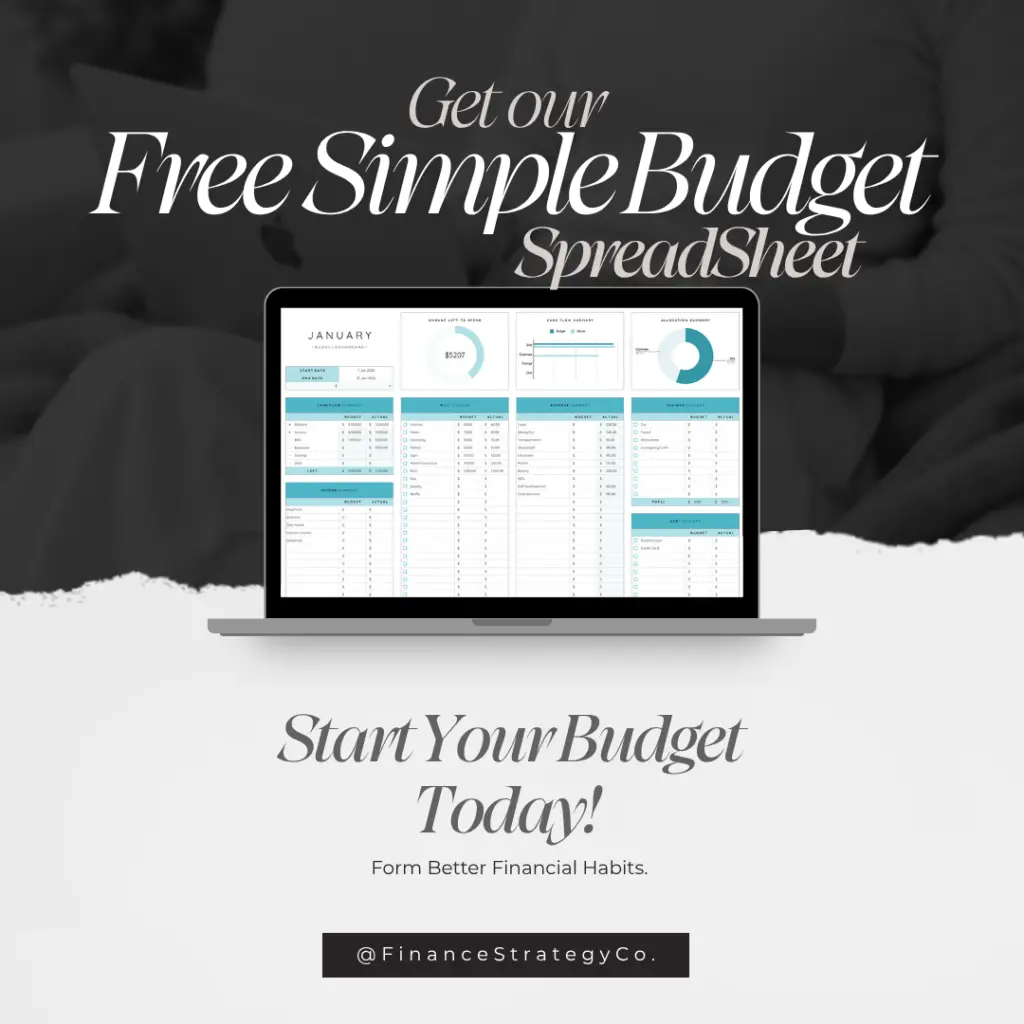
Ready to Make Your Money Feel More Organised?
Your budget is easier to maintain when your financial system is simple.
Explore Finance Strategy Co.'s thoughtfully designed budgeting and financial organisation tools to help you plan your spending, track your expenses, manage your goals and create a financial system that fits your life.
Your money deserves a strategy.