

Look back. Get clear. Plan forward.
There is something powerful about taking a moment to pause and look at your financial life as a whole.
Not just your bank balance.
Not just your budget.
Not just how much you managed to save.
Your entire financial picture.
What came in.
What went out.
What changed.
What worked.
What didn’t.
What you learned.
And, most importantly, what you want your money to make possible next.
An annual financial review is your opportunity to step back from the day-to-day and look at the bigger picture.
Think of it as a yearly financial reset, a moment to organise your numbers, review your progress, realign your priorities and create a clearer strategy for the year ahead.
No shame.
No judgement.
No obsessing over every dollar.
Just clarity.
Because your money deserves a strategy, and your strategy deserves a yearly review.
What is an annual financial review?
An annual financial review is a dedicated time to look at your finances from a bigger-picture perspective.
Rather than simply creating another budget, you’re reviewing the financial decisions you’ve made over the past year and using what you’ve learned to shape the year ahead.
Your review can include:
- Income
- Spending
- Savings
- Debt
- Bills
- Subscriptions
- Financial goals
- Emergency savings
- Investments
- Superannuation
- Net worth
- Financial habits
- Lifestyle spending
- Upcoming life changes
- Your financial priorities
The goal isn’t to find a perfect financial score.
It’s to answer one simple question:
Is my money still supporting the life I’m building?
If the answer is yes, wonderful.
If the answer is no, that’s useful information too.
You don’t need to judge the past.
You simply need to understand it.
Why you should do an annual financial review
Life changes.
Your income changes.
Your expenses change.
Your priorities change.
And sometimes your financial goals change without you even realising it.
A budget that worked beautifully twelve months ago may no longer reflect your life today.
That’s normal.
Your financial strategy shouldn’t be something you create once and never touch again.
It should evolve with you.
A yearly review gives you the opportunity to:
Understand your progress.
See how your financial position has changed.
Identify what’s working.
Keep the habits and systems that are genuinely helping you.
Find what’s draining your money.
Spot unnecessary expenses, forgotten subscriptions or spending patterns that no longer serve you.
Reconnect with your goals.
Decide whether your financial priorities still matter to you.
Prepare for what’s coming.
Think about upcoming expenses, lifestyle changes and bigger financial decisions.
Create a clearer strategy.
Turn everything you’ve learned into an intentional plan for the year ahead.
That’s the real value of an annual financial review.
It’s not about looking backwards.
It’s about using the past to create a better way forward.
Before you begin: create your financial review ritual
Don’t rush this.
This isn’t something you need to squeeze into five minutes while checking your banking app.
Make it a ritual.
Pour yourself a coffee.
Open your favourite notebook.
Put your phone on silent.
Gather your financial information.
Give yourself an hour or two if you can.
You don’t need to make the experience complicated.
You simply need enough space to think clearly.
Your annual financial review essentials:
- Bank account statements
- Credit card statements
- Current budget
- Savings balances
- Debt balances
- Investment information
- Superannuation information
- Insurance information
- Bills and recurring expenses
- Financial goals
- Previous year’s financial plan
- Calculator or spreadsheet
- A notebook for your reflections
And remember:
This is a judgement-free zone.
Your numbers are information.
They are not a reflection of your worth.

01 - KNOW YOUR NUMBERS
Start with the financial snapshot.
Before deciding what you want to change, understand where you are.
Think of this as your annual financial photograph.
Capture your current position before making any decisions.
Record:
Income
What did you earn over the past year?
Consider your main income as well as other income sources that are relevant to your situation.
Then ask:
Did my income change throughout the year?
Is my income likely to change next year?
Spending
Look at your total spending.
Don’t just look at your monthly budget.
Look at the actual numbers.
How much did you spend across the year?
Which categories increased?
Which decreased?
Were there any expenses that surprised you?
Looking at your transactions over a longer period can reveal patterns that aren’t always obvious when you’re only looking at one month.
Savings
Record your current savings.
Then look at how much you added throughout the year.
Ask:
- What did I save for?
- Did I reach my savings goals?
- Did I use any of my savings?
- Did I regularly contribute?
- Did my savings strategy still fit my life?
Remember, progress isn’t only about the final balance.
Consistency matters too.
Debt
Write down your current debts and balances.
Consider:
- Credit cards
- Personal loans
- Car loans
- Home loans
- Buy-now-pay-later balances
- Other relevant debts
Then compare your current balances with where you started the year.
Did your debt move in the direction you wanted?
If yes, acknowledge that progress.
If not, don’t turn it into a reason to give up.
It simply tells you that your strategy may need to change.
02 - CALCULATE YOUR NET WORTH
Know what you’re building.
Net worth gives you another way to look at your financial position.
The basic calculation is:
WHAT YOU OWN − WHAT YOU OWE = NET WORTH
Your assets may include things such as:
- Cash savings
- Investments
- Property
- Superannuation
- Other valuable assets
Your liabilities may include:
- Home loans
- Personal loans
- Credit card balances
- Other debts
Don’t become overly focused on the number itself.
Your net worth is simply a snapshot of where you are today.
The more useful question is:
How has it changed?
Compare your current position with the beginning of the year.
Then ask why.
Did you save more?
Pay down debt?
Invest?
Purchase a property?
Experience a major life change?
Understanding the movement is often more valuable than the number itself.
03 - REVIEW YOUR SPENDING
Your spending tells a story.
This is one of the most revealing parts of your annual financial review.
Look at your spending without judgement.
You aren’t trying to prove that you were “good” or “bad” with money.
You’re looking for patterns.
Review your major spending categories and ask:
What did I spend more on?
What did I spend less on?
What expenses increased?
What expenses disappeared?
What purchases genuinely added value to my life?
What spending would I happily repeat?
What spending no longer feels worth it?
Where did convenience take over?
Where did my spending reflect my values?
Where didn’t it?
This is where budgeting becomes more than mathematics.
It becomes self-awareness.
Because the objective isn’t necessarily to spend less.
It’s to spend more intentionally.
04 - FIND YOUR MONEY LEAKS
Not every expense is a problem.
But some expenses quietly continue long after you’ve stopped noticing them.
Look for:
- Unused subscriptions
- Duplicate services
- Forgotten memberships
- Bank fees
- Increasing bills
- Recurring purchases
- Automatic renewals
- Convenience spending
- Lifestyle creep
- Services you no longer use
- Purchases that don’t align with your priorities
Don’t feel like you need to cut everything.
Instead, ask:
Is this still worth my money?
If the answer is no, let it go.
If the answer is yes, keep it intentionally.
That distinction matters.
Finance Strategy Co. isn’t about creating a smaller life.
It’s about creating a more intentional financial life.
05 - REVIEW YOUR BILLS & SUBSCRIPTIONS
Give your recurring expenses an annual edit.
Recurring expenses are easy to overlook because they happen automatically.
That’s precisely why they deserve attention.
Create a list of your:
- Utilities
- Insurance
- Phone
- Internet
- Streaming services
- Software
- Memberships
- Apps
- Subscriptions
- Annual fees
- Other recurring commitments
Then ask:
Do I still use this?
Do I still need this?
Does the price still make sense?
Is there a better option?
Is this expense supporting the life I want?
Your financial system should make life easier.
Not silently drain money in the background.
06 - REVIEW YOUR SAVINGS
Your savings should have a purpose.
Look at every major savings goal you have.
Perhaps you’re saving for:
- An emergency fund
- A holiday
- A home
- A car
- Education
- A wedding
- A business
- A major purchase
- Future flexibility
- Long-term wealth
Then ask:
Which goals did I complete?
Which goals are still relevant?
Which goals need more time?
Which goals should become a priority?
Which goals no longer matter?
Your savings strategy should change when your life changes.
A goal that felt important twelve months ago may not be your priority anymore.
That’s okay.
You are allowed to change direction.
07 - CHECK YOUR EMERGENCY FUND
Financial security deserves its own conversation.
An emergency fund is designed to give you breathing room when something unexpected happens.
During your annual review, check:
How much do I currently have?
Has my cost of living changed?
Has my income changed?
Would my current emergency savings still provide meaningful support?
A commonly used benchmark is around three months of expenses, but your personal target can depend on your circumstances, income stability and financial responsibilities.
Don’t let the “perfect” number stop you from building a safety net.
Start where you are.
Then strengthen it over time.
08 - REVIEW YOUR FINANCIAL GOALS
Are you still building the future you want?
This is where your annual financial review becomes much bigger than budgeting.
Look at every financial goal you’ve set.
Then divide them into three categories:
KEEP
Goals that still matter.
CHANGE
Goals that need a new amount, timeline or strategy.
RELEASE
Goals that no longer reflect the life you’re building.
Then choose your priorities for the new year.
You don’t need twenty financial goals.
Choose the goals that matter most.
Perhaps your focus is:
Save $10,000.
Pay down a specific debt.
Build your emergency fund.
Save for a home deposit.
Increase your savings rate.
Build your investment portfolio.
Grow your superannuation.
Create more financial breathing room.
Your goals should give your money direction.
09 - REVIEW YOUR FINANCIAL HABITS
Your results are often connected to your routines.
Ask yourself:
What financial habits worked well this year?
Maybe you:
- Checked your spending weekly
- Automated your savings
- Planned your bills
- Used a budget consistently
- Had a monthly money date
- Reduced impulse spending
- Built a sinking fund
- Paid bills on time
- Stayed organised
Now ask:
What didn’t work?
Maybe you:
- Avoided checking your accounts
- Forgot annual expenses
- Overspent in certain categories
- Set unrealistic savings targets
- Created a budget that was too restrictive
- Didn’t account for irregular expenses
- Started strong and lost momentum
Don’t criticise yourself.
Get curious.
A financial habit that doesn’t work isn’t a personal failure.
It is simply a system that needs adjusting.
10 - REVIEW YOUR FINANCIAL SYSTEM
Does your money system still work for you?
Your financial system should make managing money easier.
Take a look at:
- Bank accounts
- Budgeting system
- Savings accounts
- Bill payments
- Automatic transfers
- Expense tracking
- Subscription tracking
- Financial documents
- Savings goals
- Debt tracking
- Investment tracking
Ask:
What’s working?
What’s unnecessarily complicated?
What could be automated?
What could be simplified?
What am I still manually managing that doesn’t need my attention?
The goal isn’t to create a complicated financial machine.
The goal is to create a system that quietly supports your life.
11 - LOOK AT THE YEAR AHEAD
Don’t just review the past. Prepare for what’s coming.
Before creating your new financial plan, look at the calendar.
What is happening next year?
Think about:
- Holidays
- Birthdays
- Insurance renewals
- Registration
- School expenses
- Medical expenses
- Annual subscriptions
- Home maintenance
- Car expenses
- Major purchases
- Weddings
- Moving
- Career changes
- Business plans
- Family changes
- Travel
- Lifestyle changes
These expenses don’t necessarily need to become emergencies.
They need a place in your plan.
This is where sinking funds can become incredibly useful.
Instead of being surprised by a large annual expense, you can gradually prepare for it.
12 - CREATE YOUR ANNUAL MONEY CALENDAR
Give every important financial date a place.
Create a simple yearly calendar.
Add:
JANUARY
Annual subscriptions
Insurance renewals
New financial goals
FEBRUARY
Upcoming expenses
Savings review
MARCH
Quarterly financial review
APRIL
Tax-related preparation
MAY
Savings progress check
JUNE
Mid-year financial review
JULY
Financial reset
AUGUST
Goal progress check
SEPTEMBER
Annual expense preparation
OCTOBER
Holiday spending plan
NOVEMBER
End-of-year financial planning
DECEMBER
Annual financial review
Your calendar doesn’t need to look exactly like this.
The point is to stop important financial dates from becoming surprises.
13 - CHOOSE YOUR FINANCIAL PRIORITIES
Your money cannot do everything at once.
One of the most important parts of your annual review is deciding what deserves your attention next.
Choose three.
Not ten.
Your Top 3 Financial Priorities
01 — __________________________
02 — __________________________
03 — __________________________
These priorities should influence your budget, savings, spending and financial decisions throughout the year.
For example:
PRIORITY 01
Build a $5,000 emergency fund.
PRIORITY 02
Pay an additional $200 per month towards debt.
PRIORITY 03
Save $3,000 for a holiday.
Now your money has direction.
14 - TURN YOUR PRIORITIES INTO NUMBERS
A goal becomes powerful when it has a plan.
Take each priority and work backwards.
If you want to save $6,000 over twelve months:
$6,000 ÷ 12 = $500 per month
If your goal is $3,000:
$3,000 ÷ 12 = $250 per month
You can then decide whether that amount fits comfortably within your financial system.
If it doesn’t, you have options:
- Extend the timeline
- Adjust the goal
- Increase income
- Reduce another expense
- Reallocate existing savings
- Change the priority
- Create a combination of strategies
A financial goal shouldn’t exist to make you feel pressured.
Your strategy should make the goal feel possible.
15 - CREATE YOUR “MORE OF THIS / LESS OF THAT” LIST
This is one of my favourite parts of an annual financial review.
Forget complicated financial resolutions for a moment.
Instead, ask yourself:
MORE OF THIS
More saving.
More planning.
More intentional spending.
More financial organisation.
More experiences I genuinely value.
More financial confidence.
More preparation.
More money conversations.
More freedom.
LESS OF THAT
Less impulse spending.
Less financial avoidance.
Less comparison.
Less forgotten subscriptions.
Less lifestyle creep.
Less spending from boredom.
Less guilt.
Less financial clutter.
Less reacting.
This simple exercise can become the philosophy behind your financial strategy for the entire year.
16 - GIVE YOUR MONEY ITS JOBS
Every dollar doesn’t need to do everything.
A useful way to think about your financial strategy is to give your money different jobs.
LIVE
Money for your everyday life.
Bills, groceries, transport, home and essentials.
ENJOY
Money for the things that make life feel like yours.
Experiences, hobbies, restaurants, travel and fun.
PROTECT
Money that creates financial security.
Emergency savings, insurance and financial buffers.
PLAN
Money for upcoming goals and larger expenses.
Sinking funds, holidays, major purchases and future plans.
BUILD
Money focused on longer-term financial growth.
Savings, debt reduction, investments and wealth-building goals.
This doesn’t mean every person needs the same accounts or categories.
It simply gives you a way to think about the bigger picture.
Your money should have direction, not just destinations.
17 - CHECK YOUR WEALTH-BUILDING PROGRESS
Look beyond the budget.
If your financial foundation is in place, your annual review can also be a time to look at longer-term wealth building.
Consider:
- Net worth
- Debt reduction
- Savings growth
- Investments
- Superannuation
- Property
- Long-term financial goals
Ask:
Am I moving forward?
What has changed?
What do I understand better than I did a year ago?
What do I want to learn next?
If you have investments, review them in the context of your goals, timeframe and overall financial strategy rather than reacting to every short-term market movement.
And if you’re considering significant investment decisions, personalised financial advice may be appropriate for your circumstances.
18 - REVIEW YOUR LIFESTYLE
Your financial review isn’t only about numbers.
This might be the most important question of all:
Did my money help me create a life I actually enjoyed?
Think about the experiences you paid for.
The time you bought back.
The people you spent money on.
The experiences you created.
The things you learned.
The home you built.
The moments you remember.
Money isn’t the destination.
It’s a tool.
And a beautiful financial life isn’t necessarily one where you spend the least.
It’s one where your spending reflects what matters to you.
19 - WRITE YOUR NEW FINANCIAL VISION
Before you create another spreadsheet, create a vision.
Close your eyes for a moment and imagine yourself twelve months from now.
What would you love to be able to say?
Perhaps:
“I finally feel organised with my money.”
“I have savings that give me breathing room.”
“I know exactly what I’m working towards.”
“I’m no longer avoiding my finances.”
“I’m spending more intentionally.”
“I’ve created a system that actually works.”
“I’m building wealth without feeling obsessed with money.”
Write your own.
My financial vision for the year ahead:
Your financial plan should support this vision.

THE FINANCE STRATEGY METHOD™
KNOW. ORGANISE. PLAN. BUILD. THRIVE.
Your annual financial review fits beautifully into the Finance Strategy Method™.
01 – KNOW
Understand your numbers.
Income.
Expenses.
Savings.
Debt.
Assets.
Net worth.
Cash flow.
02 – ORGANISE
Create order.
Accounts.
Bills.
Subscriptions.
Documents.
Budget.
Financial systems.
03 – PLAN
Give your money direction.
Goals.
Priorities.
Savings targets.
Upcoming expenses.
Annual financial roadmap.
04 – BUILD
Turn your strategy into progress.
Save.
Reduce debt.
Build financial resilience.
Grow your assets.
Work towards long-term goals.
05 – THRIVE
Create a financial life that supports the person you want to become.
More choice.
More confidence.
More flexibility.
More freedom.
More intention.
That’s the real purpose of an annual financial review.
Not simply knowing your numbers.
Knowing what you want those numbers to make possible.
THE 30-MINUTE ANNUAL MONEY RESET
Don’t have an entire afternoon?
Start here.
Set a timer for 30 minutes.
MINUTES 1–5 – CHECK YOUR NUMBERS
Write down:
Income
Savings
Debt
Assets
Net worth
MINUTES 6–10 – REVIEW YOUR SPENDING
Look at your biggest spending categories.
Ask:
What surprised me?
What worked?
What would I change?
MINUTES 11–15 – REVIEW YOUR GOALS
Write down your current financial goals.
Circle the three that matter most.
MINUTES 16–20 – LOOK AHEAD
Write down your major upcoming expenses and life events.
MINUTES 21–25 – CHOOSE YOUR PRIORITIES
Complete:
More of: ______________________
Less of: _______________________
My top financial priority: _______________________
MINUTES 26–30 – CREATE YOUR NEXT MOVE
Choose one financial action you can take this week.
Maybe it’s:
- Setting up an automatic savings transfer
- Cancelling a subscription
- Updating your budget
- Opening a savings account
- Reviewing your insurance
- Creating a sinking fund
- Paying extra towards a debt
- Setting a financial goal
- Organising your financial documents
Don’t underestimate one small action.
A strategy only becomes powerful when you put it into motion.
THE QUESTIONS THAT MATTER
At the end of your annual review, sit with these questions.
What am I proud of financially this year?
What did I learn about myself?
What financial decision served me well?
What financial decision would I approach differently?
What spending brought genuine value?
What spending no longer feels aligned?
What financial habit do I want to keep?
What habit do I want to change?
What financial goal matters most now?
What does financial security mean to me?
What does financial freedom look like in my life?
What do I want my money to make possible?
And finally:
What would make me feel more financially confident twelve months from now?
Write the answer down.
That answer may become the foundation of your next financial strategy.
YOUR FINANCIAL REVIEW IS NOT A REPORT CARD
You may discover that you didn’t save as much as you wanted.
You may have spent more than expected.
You may have taken on debt.
You may have changed direction completely.
You may have had a difficult year.
You may have achieved something you once thought was impossible.
Whatever you discover, remember:
Your financial review is not a report card.
It is information.
And information gives you options.
If something isn’t working, you can change it.
If something is working, you can strengthen it.
If your priorities have changed, you can realign them.
If you’ve fallen behind, you can begin again.
You are not starting from zero.
You’re starting from experience.
THE QUIET LUXURY OF BEING FINANCIALLY ORGANISED
There is a certain kind of luxury in knowing where you stand.
Knowing your bills are accounted for.
Knowing your savings have a purpose.
Knowing what you’re working towards.
Knowing what’s coming.
Knowing that your financial system doesn’t require constant attention.
Knowing that you can enjoy your money without wondering whether you’ve forgotten something important.
That’s the quiet luxury of financial organisation.
It isn’t about having the most money.
It’s about having clarity around the money you have.
And that clarity can create something incredibly valuable:
Peace.
YOUR FINANCIAL YEAR AHEAD
You don’t need to predict everything.
You don’t need to create a perfect twelve-month plan.
You don’t need to know exactly where you’ll be a year from now.
You simply need a direction.
A financial strategy gives you somewhere to begin.
Your annual review gives you the opportunity to pause, reflect and decide what comes next.
So take the time.
Open the spreadsheet.
Look at the numbers.
Ask the uncomfortable questions.
Celebrate the progress.
Release what no longer matters.
Choose what does.
Then create a plan that supports it.
Because your future doesn’t need more pressure.
It needs direction.
Your money should support your life.
Your financial strategy should reflect your priorities.
And every year gives you another opportunity to make the two align a little more closely.
YOUR MONEY. YOUR STRATEGY. YOUR FUTURE.
The ultimate annual financial review isn’t about becoming perfect with money.
It’s about becoming more intentional.
Know where you are.
Organise what you have.
Plan where you’re going.
Build towards what matters.
Thrive in the life you’re creating.
That’s the Finance Strategy Method™.
And that’s what we’re building here at Finance Strategy Co.
Money, but make it intentional.
A FINAL NOTE
Your financial life is allowed to evolve.
Your goals can change.
Your priorities can change.
Your income can change.
Your strategy can change.
The important thing is that you keep checking in.
Keep learning.
Keep organising.
Keep planning.
Keep moving forward.
You don’t need a perfect financial life.
You need a financial life that feels intentional, organised and yours.
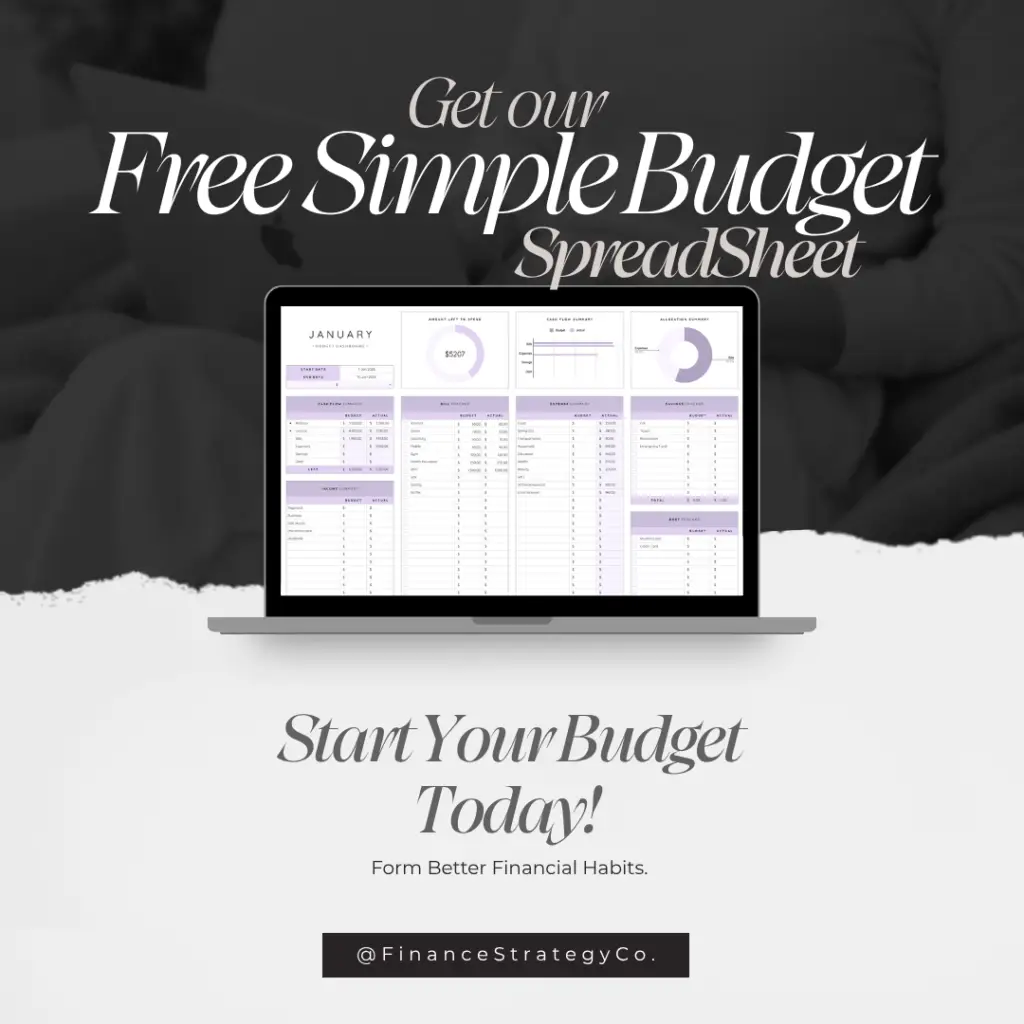
Ready to Elevate Your Money Management?
Finance Strategy Co. creates thoughtfully designed financial tools to help you organise your money, plan ahead, track your progress and build a financial system that fits your life.
Money management, elevated.