

There is something powerful about the beginning of a new year.
A new year doesn't need a new you. It needs a clearer money strategy.
A fresh calendar.
A clean page.
New possibilities.
We think about the things we’d like to achieve, the places we’d like to go and the version of life we’d like to create.
But somewhere between the January motivation and the reality of everyday life, those intentions can get lost.
The solution isn’t another resolution.
It’s a plan.
Planning your money for the year ahead gives you the opportunity to step back from the everyday noise and look at your financial life as a whole.
What matters this year?
What are you building?
What expenses are coming?
What do you want to save for?
What do you want to experience?
And perhaps the most important question:
What do you want your money to make possible this year?
Because your annual financial plan isn’t simply about spending less.
It’s about deciding what deserves your money.
Your Year Deserves a Money Strategy
Most of us manage money month to month.
Payday arrives.
Bills are paid.
Groceries are bought.
Subscriptions renew.
The weekend happens.
Then we do it all again.
There’s nothing wrong with managing money this way.
But when you only look at the next few weeks, it’s easy to lose sight of the bigger picture.
An annual money plan changes the perspective.
Instead of only asking:
“What do I need to pay this month?”
you start asking:
“What am I building throughout this year?”
That shift creates clarity.
Your yearly plan can include:
- financial goals
- savings targets
- annual expenses
- holidays
- major purchases
- debt reduction
- emergency savings
- lifestyle spending
- investments
- personal priorities
- experiences you want to enjoy
Your monthly budget then becomes the tool that brings that bigger plan to life.
The year gives you the vision.
The month gives you the action.
Start With Your Life, Not Your Spreadsheet
Before you start calculating numbers, think about your life.
What do you want this year to feel like?
Maybe you want:
More freedom.
More financial security.
More travel.
More organisation.
Less financial stress.
More time.
More confidence.
A bigger savings balance.
A fresh start.
Your financial plan should support those things.
Because money isn’t the destination.
It’s one of the tools that helps you create the life you want.
So before asking:
“How much should I save?”
ask:
“What am I saving for?”
That question changes the entire conversation.

01 - Look Back Before You Look Forward
Before you plan the year ahead, take a moment to look at the year behind you.
Not with judgement.
With curiosity.
Your previous year can tell you a lot about how you actually use your money.
Ask yourself:
What worked?
Did you find a budgeting system you liked?
Did you build savings?
Did you become more organised?
Did you make progress towards a goal?
What didn’t work?
Did your budget feel too restrictive?
Did certain expenses constantly surprise you?
Did you struggle with impulse spending?
Did saving feel inconsistent?
What surprised you?
Maybe you spent more on dining out than expected.
Maybe your subscriptions had quietly multiplied.
Maybe travel mattered more to you than you realised.
Maybe convenience spending became a bigger part of your lifestyle.
What do you want to change?
Choose a few things.
Not everything.
You don’t need to overhaul your entire financial life.
You simply need to identify what deserves your attention.
Your past isn’t a financial report card.
It’s information.
Use it.
02 - Know Where You Stand
You can’t create a meaningful plan without knowing your starting point.
Take a simple financial snapshot.
Write down:
Income: $________
Monthly essential expenses: $________
Average lifestyle spending: $________
Savings: $________
Debt: $________
Investments: $________
Assets: $________
Net worth: $________
Average monthly surplus: $________
Don’t worry if the numbers aren’t where you’d like them to be.
This isn’t about creating a perfect picture.
It’s about creating an honest one.
Clarity comes before strategy.
Once you know where you are, you can decide where you want to go.
03 - Look at the Entire Year
Here’s where annual planning becomes powerful.
Your financial life isn’t neatly divided into twelve identical months.
Some months are naturally more expensive.
Think about:
- birthdays
- holidays
- school expenses
- insurance
- car registration
- annual memberships
- travel
- celebrations
- medical expenses
- home maintenance
- car servicing
- major purchases
- seasonal spending
Look through your calendar and identify what you already know is coming.
Then ask:
“What can I prepare for now?”
The earlier you see an expense coming, the less disruptive it becomes.
04 - Create Your Annual Money Calendar
Take your calendar and make it financial.
Go month by month.
JANUARY
What expenses are coming?
What goals are beginning?
FEBRUARY
Any annual bills?
Birthdays?
Events?
MARCH
Quarterly expenses?
Travel?
APRIL
Holidays?
Major purchases?
MAY
Upcoming bills?
Membership renewals?
JUNE
Mid-year financial review.
JULY
Winter expenses?
Travel?
AUGUST
Upcoming annual costs?
SEPTEMBER
Spring plans?
Upcoming celebrations?
OCTOBER
Holiday planning begins.
NOVEMBER
End-of-year expenses.
DECEMBER
Celebrations.
Gifts.
Travel.
Year-end review.
You don’t need to know everything.
Simply map the things you already know.
This one exercise can transform the way your year feels financially.
Instead of constantly reacting to expenses, you’re anticipating them.
05 - Choose Your Three Financial Priorities
You could create twenty financial goals.
But should you?
Probably not.
Too many goals can make everything feel important—which usually means nothing gets enough attention.
Instead, choose three priorities.
For example:
PRIORITY ONE
Build financial security.
PRIORITY TWO
Save for something meaningful.
PRIORITY THREE
Build long-term wealth.
Or:
PRIORITY ONE
Pay down debt.
PRIORITY TWO
Save for a home.
PRIORITY THREE
Create more lifestyle flexibility.
Your priorities will be personal.
There is no perfect combination.
The goal is simply to decide:
What matters most right now?
06 - Turn Your Priorities Into Real Goals
A priority is a direction.
A goal gives it shape.
Instead of:
“I want to save more.”
Try:
“I want to save $6,000 by December.”
Instead of:
“I want to travel.”
Try:
“I want to create a $4,000 travel fund by August.”
Instead of:
“I want to reduce debt.”
Try:
“I want to reduce my debt by $5,000 this year.”
A useful goal answers four questions:
What?
How much?
By when?
Why?
The more clearly you define the goal, the easier it becomes to build a strategy around it.
07 - Give Your Goals a Monthly Number
This is where your goals start becoming actionable.
Let’s say your goal is:
Save $6,000 this year.
Break it down:
$6,000 ÷ 12 = $500 per month
Now you have a number.
And numbers create clarity.
You can ask:
Can I realistically save $500 per month?
If yes, you’ve found your target.
If no, you have a decision to make.
Maybe you extend the timeline.
Maybe you adjust the goal.
Maybe you reduce certain expenses.
Maybe you increase your income.
Maybe you combine several approaches.
The point isn’t to force the numbers to work.
The point is to understand what your goal actually requires.
08 - Plan for the Expenses That Don't Happen Every Month
This is one of the easiest ways to make your finances feel calmer.
Think beyond monthly bills.
If you know you’ll need $1,200 throughout the year for annual or irregular expenses, you could plan for approximately:
$100 per month.
Instead of waiting for the expense to arrive, you’re gradually preparing for it.
This is the beauty of a sinking fund.
You aren’t waiting for a financial fire.
You’re quietly preparing for the things you already know are coming.
Create categories for the expenses that matter to you:
Car
Travel
Birthdays
Christmas
Home
Medical
Annual bills
Education
Beauty
Personal
The categories don’t need to be the same for everyone.
They need to reflect your life.
09 - Build Your Savings Strategy
Now decide how your savings will actually happen.
Will you save:
Weekly?
Fortnightly?
Monthly?
As a percentage of income?
Choose the rhythm that fits your life.
Then make it easier on yourself.
Automate where possible.
Separate goal-based savings from everyday spending if that helps you stay organised.
Name your savings accounts.
Create milestones.
Make the progress visible.
The goal isn’t to think about saving every day.
It’s to create a system where saving becomes a normal part of your financial life.
You decide once.
Your system keeps going.
10 - Plan Your Lifestyle Spending
This is where Finance Strategy Co. takes a different approach.
Your annual money plan shouldn’t be a list of everything you’re not allowed to spend.
It should include the things you actually enjoy.
Ask:
What do I want to experience this year?
Maybe it’s:
- a beautiful holiday
- weekends away
- dinners with friends
- concerts
- new clothes
- beauty and self-care
- hobbies
- home projects
- experiences with your family
- personal development
Give those things a place in your plan.
Because financial responsibility doesn’t mean never enjoying your money.
It means knowing what you value enough to spend it on.
11 - Create Your “More of This, Less of That” List
This is one of the simplest exercises you can do before the year begins.
MORE OF THIS
What do you want your money to support more intentionally?
Travel.
Health.
Experiences.
Home.
Family.
Freedom.
Quality.
Education.
Time.
Adventure.
LESS OF THIS
What no longer feels worth the money?
Impulse purchases.
Unused subscriptions.
Mindless online shopping.
Spending out of boredom.
Buying things because everyone else has them.
Convenience spending you don’t actually value.
This isn’t about restriction.
It’s about alignment.
You’re deciding what deserves more of your money.
12 - Give Your Money a Job
One of the easiest ways to create financial clarity is to give your money different roles.
Think about your money in five simple categories:
LIVE
The money that supports everyday life.
Bills.
Housing.
Groceries.
Transport.
Essentials.
ENJOY
The money that allows you to actually enjoy your life.
Dining out.
Entertainment.
Hobbies.
Experiences.
Fun.
PROTECT
The money that creates financial security.
Emergency savings.
Insurance.
Financial buffers.
PLAN
The money allocated towards upcoming goals.
Travel.
Major purchases.
Home goals.
Education.
BUILD
The money directed towards your longer-term future.
Debt reduction.
Investing.
Superannuation.
Wealth-building goals.
The exact categories are yours to create.
But the philosophy remains:
Give your money a purpose before the month gives it one for you.
13 - Review Your Recurring Expenses
Take a look at everything that automatically leaves your account.
Subscriptions.
Memberships.
Apps.
Streaming services.
Insurance.
Phone plans.
Software.
Recurring deliveries.
Ask:
Do I still use this?
Do I still value this?
Would I buy it again today?
Is it supporting the life I’m building?
Sometimes financial progress doesn’t require a dramatic change.
Sometimes it simply requires noticing what has become invisible.
14 - Decide What You're Building Financially
Your annual plan shouldn’t stop at this year’s spending.
Think about the bigger picture.
What are you building over time?
Maybe it’s:
A stronger emergency fund.
Less debt.
A home deposit.
More savings.
More financial flexibility.
A growing investment portfolio.
A stronger super balance.
A business.
More freedom.
Your long-term goals don’t need to be perfectly defined.
But they should have a place in your thinking.
Your annual plan is one chapter of a much bigger financial story.
15 - Create Your “Financial Year Ahead” Dashboard
Your financial dashboard doesn’t need to be complicated.
Choose the numbers that actually matter.
INCOME
How much are you bringing in?
SAVINGS
How much are you putting aside?
DEBT
How much are you reducing?
GOALS
How close are you to your targets?
SPENDING
Are you spending in alignment with your priorities?
NET WORTH
How is your overall financial position changing?
The purpose isn’t to obsess over numbers.
It’s to create visibility.
What gets seen can be understood.
And what can be understood can be managed more intentionally.
16 - Create Your Quarterly Money Ritual
Don’t wait until the end of the year to see whether your plan is working.
Give yourself four moments throughout the year to pause.
QUARTER ONE
Where am I starting?
QUARTER TWO
What’s working?
QUARTER THREE
What needs to change?
QUARTER FOUR
What did I build?
At each check-in, ask:
Have my priorities changed?
Am I still working towards the right goals?
Are my savings targets realistic?
Have my expenses changed?
What financial decision deserves my attention next?
This keeps your annual plan alive.
17 - Leave Room for Life
A good financial plan has breathing room.
Because life isn’t predictable.
You may spend more than expected.
An unexpected expense may appear.
Your income may change.
A new opportunity may come along.
Your priorities may shift.
You may simply decide that something isn’t important anymore.
Your financial plan should be flexible enough to accommodate real life.
The goal isn’t:
“I followed my plan perfectly.”
The goal is:
“My plan helped me make better decisions.”
That’s a much healthier definition of financial progress.

Your 30-Minute Annual Money Reset
You don’t need an entire weekend to plan your finances.
Start with 30 minutes.
MINUTES 1–5
Look back.
What worked?
What didn’t?
What did you learn?
MINUTES 6–10
Look ahead.
What expenses and life events are coming?
MINUTES 11–15
Choose your three financial priorities.
MINUTES 16–20
Set your goals.
Give them numbers and deadlines.
MINUTES 21–25
Create your strategy.
What needs to be saved, reduced, redirected or organised?
MINUTES 26–30
Choose your first three actions.
Then schedule your next money check-in.
That’s enough to begin.
You don’t need to have the entire year figured out today.
Your Financial Plan Should Feel Like You
There is no perfect annual financial plan.
There is only a plan that makes sense for your life.
Maybe your biggest goal is buying a home.
Maybe it’s travelling.
Maybe it’s paying off debt.
Maybe it’s building your first $10,000 in savings.
Maybe it’s simply getting organised.
Maybe it’s creating enough financial breathing room that you can finally stop worrying about every unexpected expense.
All of these are valid.
Your money doesn’t need to look like someone else’s.
Your goals don’t need to look like someone else’s.
Your definition of success doesn’t need to look like someone else’s.
Your strategy should be yours.
The Finance Strategy Method™
At Finance Strategy Co., we believe planning your money should create clarity, not pressure.
That’s why we approach your financial life through five simple stages:
KNOW
Understand where you are.
Your income.
Your expenses.
Your savings.
Your debt.
Your goals.
ORGANISE
Create structure.
Your accounts.
Your bills.
Your subscriptions.
Your sinking funds.
Your financial calendar.
PLAN
Give your money direction.
Your priorities.
Your annual goals.
Your savings targets.
Your lifestyle plans.
BUILD
Turn your strategy into progress.
Save.
Reduce debt.
Strengthen your financial foundation.
Build wealth.
Create better financial habits.
THRIVE
Use your money to support the life you’re creating.
Enjoy it.
Experience it.
Build with it.
Create freedom with it.
KNOW → ORGANISE → PLAN → BUILD → THRIVE
This is what intentional money management looks like.
Not perfection.
Strategy.
The Quiet Luxury of Being Prepared
There is a certain kind of peace that comes from knowing what’s coming.
Knowing your annual bills are accounted for.
Knowing your savings have a purpose.
Knowing your holiday has already been planned for.
Knowing you have money set aside for the expenses you can see coming.
Knowing your everyday spending is supporting the life you actually want.
It’s not necessarily about having more money.
It’s about having more clarity around the money you have.
And that clarity can create something incredibly valuable:
peace of mind.
Don't Just Plan Your Money. Plan What Your Money Makes Possible.
The year ahead is going to happen.
The bills will arrive.
The birthdays will happen.
The holidays will come.
Life will change.
You will spend money.
The question is:
Will your money simply respond to the year, or help you create it?
An annual money plan gives you the opportunity to decide.
What matters.
What you’re building.
What you’re saving for.
What you’re willing to spend on.
What you’re ready to let go of.
And what you want your money to make possible.
You don’t need to plan every dollar perfectly.
You simply need to give your money direction.
Make This the Year You Become More Intentional With Money
You don’t need a completely new financial life.
You don’t need an extreme savings challenge.
You don’t need to say no to everything you enjoy.
You don’t need to become obsessed with every dollar.
You simply need to become more intentional.
Know where you are.
Decide where you want to go.
Choose what matters.
Plan for what you know is coming.
Create systems that support your goals.
Leave room for life.
Review.
Adjust.
Keep going.
Because financial progress isn’t created in one perfect January.
It’s created through the small decisions you make throughout the year.
One payday.
One transfer.
One intentional purchase.
One financial check-in.
One goal at a time.
And eventually, those small decisions become something bigger.
A financial life that feels calmer.
Clearer.
More organised.
More intentional.
More yours.
Your Money. Your Strategy. Your Future.
At Finance Strategy Co., we believe your financial life should support the life you’re building, not compete with it.
Your goals are personal.
Your priorities are personal.
Your lifestyle is personal.
And your money strategy should be personal too.
Know your money.
Organise your money.
Plan your future.
Build with intention.
Thrive on your terms.
The year ahead is yours to create.
And your money has a role to play in it.
Your money. Your strategy. Your future.
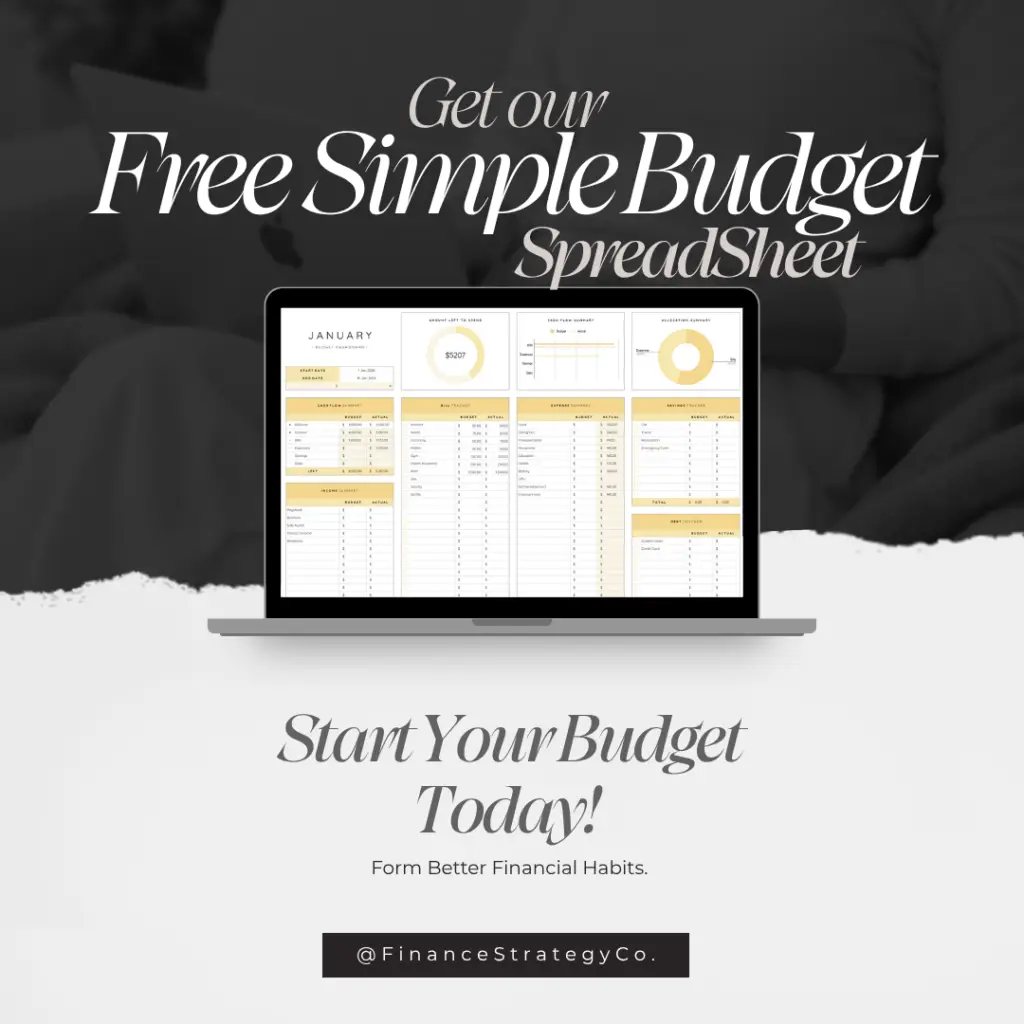
Ready to Elevate Your Money Management?
Finance Strategy Co. creates thoughtfully designed financial tools to help you organise your money, plan ahead, track your progress and build a financial system that fits your life.
Money management, elevated.