
You don't have to choose between enjoying your money and being good with it.
There is a common idea that financial success means becoming incredibly disciplined.
Cut everything unnecessary.
Stop buying coffee.
Never eat out.
Say no to holidays.
Avoid shopping.
Save every spare dollar.
And while being mindful of your spending absolutely matters, there is something missing from that conversation:
You’re allowed to enjoy your money.
Your money isn’t only for bills.
It isn’t only for savings.
It isn’t only for some distant future version of yourself.
It’s also a resource that can make your life more enjoyable today.
The key is learning how to enjoy it without allowing today’s spending to quietly take away from tomorrow’s priorities.
That’s where intentional spending comes in.
A budget can help you understand where your money is going, plan for the things that matter and make spending decisions with greater confidence.
At Finance Strategy Co., we don’t believe in a financial life built around guilt.
We believe in clarity, intention and choice.
Because the goal isn’t to spend nothing.
It’s to spend well.
Enjoying Your Money Isn't Financially Irresponsible
Let’s start here.
Buying something you enjoy doesn’t automatically mean you’re bad with money.
Going out for dinner isn’t a financial failure.
Buying a beautiful piece of clothing isn’t irresponsible.
Taking a holiday isn’t something you need to apologise for.
Having a coffee with a friend isn’t a money mistake.
The question isn’t:
“Did I spend money?”
The better question is:
“Did this spending fit my financial life?”
There’s a significant difference between spending intentionally and spending automatically.
If you’ve accounted for your responsibilities, protected your financial priorities and deliberately set aside money for enjoyment, spending that money is part of the plan.
It’s not a failure of the plan.
It is the plan.
Why We Overspend in the First Place
Overspending isn’t always about wanting too much.
Sometimes it’s about having too little structure.
You might overspend because:
- You don’t know how much you can comfortably spend.
- You don’t track your spending.
- You’re using shopping as entertainment.
- You’re influenced by social media.
- You buy things because they’re on sale.
- You don’t have a clear savings goal.
- Your budget is too restrictive.
- You don’t have money allocated for fun.
- You’re spending to cope with emotions.
- You haven’t decided what matters most to you.
This is why simply telling yourself to “have more discipline” isn’t always helpful.
You need a system.
Tracking your spending can reveal patterns, recurring expenses and small purchases that add up over time, giving you better information for making changes.
01 - Know What You Can Actually Afford
Before you decide how much you can spend on enjoyment, know your numbers.
Start with:
Money coming in
How much do you realistically receive each week, fortnight or month?
Essential expenses
What needs to be paid?
Think:
- Housing
- Utilities
- Groceries
- Transport
- Insurance
- Healthcare
- Debt repayments
- Other essential commitments
Future priorities
What are you currently working towards?
Perhaps:
- Emergency savings
- A holiday
- Home deposit
- Debt reduction
- Investing
- Retirement
- Another major financial goal
Lifestyle spending
What do you want room for?
- Dining out
- Entertainment
- Shopping
- Beauty
- Hobbies
- Socialising
- Experiences
- Personal spending
A budget gives you a clearer picture of income and expenses and helps you decide how much money can realistically be directed towards spending, saving and your priorities.
You can’t enjoy your money confidently if you don’t know where you stand.
02 - Create a “Joy” Category
This is one of the simplest changes you can make.
Give enjoyment a place in your budget.
Call it:
Joy
Fun Money
Lifestyle
Personal
Guilt-Free Spending
Whatever feels right.
The name doesn’t matter.
The intention does.
When you’ve deliberately allocated money towards enjoyment, you’re no longer wondering:
“Am I allowed to buy this?”
You already decided.
Yes.
That’s what makes planned spending feel different.
03 - Decide What You Actually Enjoy
Here’s where you can become more intentional.
Think about the things you spend money on.
Then ask:
What genuinely makes me happy?
Maybe it’s:
- Dinner with friends
- Travel
- Beauty
- Fashion
- Books
- Fitness
- Home décor
- Concerts
- Coffee
- Hobbies
- Experiences
- Weekend getaways
- Quality food
- Time-saving services
Now ask:
Which of these do I genuinely value?
Because sometimes we spend money on things that aren’t actually bringing us much enjoyment.
We simply spend because we’re used to spending.
04 - Spend More on What You Love
Once you know what matters, give those things priority.
Perhaps you’d rather:
Have one amazing dinner than five mediocre ones.
Take one meaningful holiday instead of constantly buying little things.
Buy one quality item instead of several trend pieces.
Pay for a service that gives you time back.
Spend on experiences rather than accumulating more stuff.
This is one of the most powerful principles of intentional spending:
Spend more intentionally, not necessarily more cheaply.
The objective isn’t always to reduce the amount you spend.
Sometimes it’s to increase the value you receive from your spending.
05 - Create Spending Boundaries
Enjoyment needs boundaries if you want to avoid overspending.
But boundaries don’t need to feel restrictive.
They can actually create freedom.
For example:
“I have $300 per month for personal spending.”
“I can spend $100 per week on lifestyle expenses.”
“I’ll have two takeaway meals this week.”
“I’ll save for larger purchases rather than putting them on credit.”
“I’ll wait 24 hours before buying non-essential items over $100.”
These aren’t punishments.
They’re parameters.
And parameters make decisions easier.
Moneysmart recommends setting limits for discretionary spending and using reminders and separate accounts to help stay in control.
06 - Use the “Spend It Once” Mindset
This is a simple mindset shift:
Make your money count.
Instead of buying five things you feel mildly excited about, consider whether one purchase could create significantly more value.
For example:
Instead of five inexpensive outfits you don’t love:
Buy one piece you genuinely adore.
Instead of several random weekend activities:
Plan one experience you’re genuinely excited about.
Instead of constantly buying small home décor pieces:
Save for the piece that will actually transform the room.
You don’t need more spending.
You need better spending decisions.
07 - Introduce a Waiting Period
Not every purchase needs a waiting period.
You don’t need to overthink your morning coffee.
But for larger or impulsive purchases, a pause can be incredibly useful.
Try:
24 hours
For smaller non-essential purchases.
72 hours
For purchases that are more expensive or emotional.
30 days
For significant lifestyle purchases.
During the waiting period, ask:
Do I still want this?
Do I need it?
Is it worth it?
Does it fit my budget?
Would I rather use this money somewhere else?
If you still want it and it fits your plan, buy it.
Without guilt.
The waiting period isn’t designed to stop you from spending.
It’s designed to make sure you are the one making the decision.
08 - Stop Using Sales as a Reason to Spend
A sale can make something feel like an opportunity.
But sometimes the opportunity is simply to spend less money than you otherwise would have.
That isn’t the same as saving.
If something costs $200 and is discounted to $120, you haven’t “made” $80.
You’ve spent $120.
Ask:
“Would I buy this if it wasn’t on sale?”
If the answer is no, walk away.
Your goal isn’t to collect bargains.
It’s to use your money intentionally.
09 - Give Yourself a Fun Money Allowance
One of the easiest ways to make a spending plan sustainable is to create money you don’t have to overthink.
Let’s say your budget gives you:
$250 per month for fun.
That money might cover:
- Coffee
- Lunches
- Dinner
- Entertainment
- Small purchases
- Hobbies
- Personal treats
Once you’ve allocated it, enjoy it.
You don’t need to feel guilty because you spent $40 on dinner.
You planned for dinner.
You don’t need to feel guilty because you bought a book.
You planned for personal spending.
Permission changes the psychology of spending.
10 - Don't Let “Fun Money” Become “Future Money”
There’s another side to this.
If your spending allowance is $250, that doesn’t mean you should spend $250 simply because it’s there.
The purpose is to create permission, not pressure.
If you only spend $180, you don’t have to find a way to spend the remaining $70.
You can:
- Save it
- Add it to another goal
- Roll it forward
- Put it towards something larger
Your spending allowance is a ceiling, not a target.
11 - Create Sinking Funds for Bigger Enjoyments
Some of the best things in life cost more than your weekly spending allowance.
Holidays.
Christmas.
Concerts.
Weekend trips.
Special occasions.
A new wardrobe.
Home projects.
Instead of trying to squeeze these purchases into your everyday budget, create a sinking fund.
For example:
Holiday goal
Target: $2,400
Timeline: 12 months
Monthly contribution: $200
Now the holiday isn’t an unexpected financial event.
It’s a planned experience.
And when the time comes to book it, you can enjoy it knowing you’ve already funded it.
12 - Use Separate Accounts to Create Boundaries
One practical way to make your spending easier to manage is to separate money according to its purpose.
For example:
Bills Account
For regular commitments.
Spending Account
For everyday and lifestyle spending.
Savings Account
For your future goals.
Moneysmart suggests separate accounts can make budgeting easier, and regular transfers can automate savings.
This creates a simple psychological boundary:
Money in the spending account is available to spend.
Money in the savings account has another job.
Your money doesn’t have to live in one big pool where every purchase feels like it’s competing with every other priority.
13 - Make Your Savings Automatic
One of the best ways to enjoy your money without overspending is to protect your future before you start spending.
Set up an automatic transfer to savings when you get paid.
Moneysmart recommends setting a realistic savings amount and automating regular transfers, helping saving become a habit rather than something you have to remember every time.
The sequence becomes:
Income → Essentials → Savings → Spending
rather than:
Income → Spend → Hope there’s something left.
That small change can completely transform how your money feels.
14 - Give Yourself Permission to Spend
This might sound strange coming from a personal finance brand.
But sometimes the people who are most afraid of overspending actually need to become more comfortable with intentional spending.
If you constantly tell yourself:
“I shouldn’t buy this.”
“I shouldn’t spend that.”
“I should save everything.”
Eventually, money becomes associated with guilt.
Instead, try:
“I’ve planned for this.”
“This is within my spending limit.”
“This is something I value.”
“My financial priorities are already being taken care of.”
“I can enjoy this.”
That’s financial confidence.
The “Enjoy It Without Regret” Test
Before making a larger purchase, ask yourself:
CAN I AFFORD IT?
Does it fit comfortably within my financial plan?
DO I WANT IT?
Would I still want it without social pressure or a sale?
DO I VALUE IT?
Will it genuinely improve my life?
DOES IT FIT MY PRIORITIES?
Is there something more important this money needs to do?
WILL I ENJOY IT?
If you buy it, can you actually enjoy it without worrying afterwards?
If the answer is yes:
Enjoy your purchase.
You don’t need to feel guilty about money you’ve intentionally chosen to spend.
The Difference Between Enjoyment and Overspending
Here’s a useful distinction:
Enjoyment says:
“I planned for this and I’m happy with my choice.”
Overspending says:
“I didn’t really plan for this, but I’ll figure it out later.”
Enjoyment has intention behind it.
Overspending often has avoidance behind it.
The solution isn’t to eliminate enjoyment.
It’s to create enough structure that enjoyment has a place.
What If You Overspend?
It happens.
You go over your dining-out budget.
You buy something impulsively.
You have an expensive weekend.
You spend more on holiday than expected.
Don’t turn one decision into an identity.
Instead, ask:
What happened?
Maybe your spending category was unrealistic.
Maybe you forgot an expense.
Maybe you were emotional.
Maybe you need a better boundary.
Maybe you simply had an unusual month.
Then adjust.
Moneysmart recommends reviewing and adjusting your budget as your income, expenses and goals change.
A financial plan should be something you can return to.
Not something you can fail.
Your Guilt-Free Spending Formula
If you want to keep this simple, remember:
PLAN → PROTECT → PRIORITISE → ENJOY
PLAN
Know your income and expenses.
PROTECT
Take care of your essential expenses and future priorities.
PRIORITISE
Choose what deserves your discretionary money.
ENJOY
Spend the money you’ve intentionally allocated—and enjoy it.
No guilt.
No shame.
No financial perfectionism.
Just a strategy.
The 30-Minute “Enjoy Your Money” Reset
Ready to create more room for enjoyment?
Set aside 30 minutes.
MINUTES 1–5
Write down your monthly income.
MINUTES 6–10
List your essential expenses.
MINUTES 11–15
Review your savings and financial goals.
MINUTES 16–20
Look at your recent discretionary spending.
MINUTES 21–25
Write down your top five things you genuinely enjoy spending money on.
MINUTES 26–30
Set your monthly guilt-free spending amount.
Then choose one spending habit to reduce and redirect the money towards something you actually value.
Don’t just spend less. Spend better.
The Quiet Luxury of Enjoying Your Money
There is something beautiful about being able to spend money without anxiety.
Knowing your bills are covered.
Knowing you’re saving.
Knowing you’re working towards your goals.
Knowing your spending has boundaries.
And then being able to sit down for dinner with someone you love and simply enjoy the evening.
No mental arithmetic.
No guilt.
No regret.
Just presence.
That is what financial strategy can create.
Not a life where you never spend.
A life where you know when you can spend, and feel confident doing it.
The Finance Strategy Method™
This is exactly where The Finance Strategy Method™ comes into play.
KNOW
Understand what you’re earning, spending and saving.
ORGANISE
Give your money clear places and purposes.
PLAN
Decide what matters today and what matters tomorrow.
BUILD
Strengthen your savings, financial security and wealth.
THRIVE
Create a financial life that gives you both stability and enjoyment.
Because money isn’t meant to sit untouched forever.
And it isn’t meant to disappear without intention.
It’s meant to support your life.
You Don't Have to Choose Between Enjoyment and Financial Progress
You can save for the future and enjoy today.
You can build wealth and go out for dinner.
You can be financially responsible and buy something beautiful.
You can have goals and take holidays.
You can care about your finances without obsessing over every dollar.
The secret is not perfect discipline.
It’s having a system that makes room for both.
Know your numbers.
Protect your priorities.
Decide what matters.
Create boundaries.
And then give yourself permission to enjoy the money you’ve intentionally set aside.
Because your financial life isn’t just about what you can accumulate.
It’s also about what your money allows you to experience, enjoy and create.
Spend intentionally. Save confidently. Live fully.
Your money. Your strategy. Your future.
Ready to Build Your Strategy?
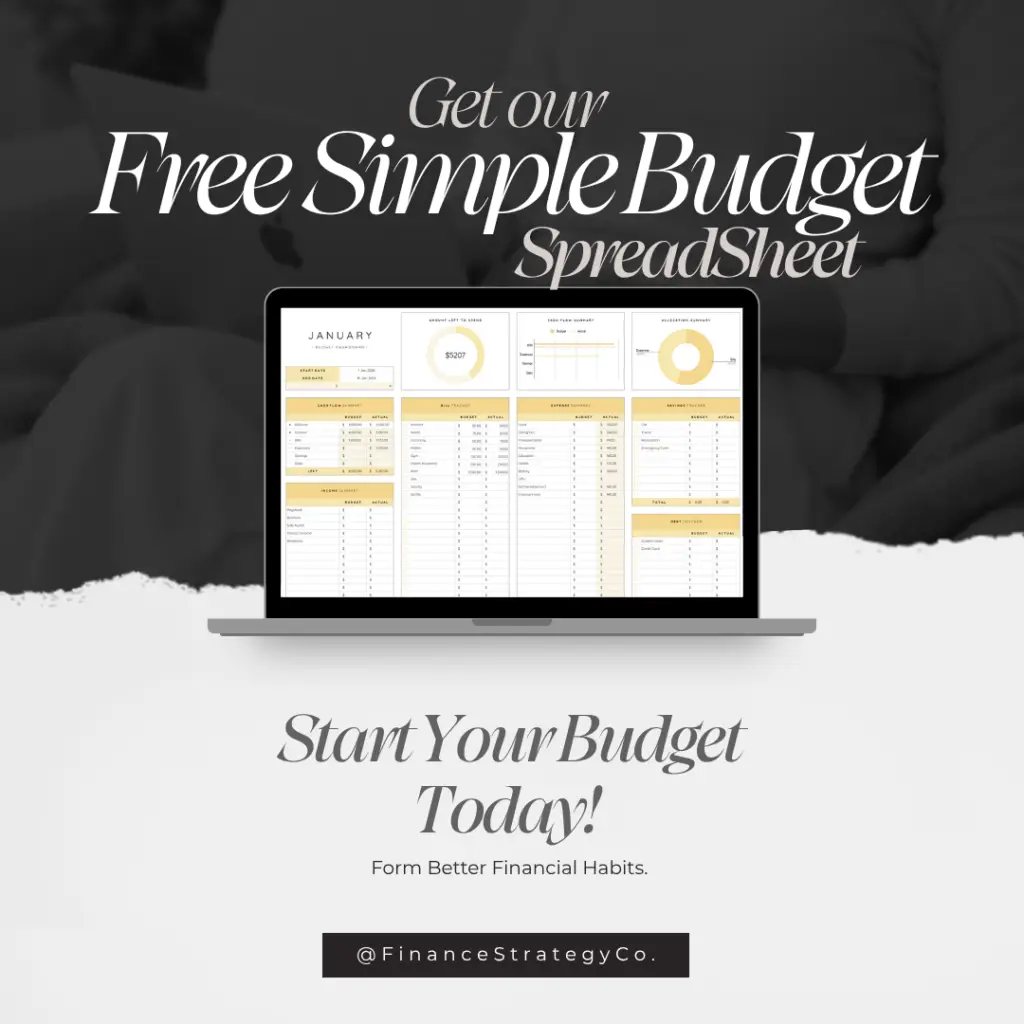
Finance Strategy Co. creates thoughtfully designed financial tools to help you organise your money, clarify your goals and build a financial system that fits your life.
Money management, elevated.