
Your money is limited. Your priorities are personal.
So why not make your spending reflect both?
There is a difference between spending less and spending well.
One asks:
“How can I reduce my expenses?”
The other asks:
“What is actually worth my money?”
And that second question can completely change the way you think about your finances.
Because a beautiful financial life isn’t necessarily one where you never spend.
It’s one where the money you do spend feels intentional.
Where you can enjoy a dinner with friends without guilt.
Book the holiday you’ve been planning for.
Invest in your health.
Create a beautiful home.
Buy back your time.
Save for your future.
And say no to the things that don’t add much value to your life.
This is the heart of intentional spending.
It isn’t about deprivation.
It is about direction.
What Does It Mean to Spend on What Matters Most?
Spending on what matters most means deliberately directing more of your money towards the people, experiences, priorities and goals that genuinely add value to your life.
It means recognising that not every expense deserves equal importance.
Some purchases might bring you genuine joy.
Others might make your life easier.
Some support your health, relationships or freedom.
Others may simply be habits you’ve never stopped to question.
The goal isn’t to eliminate the things you enjoy.
It’s to become more conscious of where your money is going, and whether those choices still make sense for the life you’re creating.
Tracking your spending is a useful first step because it shows you where your money is actually going and can reveal patterns, recurring expenses and opportunities to make different choices.
Think of your money as a reflection of your priorities.
What does yours currently say?
Your Budget Shouldn't Just Tell You What You Can't Spend
A budget is often treated like a list of restrictions.
No more takeaway.
No more shopping.
No more weekends away.
No more little luxuries.
But that’s not the kind of budgeting we believe in.
A budget should help you answer:
What do I want my money to make possible?
Your essentials matter.
Your financial security matters.
Your future matters.
But so does your life today.
A well-designed budget gives your money somewhere to go. It helps you understand your income and expenses, plan for savings and make adjustments as your circumstances and goals change.
Instead of asking yourself to spend as little as possible, try asking:
“If I could spend more on the things that genuinely matter to me, what would they be?”
That is where your strategy begins.

01 - Decide What Matters Most
Before changing your spending, define your priorities.
Not someone else’s.
Yours.
Your priorities might include:
- Family
- Travel
- Health
- Home
- Experiences
- Education
- Career
- Creativity
- Time
- Relationships
- Personal growth
- Security
- Freedom
- Generosity
- Adventure
- Wellness
- Building wealth
There is no universal answer.
Someone might happily spend $200 on a concert while someone else would rather put that money towards a weekend away.
Someone might value beautiful clothing.
Someone else might value having fewer possessions and more money invested for the future.
Neither is inherently better.
Your money strategy should reflect your life, not somebody else’s version of success.
02 - Look at Where Your Money Is Going Now
Before you decide where you want your money to go, look at where it is currently going.
Take the last one to three months of transactions and review them without judgement.
You are not looking for mistakes.
You’re looking for information.
Look for:
The things you love paying for
What expenses consistently make you feel happy, supported or fulfilled?
The things that make your life easier
Which purchases save you time, energy or stress?
The things that support your goals
Are you spending in ways that help you become healthier, more secure or closer to your goals?
The things you’ve simply become accustomed to
Some expenses remain in our lives simply because they’ve always been there.
The things you barely notice
Subscriptions, convenience spending, unused memberships and small recurring purchases can quietly add up.
Moneysmart recommends reviewing recent transactions, grouping spending into categories and looking for recurring expenses or subscriptions you no longer use.
This isn’t about finding everything you should cut.
It’s about discovering where you have choice.
03 - Find Your “Worth It” Spending
Here’s where intentional spending becomes personal.
Create a list called:
WORTH IT
Write down the things you’re genuinely happy to spend money on.
For example:
WORTH IT TO ME
- Travel
- Quality skincare
- Dinner with close friends
- Fitness
- Books
- Good coffee
- Experiences with family
- A comfortable home
- Convenience that saves me time
- Education
- Building my savings
- Investing for the future
Your list might look completely different.
And that’s the point.
Once you know what is worth it to you, spending decisions become easier.
You don’t have to debate every purchase.
You have a personal framework.
04 - Create Your “Not For Me” List
Now create the opposite.
NOT FOR ME
These are things you don’t particularly value—even if everyone else seems to.
Maybe it’s:
- Trend-based shopping
- Expensive nights out
- Constantly upgrading technology
- Certain subscriptions
- Status purchases
- Buying things because they’re on sale
- Keeping up with friends
- Spending money to impress other people
- Convenience purchases you don’t actually enjoy
There is enormous freedom in being able to say:
“That’s just not important to me.”
You don’t need to justify it.
You don’t need to feel like you’re missing out.
Your money doesn’t have to fund every lifestyle you admire.
It only needs to support the life you’re choosing.
05 - Give Your Priorities a Place in Your Budget
Knowing what matters isn’t enough.
Your priorities need somewhere to go.
This is where your budget becomes a strategy.
Instead of creating categories based only on bills and necessities, create categories that reflect your life.
For example:
ESSENTIALS
The expenses that keep your life running.
- Housing
- Groceries
- Utilities
- Transport
- Insurance
- Healthcare
FUTURE
The money that supports your future self.
- Emergency fund
- Savings
- Debt reduction
- Investing
- Financial goals
VALUES
The things that genuinely matter to you.
- Travel
- Health
- Education
- Family
- Experiences
- Home
JOY
The things that make everyday life enjoyable.
- Dining out
- Entertainment
- Hobbies
- Beauty
- Personal spending
- Fun money
The exact categories aren’t important.
The intention behind them is.
06 - Spend More on What Matters - Not Everything
Intentional spending doesn’t mean giving yourself permission to spend freely on every category.
That defeats the purpose.
Instead, think about your spending as a series of priorities.
You may decide:
More of this.
Less of that.
For example:
I want to spend more on travel, so I’ll reduce random online shopping.
I want to prioritise my health, so I’ll budget for fitness and reduce takeaway meals.
I want more financial freedom, so I’ll increase my savings contribution and reduce convenience spending.
I want more time, so I’ll intentionally spend on services that genuinely give me time back.
This is where spending becomes strategic.
You’re not simply cutting.
You’re reallocating.
07 - Stop Treating Every Purchase the Same
A $10 purchase and a $1,000 purchase don’t necessarily have the same impact on your life.
But neither does price automatically determine value.
A $15 book that changes how you think could be incredibly valuable.
A $300 purchase that sits unused might not be.
So instead of asking only:
“Can I afford this?”
Try asking:
- Will I actually use this?
- Does this support something I care about?
- Will I still value it in six months?
- Is this solving a real problem?
- Am I buying this because I want it—or because I’m influenced by someone else?
- Does this fit my current priorities?
- Would I rather put this money towards something else?
You don’t need to interrogate every coffee.
But for larger or repeated purchases, these questions can create a useful pause.
08 - Make Room for “Fun Money”
One of the easiest ways to make a budget unsustainable is to remove everything enjoyable.
Eventually, the restriction becomes exhausting.
And when the budget feels impossible, it’s much harder to stick with.
Instead, create space for enjoyment.
Call it:
Fun Money.
Lifestyle Money.
Personal Spending.
Joy.
Whatever feels right for you.
The amount doesn’t need to be huge.
The purpose is simply to acknowledge that enjoying your money is part of having a healthy relationship with it.
A sustainable financial strategy needs to account for real life, not an imaginary version of it where you never want anything.
09 - Protect the Things That Matter in the Future
Intentional spending isn’t only about enjoying your money today.
It’s also about protecting what matters tomorrow.
Your future priorities might include:
- An emergency fund
- A home deposit
- Becoming debt-free
- Investing
- Retirement
- Starting a business
- Taking a career break
- Travelling
- Supporting your family
- Creating more financial freedom
Give these goals a place in your financial plan.
Even small, consistent amounts can contribute towards a savings goal over time, and having a clear goal can make it easier to stay focused.
Because sometimes the most meaningful thing you can spend money on is future freedom.
10 - Learn the Difference Between Convenience and Value
Convenience isn’t bad.
In fact, spending money to save time can be incredibly valuable.
The question is:
Is this convenience actually improving my life?
Paying for something because it saves you meaningful time may be completely worthwhile.
Paying for convenience simply because you’re not paying attention may be another story.
For example:
A meal delivery service might give you back an hour on a busy evening.
A forgotten subscription might give you nothing.
A cleaner might give you back an entire afternoon.
Five unused apps might simply take money.
Intentional spending asks you to distinguish between the two.
Spend on convenience when it creates genuine value.

The “More of This, Less of That” Strategy
If you’re not sure where to begin, try this simple exercise.
Create two columns:
| MORE OF THIS | LESS OF THAT |
|---|---|
| Travel | Impulse shopping |
| Experiences | Unused subscriptions |
| Health | Convenience spending I don’t value |
| Savings | Random online purchases |
| Family time | Spending to keep up |
| Investing | Unplanned upgrades |
| Quality | Quantity |
Then ask:
What would happen if I redirected the money from the right-hand column towards the left?
You may not need to spend less overall.
You may simply need to spend differently.
Create Your Personal Spending Philosophy
Your spending philosophy is a set of personal principles that guide your financial decisions.
It might sound like:
I spend generously on experiences and relationships, intentionally on convenience, carefully on things I don’t value and consistently towards my future.
Or:
I prioritise health, freedom, travel and financial security. I don’t spend money to impress people or keep up with trends.
Or simply:
I spend on what adds value to my life and save for what creates freedom.
There is no perfect philosophy.
The best one is the one you can actually live by.
A Simple Rule for Intentional Spending
When you’re considering a purchase, try this:
PAUSE → PRIORITISE → PURCHASE
PAUSE
Give yourself a moment before buying.
Especially when the purchase is emotional, expensive or unexpected.
PRIORITISE
Ask:
Does this matter to me?
Does it support your values, goals, lifestyle or wellbeing?
PURCHASE
If the answer is yes, and it fits your financial plan, enjoy it.
No guilt.
No second-guessing.
No need to feel bad for spending money on something you intentionally chose.
Intentional spending should create confidence, not anxiety.
The 30-Minute “Spend on What Matters” Reset
Want to try this today?
Set aside 30 minutes.
Put your phone away.
Open your bank account and grab your budget.
Then work through these questions.
1. What do I value most right now?
Write down your top five.
2. Where is my money currently going?
Look at your recent transactions.
3. What spending genuinely brings value?
Circle the expenses you wouldn’t want to lose.
4. What spending no longer feels worthwhile?
Highlight subscriptions, habits and purchases you could reconsider.
5. What do I want more money for?
Choose one to three priorities.
6. What can I redirect?
Find spending that could move towards those priorities.
7. What will I change this month?
Choose one to three actions.
Not twenty.
Just a few meaningful changes.
Your Money Doesn't Need to Be Perfect
There will be months when you spend more than planned.
There will be birthdays.
Unexpected expenses.
Holidays.
Busy weeks.
Impulse purchases.
Life.
That’s okay.
Intentional spending isn’t about making every financial decision perfectly.
It’s about becoming more aware of your decisions over time.
Your budget should be flexible enough to accommodate real life.
As Moneysmart notes, your budget should be reviewed and adjusted when your income, expenses or goals change.
Think of your financial strategy as something you refine, not something you pass or fail.
The Quiet Luxury of Spending With Intention
There is something incredibly freeing about knowing what is worth your money.
You don’t have to buy everything.
You don’t have to keep up.
You don’t have to feel guilty every time you enjoy something.
You don’t have to spend less simply for the sake of spending less.
You can choose.
You can prioritise.
You can say no.
You can spend generously on the things you love while being more selective about everything else.
That is the beauty of intentional spending.
It’s not about having more money.
It’s about making more meaning from the money you already have.
The Finance Strategy Method™
At Finance Strategy Co., we believe your money should have direction.
That’s why intentional spending fits naturally within The Finance Strategy Method™:
KNOW
Understand where your money is currently going.
ORGANISE
Create a clear financial system.
PLAN
Decide what matters and give your goals a place in your budget.
BUILD
Use your money to strengthen your savings, financial security and wealth.
THRIVE
Create a financial life that supports the person, and the life, you actually want.
Because the ultimate goal isn’t simply to spend less.
It’s to create a financial system that gives you clarity, confidence and choice.
Your Money. Your Priorities. Your Life.
You don’t need to justify what matters to you.
You don’t need to follow someone else’s definition of a “good” financial life.
And you certainly don’t need to eliminate every enjoyable expense to be financially responsible.
Instead, get curious.
Look at your spending.
Identify what matters.
Protect your priorities.
Reduce what doesn’t.
And give your money a clear role in creating the life you want.
Because when your spending reflects your values, your budget becomes more than a financial document.
It becomes a reflection of your life.
And that is where money starts to feel less restrictive—and far more empowering.
Your money. Your strategy. Your future.
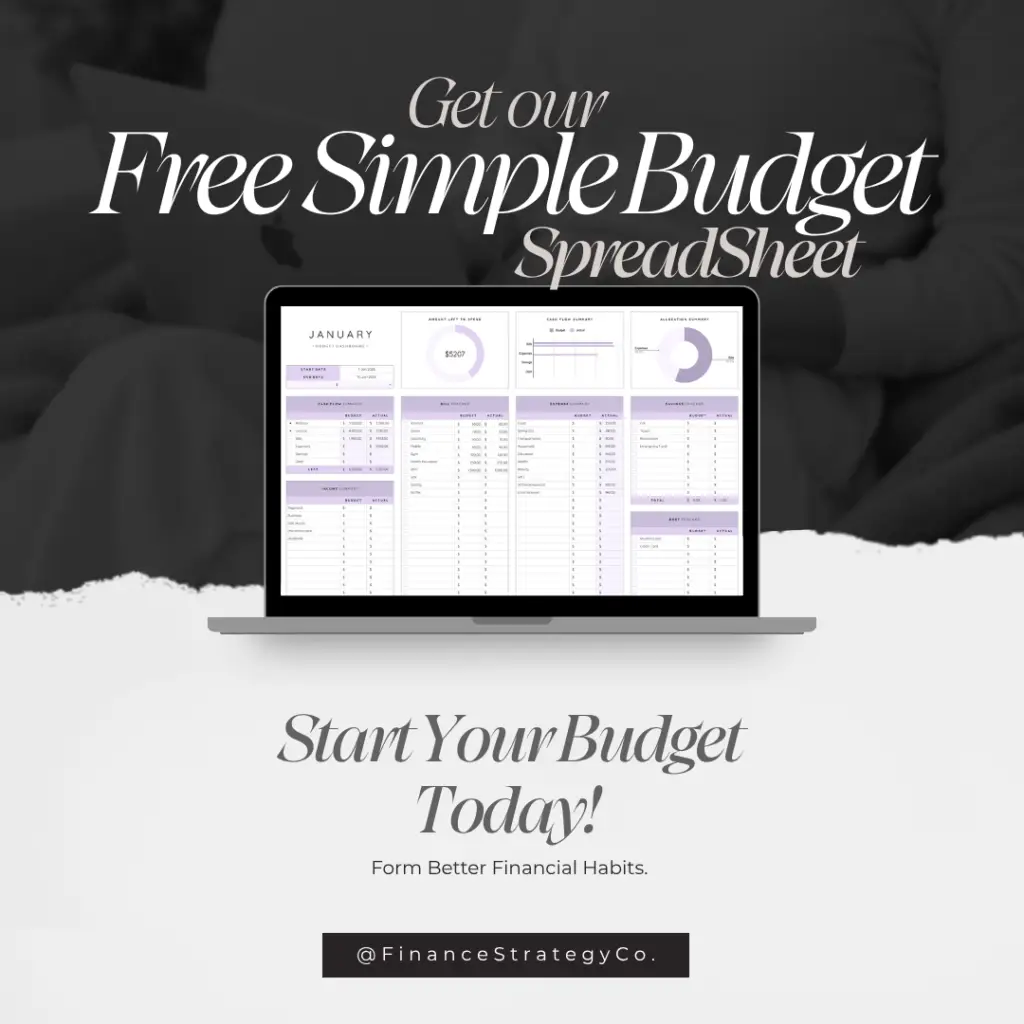
Ready to Build Your Strategy?
Finance Strategy Co. creates thoughtfully designed financial tools to help you organise your money, clarify your goals and build a financial system that fits your life.
Money management, elevated.