
Your spending tells a story.
The question is:
does it tell the story you want it to tell?
Every day, your money makes small decisions on your behalf.
Where you live.
What you eat.
How you spend your weekends.
The experiences you prioritise.
The things you buy.
The things you save for.
The future you’re building.
And yet, most of us don’t intentionally decide what that story should look like.
We spend because something is convenient.
Because everyone else is doing it.
Because we’ve always done it.
Because we’re tired.
Because it’s on sale.
Because we had a difficult week.
Because we deserve a treat.
None of these things make you bad with money.
They’re simply reminders that money decisions are rarely just about money.
They’re about emotions, priorities, habits, identity and the life we want to create.
That’s why one of the most powerful questions you can ask yourself isn’t:
“How can I spend less?”
It’s:
“Does the way I’m spending my money reflect what I actually value?”
Because when your money starts reflecting your values, budgeting feels less like restriction and more like alignment.
What Does It Mean to Spend According to Your Values?
Your values are the things that matter most to you.
They might include:
- Family
- Freedom
- Health
- Travel
- Experiences
- Security
- Creativity
- Education
- Home
- Community
- Time
- Adventure
- Beauty
- Relationships
- Personal growth
- Generosity
- Independence
There is no universal list.
Your values are yours.
And that’s important because your financial strategy shouldn’t look exactly like someone else’s.
Maybe someone else thinks financial success means owning a luxury car.
You might value having the freedom to work fewer hours.
Someone else might prioritise a large home.
You might prioritise travelling every year.
Someone else might spend heavily on fashion.
You might prefer spending on restaurants, concerts and experiences.
None of these choices are automatically right or wrong.
The question is:
Does your money reflect what matters to you?
Your Budget Is a Reflection of Your Priorities
A budget is often treated as a list of things you’re allowed to buy.
We see it differently.
A budget is a plan for what deserves your money.
When you create a budget, you’re deciding how your income will be divided between today’s needs, today’s enjoyment and tomorrow’s goals.
Moneysmart describes budgeting as a way to understand where your money goes and direct it towards what matters most, while also making room for savings and financial goals.
That means your budget can become a reflection of your values.
If health matters to you, perhaps your budget includes:
Health → gym, classes, quality food, preventative care
If travel matters:
Travel → dedicated holiday savings
If family matters:
Family → experiences, visits, gifts
If freedom matters:
Freedom → emergency savings, debt reduction, investing or a financial buffer
Your budget starts telling a different story.
Not:
“Here’s everything I can’t have.”
But:
“Here’s what I’m choosing to prioritise.”

01 - Discover What You Actually Value
Before changing your spending, get curious.
Ask yourself:
What makes me feel most fulfilled?
Think about the moments when you feel happiest, most energised or most like yourself.
What do I wish I had more time for?
This can reveal values that aren’t necessarily financial.
Maybe you want more time with your family.
More travel.
More creativity.
More rest.
More adventure.
What experiences do I never regret spending money on?
Look back at your purchases.
Which ones genuinely made your life better?
What do I spend money on that I barely notice?
These are often the areas where your money is quietly disappearing.
What would I happily spend more money on if I had more room in my budget?
This can reveal your priorities.
Your values don’t always need to be discovered through a personality quiz.
Your existing life already contains clues.
02 - Look at Where Your Money Is Actually Going
This is where honesty becomes useful.
Don’t look at your spending with judgement.
Look at it with curiosity.
Open your banking app.
Review your recent transactions.
Look at the last month—or even better, several months.
Group your spending into categories such as:
- Housing
- Groceries
- Transport
- Health
- Shopping
- Dining
- Entertainment
- Subscriptions
- Travel
- Personal
- Savings
- Debt
Moneysmart recommends reviewing bank transactions over several months because it can reveal regular and occasional costs, spending patterns, subscriptions and areas where small changes may be possible.
Then ask:
Does this spending reflect my values?
Not:
“Did I spend too much?”
That’s a very different question.
03 - Find Your "Values Spending"
Look for the expenses that genuinely make your life better.
Maybe you discover that you spend $150 a month on something you barely think about.
But you also realise that you would love to spend an extra $150 on weekend trips with your partner.
That’s your opportunity.
You’re not necessarily looking to eliminate $150 of spending.
You’re looking to redirect it.
This is the heart of intentional spending.
Take money away from what matters less and move it towards what matters more.
You aren’t necessarily spending less.
You’re spending better.
04 - Identify Your Money That Doesn't Reflect You
Now look at the other side.
What spending feels disconnected from your values?
Perhaps it’s:
- Shopping because you’re bored
- Subscriptions you don’t use
- Buying things because they’re discounted
- Convenience spending when you’re tired
- Keeping up with friends
- Impulse purchases
- Spending to relieve stress
- Buying things because social media made them seem essential
- Paying for services you no longer need
- Purchases you forget about almost immediately
This isn’t about labelling those purchases “bad.”
It’s about recognising patterns.
You might discover:
“I don’t actually care about this. I just keep spending money on it.”
That’s valuable information.
05 - Create Your Personal Money Values
Choose your top five financial values.
For example:
01 – FREEDOM
Having enough financial flexibility to make choices.
02 – EXPERIENCES
Prioritising travel, restaurants, concerts and memories.
03 – SECURITY
Building savings and protecting your future.
04 – HEALTH
Investing in physical and mental wellbeing.
05 – FAMILY
Using money to create time and experiences with the people you love.
Your list might look completely different.
That’s the point.
There is no perfect set of financial values.
There is only your set.
06 - Turn Values Into Money Decisions
This is where the exercise becomes practical.
It’s one thing to say:
“Travel is important to me.”
It’s another to create:
Travel Fund → $150 per fortnight
It’s one thing to say:
“Financial security matters.”
It’s another to create:
Emergency Fund → $100 per payday
It’s one thing to say:
“My health matters.”
It’s another to create:
Health → $80 per month
Values need somewhere to live inside your financial system.
Give them a budget category.
07 - Create a "More of This" List
Instead of only making a list of expenses you want to reduce, create a list of things you want more of.
For example:
MORE
Travel
Family dinners
Fitness
Savings
Experiences
Time
Education
LESS
Impulse shopping
Unused subscriptions
Convenience spending
Buying things out of boredom
Spending to impress others
Purchases I quickly forget
This creates a much more positive approach to budgeting.
You’re not building your financial life around deprivation.
You’re building it around intention.
08 - Stop Comparing Your Spending
One of the easiest ways to lose touch with your values is to compare your financial life with someone else’s.
Social media makes this incredibly easy.
Someone has the beautiful apartment.
Someone else travels constantly.
Someone drives the luxury car.
Someone wears designer clothes.
Someone eats at incredible restaurants every weekend.
And suddenly, you feel like you’re falling behind.
But here’s what you can’t see:
Their financial priorities.
You don’t know their income.
Their debt.
Their savings.
Their responsibilities.
Their goals.
Their financial support.
Their future plans.
And most importantly:
Their values aren’t necessarily yours.
Your money doesn’t need to look impressive to someone else.
It needs to make sense to you.
09 - Build a Budget Around Your Life
This is where a traditional budget can become a lifestyle budget.
Instead of starting with:
“What should I cut?”
Start with:
“What kind of life am I trying to create?”
Imagine your ideal ordinary week.
Not your fantasy life.
Your real life.
What does it include?
Maybe:
- A comfortable home
- Healthy meals
- Coffee with friends
- A weekly workout
- Occasional dining out
- A monthly day trip
- Annual travel
- Time with family
- Savings
- Financial security
Now look at your budget.
Does your money support that life?
If it doesn’t, that’s where the strategy begins.
10 - Create Your "Worth It" List
Not every expense needs to be analysed.
Some things are simply worth it to you.
Create a list.
Call it:
MY WORTH-IT LIST
For example:
Travel
Worth it.
Sunday brunch with friends
Worth it.
Quality skincare
Worth it.
Fitness classes
Worth it.
Books
Worth it.
Random online shopping
Not worth it.
Subscriptions I don’t use
Not worth it.
Buying something because it’s 30% off
Not worth it.
This gives you a personal filter.
When a purchase comes up, ask:
Does this belong on my “worth it” list?
If yes, enjoy it.
If not, pause.
11 - Create a "Not For Me" List
This is equally powerful.
Financial freedom isn’t only about knowing what you want.
It’s about becoming comfortable with what you don’t want.
Maybe:
Luxury cars aren’t important to me.
Designer clothing isn’t important to me.
Keeping up with trends isn’t important to me.
Having the newest phone isn’t important to me.
A huge house isn’t important to me.
There’s nothing wrong with wanting these things.
But there is something powerful about being able to say:
“That’s not where I want my money to go.”
Because every time you say no to something that doesn’t matter, you’re creating more space for something that does.
12 - Align Your Savings With Your Values
Your values shouldn’t only influence your spending.
They should influence your saving too.
Think about your future.
What matters to you?
Perhaps:
Security → Emergency Fund
Freedom → Financial Buffer
Travel → Holiday Fund
Home → Deposit Savings
Family → Family Experiences Fund
Future → Long-Term Wealth Building
Now your savings aren’t just sitting in an account.
They’re connected to something meaningful.
Moneysmart recommends setting clear savings goals and using a budget to work out how much you can regularly contribute towards them.
13 - Let Your Values Influence Your Lifestyle Inflation
Your income increases.
What happens next?
For many people, the answer is:
Everything gets more expensive.
A nicer car.
A bigger home.
More expensive restaurants.
More shopping.
More subscriptions.
More convenience.
But you don’t have to upgrade everything.
Instead, ask:
“If I earn more, what actually deserves more money?”
Maybe your answer is:
More travel.
Or:
More savings.
Or:
More freedom.
Or:
More time.
Or perhaps:
A little more of everything, but intentionally.
The point is to make lifestyle upgrades conscious decisions, not automatic ones.
14 -Give Your Money a "Freedom" Category
One of the most beautiful financial values is freedom.
Freedom can mean different things.
For one person, it might mean:
Leaving a job they don’t love.
For another:
Taking six months off to travel.
For another:
Having enough savings to handle an emergency.
For another:
Working fewer hours.
Your definition doesn’t need to look like anyone else’s.
But if freedom matters to you, give it a place in your financial system.
Create a:
Freedom Fund
It might be your emergency fund.
Your savings.
Your investments.
Your debt-reduction strategy.
Or a combination.
Because sometimes the most valuable thing money can buy isn’t another possession.
It’s options.
15 - Review Your Values Regularly
Your values can change.
What mattered to you five years ago might not matter now.
Maybe you used to prioritise nightlife.
Now you value travel.
Maybe you used to care about having the latest technology.
Now you care about saving for a home.
Maybe you used to prioritise career progression.
Now you value time.
That’s normal.
Your financial strategy should evolve with you.
A regular financial review gives you the opportunity to ask:
What matters to me now?
Is my money supporting it?
What has changed?
What no longer deserves as much money?
What deserves more?
Moneysmart also recommends reviewing and adjusting your budget as your income, expenses and goals change.

The Values-Based Budget
Let’s turn everything into a simple framework.
ESSENTIALS
What must your money cover?
Housing.
Food.
Utilities.
Transport.
Insurance.
Health.
Debt commitments.
VALUES
What matters most to you?
Travel.
Family.
Health.
Experiences.
Freedom.
Education.
Home.
Creativity.
FUTURE
What are you building?
Emergency savings.
Financial goals.
Debt reduction.
Investments.
Long-term wealth.
JOY
What do you genuinely enjoy spending money on?
Restaurants.
Coffee.
Fashion.
Entertainment.
Hobbies.
Beauty.
Experiences.
The exact categories don’t matter.
What matters is that your budget reflects your actual life.
Your Finance Strategy: Know → Organise → Plan → Build → Thrive
This is where your values-based spending fits beautifully into the Finance Strategy Method™.
KNOW
Understand where your money is going.
ORGANISE
Create categories and systems that make your money easier to manage.
PLAN
Decide what matters most.
BUILD
Direct your money towards your goals, savings and future.
THRIVE
Use your money to create a life that feels aligned, meaningful and intentional.
Your values aren’t separate from your financial strategy.
They are the reason for it.
The 30-Minute Money Values Reset
Want to try this today?
Set aside 30 minutes.
Minutes 1–5: Write Your Values
Choose five things that matter most to you.
Minutes 6–10: Review Your Spending
Look at your recent transactions.
Minutes 11–15: Find the Disconnects
Where is your money going that doesn’t reflect your values?
Minutes 16–20: Find the Alignment
Which expenses genuinely support the life you want?
Minutes 21–25: Redirect
Choose one or two expenses you could reduce and redirect the money elsewhere.
Minutes 26–30: Create One New Rule
For example:
“I will automatically save $100 every payday towards travel.”
Or:
“I will no longer keep subscriptions I don’t use.”
Or:
“I will budget for experiences before I spend on impulse purchases.”
One small change can begin shifting your entire financial system.
Questions to Ask Before You Spend
The next time you’re about to make a purchase, try asking:
Does this support something I value?
Would I choose this if nobody else could see it?
Will this make my life meaningfully better?
Am I buying this because I want it—or because I’m bored, stressed or influenced?
Would I rather have this or put the money towards something else?
Does this purchase fit the life I’m trying to build?
You don’t need to ask these questions about every $5 purchase.
But when something feels questionable, pause.
A little awareness can change a lot.
You Don't Need to Spend Less. You Need to Spend With Intention.
This is perhaps the biggest misconception about intentional spending.
It isn’t about becoming the person who spends the least.
It’s about becoming the person who knows why they spend.
Someone who spends $5,000 on travel and barely shops might be spending according to their values.
Someone who spends $5,000 on clothing might be doing exactly the same thing.
The number isn’t the whole story.
The alignment is.
Your financial life doesn’t have to look minimalist.
It doesn’t have to look luxurious.
It doesn’t have to look like anyone else’s.
It simply needs to feel like you.
Money Is a Tool for the Life You Want
Money isn’t the destination.
It’s the tool.
It can provide security.
It can create experiences.
It can buy back time.
It can create opportunities.
It can support the people you love.
It can help you build something meaningful.
It can give you choices.
And when your spending, saving and financial goals reflect your values, money starts becoming much more than a series of transactions.
It becomes a reflection of the life you’re intentionally creating.
Your Money, Your Values, Your Life
You don’t need to completely overhaul your finances today.
Start with one question:
What matters most to me?
Then look at your money.
Where is it supporting that?
Where isn’t it?
What could change?
Maybe the answer is reducing one expense.
Maybe it’s increasing your savings.
Maybe it’s creating a new category.
Maybe it’s spending more on something you genuinely love.
Maybe it’s simply giving yourself permission to stop spending money on things you don’t care about.
There is no perfect answer.
Because this isn’t about creating the perfect budget.
It’s about creating a financial life that feels like your own.
Your money should support your values.
Your values should influence your strategy.
And your strategy should help create the life you want to live.
Your money doesn’t need more rules.
It needs a strategy.
Your money. Your strategy. Your future.
Ready to Make Your Money Work With You?
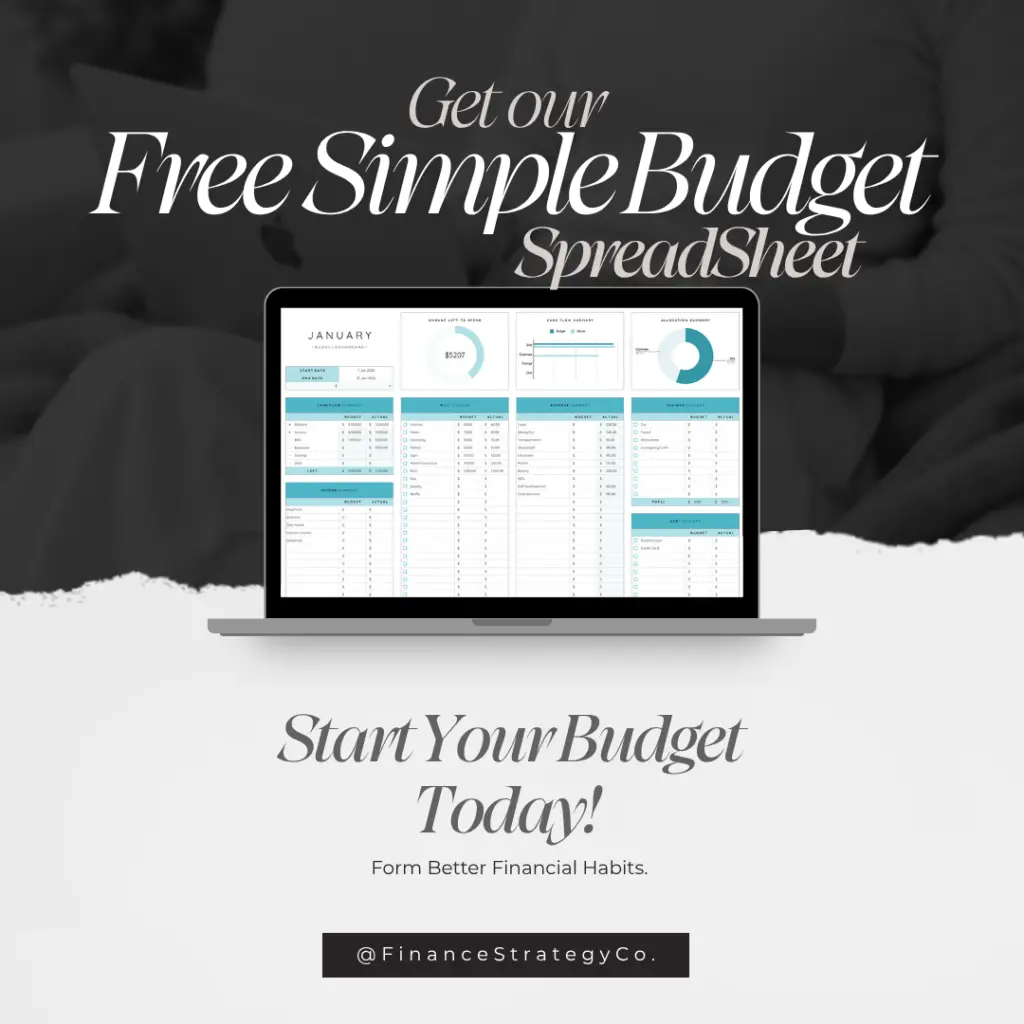
Your financial system should make intentional spending and saving easier.
Explore the Finance Strategy Co. collection of thoughtfully designed budgeting, savings and financial planning tools created to help you organise your money, track your goals and build a strategy that fits your lifestyle.
Money management, elevated.