
Saving money sounds simple.
Decide on an amount. Put it aside. Repeat.
The easiest way to save more money isn’t necessarily to become more disciplined. It’s to make saving happen before you have the chance to spend it.
Yet, in real life, saving can quickly become the thing that happens if there’s anything left over.
Bills arrive.
Groceries cost more than expected.
A weekend away appears.
You buy something you’ve been wanting.
And suddenly, the money you intended to save has disappeared into everyday life.
This is why automation can be such a powerful part of your financial strategy.
Instead of relying on motivation, memory or willpower, you create a system that moves money for you.
You decide once. Your system keeps going.
And that is the beauty of automated saving.
What Does It Mean to Automate Your Savings?
Automating your savings simply means setting up a recurring transfer so that money moves into your savings account automatically.
For example:
Payday → $100 automatically moves to savings → remaining money stays available for bills and spending.
You don’t have to remember.
You don’t have to make the decision every week.
You don’t have to wait until the end of the month to see what’s left.
The saving happens as part of your normal financial routine.
Moneysmart recommends automatic transfers as a way to make saving easier and more consistent, including scheduling transfers into a separate savings account when you get paid.
And this is an important distinction:
Automation isn’t about giving up control of your money.
It’s about designing your money system so it works with less effort.
Why Automated Saving Works
Think about all the financial decisions you make throughout the week.
What should I buy?
Can I afford this?
Should I save this month?
Should I transfer money into savings?
Can I afford dinner?
Should I move money back?
The more decisions you have to make, the easier it becomes to fall back into old habits.
Automation removes one of those decisions.
You don’t have to repeatedly ask:
“Should I save?”
You’ve already decided.
That makes saving less emotional and more routine.
Over time, your savings habit can become almost invisible.
And that’s exactly what you want.
Your financial system should do some of the work for you.

01 - Decide What You're Saving For
Before automating anything, give your savings a purpose.
Saving without a reason can feel abstract.
Saving for something meaningful feels very different.
Your goal could be:
- Your first $1,000
- An emergency fund
- A holiday
- A home deposit
- A new car
- Annual expenses
- A financial buffer
- A future opportunity
- A larger wealth-building goal
Your goal doesn’t need to be complicated.
It simply needs to answer:
“Why am I putting this money aside?”
Moneysmart recommends setting a clear savings goal because knowing what you’re working towards can help you determine how much you need to save and how long it may take.
02 - Work Out How Much You Can Actually Save
This is where your budget becomes important.
Don’t choose an amount because it sounds impressive.
Choose an amount that fits your actual life.
Start by looking at:
Income
What comes in?
Essential expenses
What has to go out?
Debt repayments
What commitments do you have?
Lifestyle spending
What do you normally spend on food, entertainment, shopping and experiences?
Irregular expenses
What costs don’t happen every week or month?
Once you’ve looked at the full picture, decide what amount feels sustainable.
Maybe it’s:
$10 a week.
$25 a week.
$50 a fortnight.
$100 a week.
There is no universal number.
A smaller amount that happens consistently can be more useful than a large amount you can’t maintain.
Moneysmart recommends choosing a savings amount and schedule that fit your day-to-day circumstances and adjusting the plan as your income, expenses or priorities change.
03 - Choose Your Savings Frequency
You can automate your savings around the way you’re paid.
Weekly
Ideal if you’re paid weekly or prefer smaller, more frequent transfers.
Example:
$25 × 52 weeks = $1,300
Fortnightly
A natural option if you’re paid every two weeks.
Example:
$100 × 26 fortnights = $2,600
Monthly
Useful if your income and major expenses are structured monthly.
Example:
$300 × 12 months = $3,600
The numbers are simply examples.
The best frequency is the one that fits naturally into your cash flow.
Make the system fit your life, not the other way around.
04 - Save on Payday
One of the simplest strategies is to schedule your savings transfer for payday.
Your money arrives.
Your savings transfer happens.
Then you manage the rest.
This is often easier than waiting until the end of the pay cycle.
Because if you leave your savings sitting in your everyday account, it can start to feel available.
And available money has a tendency to get spent.
Think of your savings as a bill you pay to your future self.
Not because saving is a punishment.
Because your future deserves a financial contribution too.
Moneysmart suggests setting up a regular transfer to your savings account on payday, and also notes that some employers may be able to split your pay so part goes directly to savings.
05 - Keep Savings Separate
Your savings account doesn’t need to sit beside your everyday spending money.
In fact, separating them can make your system easier to manage.
You might have:
EVERYDAY
For groceries, coffee, shopping and everyday spending.
BILLS
For regular financial commitments.
SAVINGS
For your financial goals.
EMERGENCY
For unexpected expenses.
The exact structure is personal.
You don’t need ten different accounts.
You simply want enough separation that you know what each dollar is supposed to do.
Moneysmart recommends separate accounts as a way to make savings easier to track and reduce the temptation to dip into them for everyday spending.
06 - Give Every Savings Account a Name
This might seem unnecessary.
It isn’t.
Compare:
Savings Account
with:
Emergency Fund
Holiday 2027
Home Deposit
Future Me
Financial Freedom
A specific name creates a psychological boundary.
It reminds you that this money has a purpose.
You aren’t looking at $2,000 sitting in an account.
You’re looking at:
$2,000 protecting your future.
That can make it easier to leave the money alone.
07 - Create Multiple Automated Goals
Once you’ve mastered one automated savings transfer, you can build from there.
For example:
Payday
↓
$100 → Emergency Fund
$75 → Holiday Fund
$50 → Annual Expenses
$25 → Future Goal
Suddenly, your money is moving towards several priorities without you needing to manually manage each one.
But don’t overcomplicate this.
If four accounts make your finances feel more organised, use four.
If two accounts work beautifully, use two.
The best financial system is the one you can actually maintain.
08 - Try the "Pay Yourself First" Method
You’ve probably heard the phrase:
Pay yourself first.
The concept is simple.
Rather than paying everyone else and saving whatever happens to remain, you intentionally direct some of your income towards your future first.
For example:
Income: $2,000
↓
$200 → Savings
↓
$1,800 → Bills + Lifestyle
The percentage will depend entirely on your circumstances.
The important part is creating the habit.
You’re making saving part of your financial structure rather than treating it as an afterthought.
09 - Use Round-Ups as a Bonus
Some banks offer savings features that round your purchases up to the nearest dollar or another amount and transfer the difference into savings.
For example:
You spend $7.40.
Your transaction is rounded to $8.00.
The additional $0.60 moves into savings.
It might seem tiny.
But small amounts can accumulate.
Moneysmart currently lists round-ups as one option for making saving automatic, where your bank offers the feature.
Just remember:
Round-ups should complement your savings strategy, not replace it.
Your main automated contribution should still do the heavy lifting.
10 - Automate Your Windfalls
Automation doesn’t have to be limited to your regular pay.
You can create rules for unexpected money too.
For example:
50% of bonuses → savings
50% → lifestyle or another goal
Or:
Tax refund → emergency fund
Or:
Money from selling unwanted items → holiday fund
The percentage isn’t the important part.
The important part is having a plan before the money arrives.
Otherwise, unexpected money can disappear surprisingly quickly.
11 - Make Your Savings Harder to Access
Your emergency savings should be accessible when you genuinely need it.
But your everyday spending money doesn’t need instant access to every dollar you’re saving.
Depending on your circumstances, a separate savings account can create useful friction.
You see the balance.
You know it’s there.
But it’s not sitting in the account you use for your morning coffee or weekend shopping.
When choosing a savings account, consider the interest rate, fees, access conditions and any requirements attached to bonus interest. Moneysmart recommends comparing these features rather than looking at the headline interest rate alone.
Make saving easy. Make unnecessary spending slightly less easy.
12 - Check Your Automation
“Set and forget” doesn’t mean never look at it again.
Your financial life changes.
Your income may change.
Your rent or mortgage may change.
Bills can increase.
Your goals can change.
Your priorities can change.
So review your automated savings regularly.
A simple monthly check-in could ask:
Is this amount still realistic?
Am I saving enough for my current goals?
Have my priorities changed?
Do I need another savings category?
Can I increase my savings?
Do I need to temporarily reduce it?
Moneysmart recommends reviewing and adjusting savings plans as circumstances change.
Your system should evolve with your life.

What If You Don't Have Much Money to Save?
This is where we want to remove the pressure.
You don’t need to start with $500 a month.
You don’t need to save 20% of your income.
You don’t need to completely transform your lifestyle.
Start with what is realistic.
$5.
$10.
$20.
Small amounts still create the habit.
And once the system exists, you can increase it when your circumstances allow.
You could start with:
$10 per payday.
Then later increase it to:
$20.
Then:
$50.
Then perhaps:
$100.
Your financial strategy doesn’t need to begin at its final destination.
It simply needs to begin.
What If Your Income Is Irregular?
Automating savings can look different when your income changes from week to week.
Instead of choosing an amount that may become difficult during a lower-income period, you could:
- Set a smaller base transfer
- Save a percentage of each payment
- Make additional transfers during higher-income periods
- Save a portion of bonuses or extra income
- Review the amount regularly
For example:
5% of every payment → Savings
This allows the savings habit to move with your income.
The key is making the system flexible enough to work during both strong and quieter periods.
Your Automated Savings System
Let’s bring everything together.
KNOW
Understand your income, expenses and current savings capacity.
ORGANISE
Separate everyday spending from savings.
PLAN
Choose your goals and decide how much you want to contribute.
BUILD
Automate your transfers and make saving consistent.
THRIVE
Review your system and gradually increase your savings as your circumstances allow.
KNOW → ORGANISE → PLAN → BUILD → THRIVE
This is the Finance Strategy Method™.
And automated savings fit beautifully into the BUILD stage.
Your 15-Minute Savings Setup
Want to automate your savings today?
Set aside 15 minutes.
Minute 1–3: Choose your goal
What are you saving for?
Minute 4–6: Choose your amount
What can you realistically save?
Minute 7–9: Choose your account
Where will the money live?
Minute 10–12: Set the transfer
Choose your payday or preferred transfer date.
Minute 13–15: Name your goal
Give the account a name that reminds you what you’re building.
Then you’re done.
You don’t need a complicated spreadsheet.
You don’t need a perfect budget.
You need a system.
The Beauty of Money on Autopilot
Imagine getting paid and knowing that part of your income is already taking care of your future.
You don’t have to think about it.
You don’t have to debate it.
You don’t have to remember it.
It’s simply happening.
That is the quiet power of automation.
Your financial progress doesn’t need your attention every single day.
It needs a good system.
And once the system is working, your job becomes much simpler:
Check in. Adjust when needed. Keep going.
Saving Should Feel Like Progress, Not Punishment
At Finance Strategy Co., we don’t believe saving should mean removing every enjoyable part of your life.
You can save and still enjoy your money.
You can build an emergency fund and go out for dinner.
You can save for your future and take the holiday.
You can work towards wealth and still spend on the things that matter to you.
The goal isn’t to make your life smaller.
It’s to make your money more intentional.
Automation simply helps you make those intentions real.
Start Small. Automate. Keep Going.
You don’t need to wait until you’re earning more.
You don’t need to wait until your budget is perfect.
You don’t need to wait for the “right time.”
Choose an amount that works.
Set the transfer.
Give the money a purpose.
Then let the system do its job.
Because saving doesn’t have to be something you constantly think about.
The best savings strategy may be the one that quietly happens in the background while you get on with your life.
And that is what financial strategy is really about.
Less stress.
More clarity.
Better systems.
More choice.
Your money doesn’t need more rules.
It needs a strategy.
Your money. Your strategy. Your future.
Ready to Make Your Money Work Around Your Life?
Your financial system should make intentional spending and saving easier.
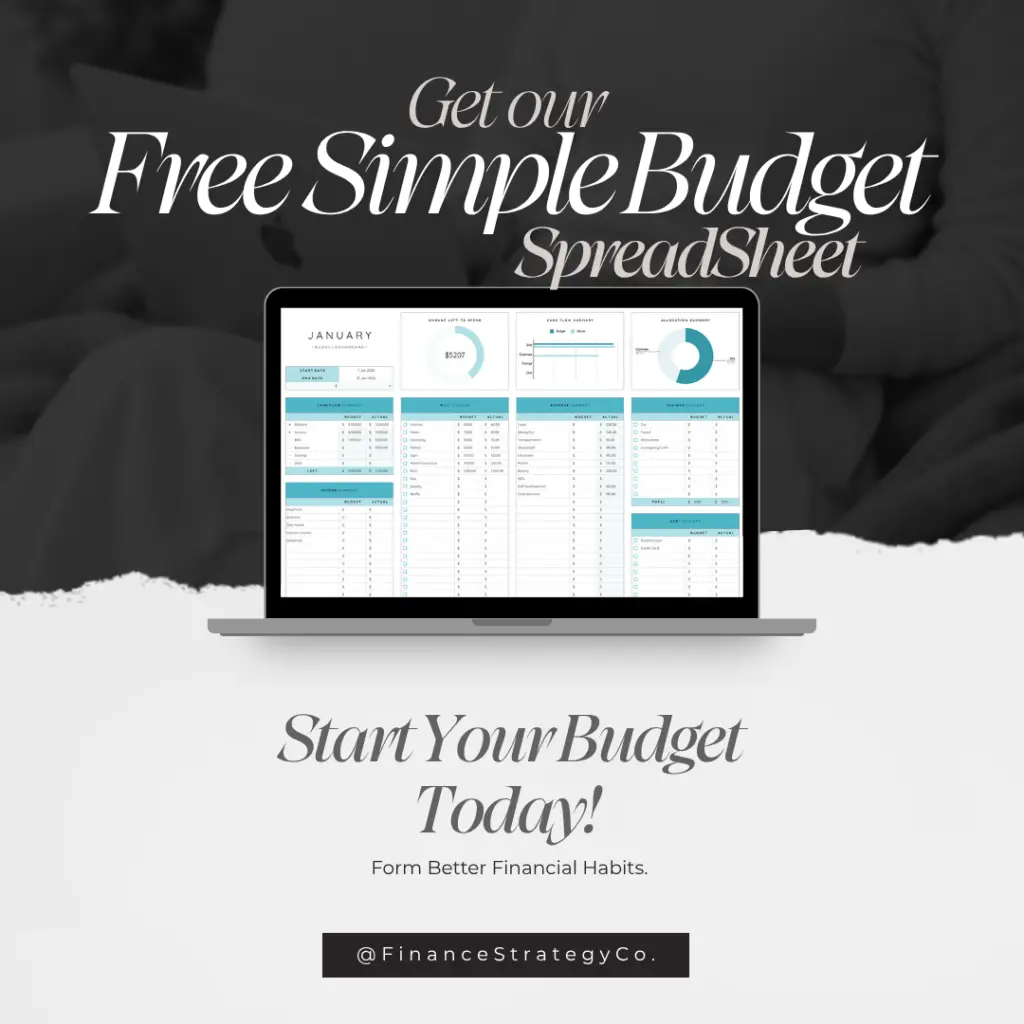
Explore the Finance Strategy Co. collection of thoughtfully designed budgeting, savings and financial planning tools created to help you organise your money, track your goals and build a strategy that fits your lifestyle.
Money management, elevated.