
Saving money shouldn't mean creating a life you don't enjoy.
There is a certain kind of financial advice that tells you to stop buying coffee.
Cancel every subscription.
Never eat out.
Stop shopping.
Say no to holidays.
Cut every little luxury.
Save everything you possibly can.
And while reducing unnecessary spending can certainly help your finances, there is a problem with this approach.
It can make saving feel like punishment.
And a financial strategy that makes you miserable isn’t likely to be sustainable.
At Finance Strategy Co., we believe you shouldn’t have to choose between enjoying your life today and building a better financial future.
You can do both.
You can save.
You can spend.
You can enjoy beautiful experiences.
You can work towards meaningful goals.
And you can still build financial security.
The secret isn’t spending nothing.
It’s spending intentionally.
Saving Money Isn't About Saying No to Everything
Let’s change the way we think about saving.
Saving isn’t:
“I can’t have that.”
It’s:
“What matters more to me?”
Imagine you have $200 available for discretionary spending.
You could spend it on several small purchases that you barely remember a month later.
Or you could put it towards something you’re genuinely excited about.
Perhaps it’s:
- Your next holiday
- A home deposit
- A new car
- An emergency fund
- A beautiful piece you’ve been planning for
- A special experience
- Greater financial freedom
The point isn’t that one choice is better than the other.
The point is that you get to choose.
Intentional spending gives your money meaning.
The Problem With Extreme Saving
Extreme saving can work in the short term.
But for many people, completely removing the things they enjoy isn’t sustainable.
Eventually, restriction creates frustration.
Frustration creates impulsive spending.
And impulsive spending can lead to guilt.
Then comes another attempt to restrict spending.
And the cycle begins again.
Sustainable financial habits require room for real life.
Your budget should include the things that make your life enjoyable.
Because the goal isn’t to become someone who never spends money.
The goal is to become someone who knows why they’re spending it.

01 Decide What You Actually Value
Before cutting expenses, ask yourself:
What do I genuinely enjoy spending money on?
Maybe it’s travel.
Maybe it’s restaurants.
Maybe it’s fashion.
Maybe it’s your home.
Maybe it’s beauty.
Maybe it’s fitness.
Maybe it’s experiences with family and friends.
Maybe it’s your morning coffee.
There is no universally correct answer.
Your priorities are personal.
Choose the things that bring genuine value to your life.
Then give those things a place in your financial strategy.
02 - Create Your “Worth It” List
This is one of my favourite ways to make saving feel less restrictive.
Create three categories:
ALWAYS WORTH IT
Things you consistently love and genuinely value.
SOMETIMES WORTH IT
Things you enjoy but don’t need regularly.
NOT WORTH IT
Things you often buy without feeling much satisfaction afterwards.
For example:
ALWAYS WORTH IT
A beautiful dinner with friends.
SOMETIMES WORTH IT
A new outfit for a special occasion.
NOT WORTH IT
Random online purchases that sit unused.
This simple exercise helps you identify where your money actually brings value.
Spend more intentionally on what you love.
Spend less automatically on what you don’t.
03 - Stop Budgeting for Your “Perfect” Life
Your budget should reflect your real life.
Not the version of yourself who cooks every meal from scratch.
Never goes out.
Never buys anything unexpected.
Never travels.
Never has a busy week.
That person probably doesn’t exist.
Instead, build your budget around your actual lifestyle.
If you enjoy dining out, include it.
If you have regular social events, account for them.
If you like buying clothes, create a clothing budget.
If you travel, create a travel fund.
A realistic budget is easier to follow than a perfect one.
04 - Create a Lifestyle Fund
Instead of feeling guilty every time you spend money on something enjoyable, give it a designated place in your budget.
Call it whatever feels right:
Lifestyle Fund
Fun Money
Personal Spending
Enjoyment Fund
The Life Fund
The name doesn’t matter.
The principle does.
You have money specifically allocated for enjoyment.
Once you’ve decided how much you’re comfortable spending, you can use it without the same level of financial uncertainty.
Planned enjoyment feels very different from impulsive spending.

05 - Try the “One Thing In, One Thing Out” Rule
This can be useful for shopping.
Before purchasing something new, ask:
What am I adding?
And:
What could I remove?
For example:
Buy a new pair of shoes?
Consider donating or selling a pair you no longer wear.
Buying a new beauty product?
Finish something you already own first.
Buying another home item?
Ask whether you genuinely have space for it.
This doesn’t mean you can never own more.
It simply introduces a moment of intention before purchasing.
Consumption becomes more conscious.
06 - Introduce a 48-Hour Pause
Not every purchase needs a waiting period.
But for larger non-essential purchases, a pause can be incredibly useful.
Before buying, ask:
Do I still want this?
Can I afford it comfortably?
Does it fit my financial priorities?
Would I still buy it if it weren’t on sale?
Will I still value it in six months?
Give yourself 24 or 48 hours.
Sometimes you’ll still want it.
Great.
If it fits your budget and priorities, you can make the purchase intentionally.
Other times, you’ll realise you didn’t really want it.
The goal isn’t to stop spending.
It’s to stop spending automatically.
07 - Make Your Savings Goals Visible
Saving can feel restrictive when the money you’re putting away feels like it’s simply disappearing.
Give it a purpose.
Instead of:
Savings: $5,000
Try:
European Holiday: $5,000
Or:
Home Deposit: $20,000
Or:
Financial Freedom Fund: $10,000
Seeing the reason behind your savings makes the sacrifice feel smaller.
You’re not simply putting money away.
You’re buying yourself future options.
08 - Use Sinking Funds for the Things You Love
Some expenses feel “unexpected” because we don’t plan for them.
Birthdays.
Christmas.
Holidays.
Concerts.
Annual memberships.
Special occasions.
Beauty appointments.
Home projects.
Instead of allowing these expenses to disrupt your budget, create sinking funds.
For example:
TRAVEL
$150 per month
CHRISTMAS
$50 per month
PERSONAL
$75 per month
HOME
$100 per month
The amounts will depend on your circumstances.
The principle is simple:
Plan for the things you know you want to enjoy.

09 - Find Your Financial Leaks
Saving money doesn’t always require major lifestyle changes.
Sometimes it’s about identifying small expenses that don’t actually add value.
Look at:
- Forgotten subscriptions
- Unused memberships
- Frequent takeaway
- Convenience purchases
- Online shopping
- Duplicate services
- Automatic renewals
- Purchases made from boredom
Ask yourself:
“Would I choose this expense again today?”
If the answer is no, consider removing it.
The easiest expense to cut is often the one you don’t value.
10 - Upgrade Your Spending Instead of Simply Cutting It
This is where saving becomes more interesting.
Instead of asking:
“How can I spend less?”
Ask:
“How can I get more value from the money I spend?”
For example:
Instead of buying five inexpensive items you don’t really need, save for one quality item you’ll genuinely enjoy.
Instead of eating out multiple times because you’re tired, plan one dinner somewhere you really want to go.
Instead of constantly buying small home décor pieces, save for one piece you absolutely love.
Spend with intention.
Not simply with restraint.
11 - Create a “Luxury Without the Price Tag” List
Luxury doesn’t always mean spending more.
Sometimes luxury is:
A slow morning.
A beautifully organised home.
Cooking your favourite meal.
Fresh flowers.
A long walk.
A library visit.
A home spa evening.
A picnic.
A beautiful playlist.
A quiet afternoon.
Time with people you love.
The feeling of luxury often comes from intention and experience, not simply price.
You don’t need to spend more money to make your life feel richer.
12 - Give Yourself Permission to Spend
This might sound strange in an article about saving money.
But it’s important.
If you’ve budgeted for something, you don’t need to feel guilty about spending it.
If you’ve allocated $150 for personal spending and you spend the full $150 on something you genuinely value, that’s not failure.
That’s your strategy working.
Money is a tool.
It’s not a scorecard.
The goal isn’t to end every month having spent as little as possible.
The goal is to use your money in a way that reflects your priorities.
13 - Create a “Guilt-Free Spending” Category
If you constantly feel guilty whenever you spend money, create a designated guilt-free category.
Choose an amount that fits comfortably within your financial strategy.
Then give yourself permission to spend it.
No overthinking.
No guilt.
No post-purchase regret.
Just intentional enjoyment.
The only rule?
Stay within the amount you’ve chosen.
This creates a healthy boundary between planned enjoyment and impulsive spending.
14 - Make Saving Automatic
The easiest way to save without feeling deprived is to make saving happen before you have the opportunity to spend the money.
Where appropriate, automate transfers into your savings accounts.
For example:
Payday → Savings → Bills → Lifestyle → Everything else
Your exact order will depend on your circumstances.
But the principle is simple.
Don’t rely on willpower.
Build a system.
When saving happens automatically, you don’t have to make the decision every week.
15 - Celebrate Your Progress
Saving money can become exhausting if you’re constantly focused on what you haven’t achieved yet.
Pause and acknowledge your progress.
Saved your first $500?
Celebrate.
Reached $1,000?
Celebrate.
Paid off a debt?
Celebrate.
Reached your holiday fund target?
Celebrate.
Built your emergency fund?
Celebrate.
Celebration doesn’t have to mean spending money.
It can simply mean acknowledging the achievement.
You are building something.
Give yourself credit for it.

The “Save More, Live Well” Strategy
Here’s a simple framework to bring everything together.
1. SAVE FIRST
Automate your savings where appropriate.
2. COVER YOUR ESSENTIALS
Make sure your core expenses are accounted for.
3. FUND YOUR FUTURE
Contribute towards meaningful financial goals.
4. SPEND ON WHAT YOU LOVE
Give your lifestyle priorities a place in your budget.
5. CUT WHAT YOU DON’T VALUE
Remove spending that doesn’t contribute to your life.
6. REVIEW REGULARLY
Adjust your strategy as your circumstances change.
This creates balance.
You’re not choosing between saving and living.
You’re creating a financial system that allows you to do both.
How to Save Money Without Feeling Miserable
If you’re constantly thinking:
“I can’t buy that.”
“I can’t go there.”
“I can’t afford anything.”
Your strategy probably needs a rethink.
Instead, try:
“What can I comfortably afford?”
“What matters most to me?”
“What can I plan for?”
“What am I willing to spend less on?”
“What am I happily saving for?”
These questions shift your mindset from restriction to choice.
And choice is powerful.
Your Money Doesn't Need to Be Perfect
Some months you’ll save more.
Some months you’ll save less.
Some months you’ll have unexpected expenses.
Some months you’ll spend more than planned.
That’s life.
Your financial strategy needs flexibility.
A successful money strategy isn’t one that survives a perfect month.
It’s one that can adapt to a real one.
Don’t abandon your financial plan because one month didn’t go perfectly.
Adjust.
Reset.
Continue.
Your “No Deprivation” Money Rules
Create your own personal rules for balanced spending.
For example:
RULE ONE
I save automatically every payday.
RULE TWO
I spend intentionally on the things I genuinely value.
RULE THREE
I don’t buy something simply because it’s on sale.
RULE FOUR
I plan for larger purchases.
RULE FIVE
I budget for enjoyment.
RULE SIX
I review my subscriptions regularly.
RULE SEVEN
I don’t compare my lifestyle to someone else’s.
Your rules might look completely different.
Your financial strategy should reflect your values.

Your Save Without Deprivation Checklist
☐ Identify what you genuinely value
☐ Create a realistic lifestyle budget
☐ Set meaningful savings goals
☐ Automate your savings
☐ Create sinking funds
☐ Review your subscriptions
☐ Identify financial leaks
☐ Introduce a waiting period for larger purchases
☐ Create a guilt-free spending category
☐ Prioritise quality over mindless consumption
☐ Track your savings progress
☐ Celebrate your milestones
☐ Review your strategy monthly
The Real Secret to Saving More
The secret isn’t becoming incredibly disciplined.
It’s creating a financial system where your money naturally moves towards what matters.
When your savings are automated…
When your goals are visible…
When your spending reflects your values…
When your lifestyle is included in your budget…
When your future has a place in your financial plan…
Saving becomes easier.
You’re no longer constantly fighting yourself.
You’re simply following your strategy.
Saving Is Not About Having Less
This is the mindset shift I want you to remember.
Saving money isn’t about creating a smaller life.
It’s about creating a more intentional one.
You’re deciding:
What deserves your money.
What doesn’t.
What matters today.
What matters tomorrow.
What you want to experience.
What you want to build.
And what kind of financial future you want to create.
That isn’t deprivation.
That’s choice.
Your Money. Your Strategy. Your Life.
At Finance Strategy Co., we don’t believe you need to sacrifice everything you love to become financially successful.
We believe your money should support your life.
KNOW.
Understand where your money is going.
ORGANISE.
Create a system that makes your finances easier to manage.
PLAN.
Give your savings and spending a purpose.
BUILD.
Create financial security and work towards your goals.
THRIVE.
Enjoy the life you’ve intentionally built.
That’s the Finance Strategy Method™.
And that’s what thoughtful money management looks like.
The Luxury of Intentional Spending
There is a certain freedom that comes from no longer feeling guilty about every purchase.
You know what you’re saving for.
You know what you’re spending on.
You know what’s important.
You know what’s unnecessary.
And you know that your financial decisions are connected to something bigger.
You don’t need to spend less on everything.
You simply need to spend less on what doesn’t matter so you can spend more intentionally on what does.
That is how you save money without feeling deprived.
And that is how you build a financial life that feels secure, intentional and beautifully yours.
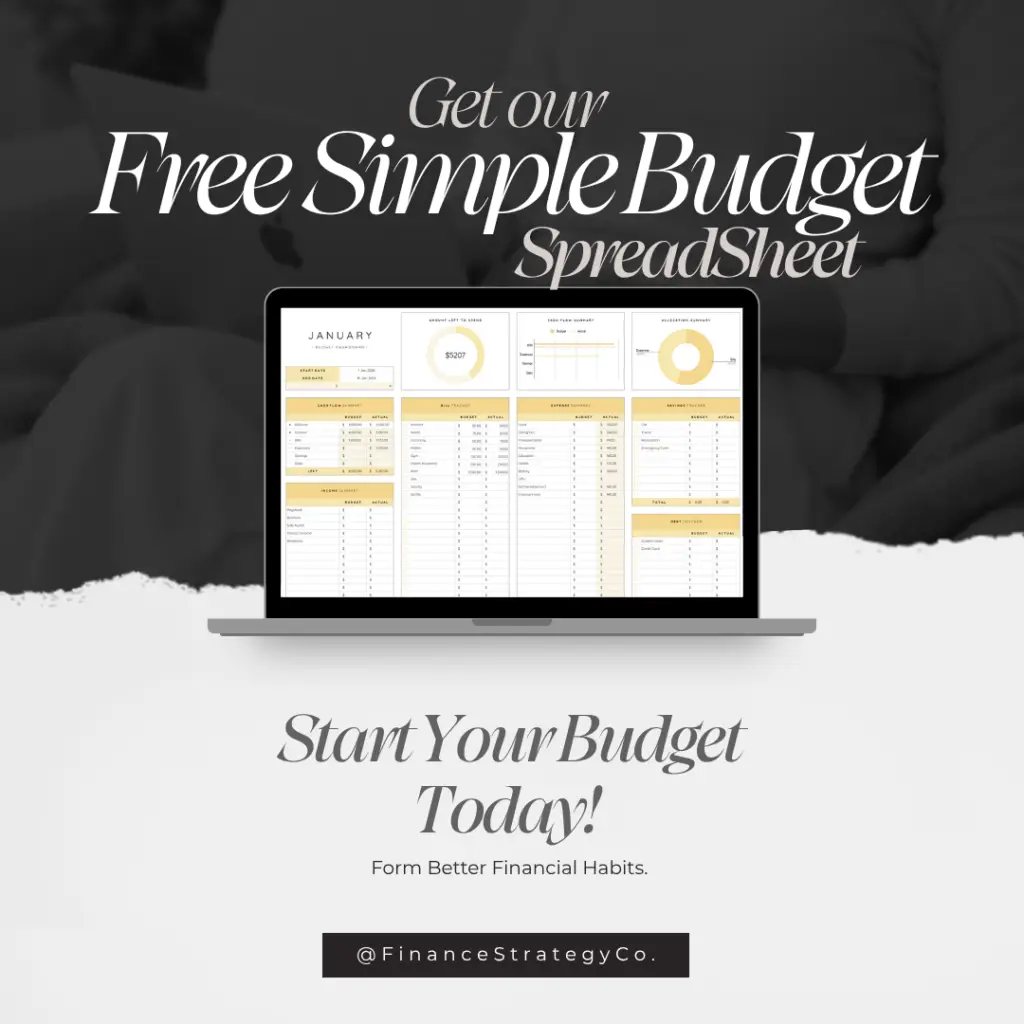
Ready to Make Your Money Work Around Your Life?
Your financial system should make intentional spending and saving easier.
Explore the Finance Strategy Co. collection of thoughtfully designed budgeting, savings and financial planning tools created to help you organise your money, track your goals and build a strategy that fits your lifestyle.
Money management, elevated.