

Not everything deserves your money. And that's not a limitation, it's freedom.
There is a question we don't ask often enough when it comes to money:
“Is this actually worth it to me?”
Instead, we tend to ask:
Can I afford it?
Is it on sale?
Does everyone else have one?
Will I regret not buying it?
Do I deserve it?
But affordability and value aren’t the same thing.
You can technically afford something and still decide it isn’t worth your money.
You can also spend more on something and know, without hesitation, that it was absolutely worth it.
That is the difference between spending money and spending intentionally.
At Finance Strategy Co., we believe your money should support the life you’re actually trying to create.
That means learning to recognise what deserves your money, and becoming comfortable letting the rest go.
Because financial confidence isn’t about saying no to everything.
It’s about knowing what you’re saying yes to.
What Does “Worth It” Actually Mean?
Something being worth the money doesn’t necessarily mean it is cheap.
And it doesn’t necessarily mean it lasts forever.
Something can be worth it because it:
- Makes your life easier
- Saves you meaningful time
- Supports your health
- Strengthens your relationships
- Creates an experience you’ll remember
- Helps you reach a goal
- Gives you genuine joy
- Supports your values
- Improves your everyday life
- Creates greater freedom
- Protects your future
Worth is personal.
A $30 purchase could be completely unnecessary for one person and incredibly valuable to another.
There is no universal list of what is “worth buying.”
There is only what is worth buying to you.
The Problem With “Good” and “Bad” Spending
Personal finance content can sometimes make spending sound very black and white.
Good spending.
Bad spending.
Needs.
Wants.
Essential.
Unnecessary.
But real life is much more nuanced.
A takeaway dinner might be unnecessary, but it could also be a meaningful evening with friends.
A cleaner might be a luxury, but it could give someone valuable time back.
A holiday might not be essential, but it could be one of the experiences they value most.
A new laptop might feel expensive, but it could support someone’s career.
The question isn’t simply:
“Do I need this?”
A better question is:
“What value does this bring to my life?”
Budgeting can help you understand where your money goes and decide which areas matter most to you, rather than simply treating every discretionary expense the same.
Start With What Matters to You
Before deciding whether something is worth spending money on, you need to understand your priorities.
What are you actually trying to create?
Perhaps you value:
- Freedom
- Family
- Travel
- Health
- Security
- Experiences
- Time
- Home
- Education
- Career
- Creativity
- Personal growth
- Relationships
- Adventure
- Comfort
- Financial independence
- Building wealth
Your priorities become your filter.
If travel is incredibly important to you, spending money on a holiday may feel worthwhile.
If travel isn’t important to you, the same expense might feel completely unnecessary.
Neither person is wrong.
Your money should reflect your priorities, not somebody else’s.
The “Worth It” Test
Before making a purchase, run it through these five questions.
1. Does it matter to me?
Would I genuinely miss this if I didn’t have it?
2. Does it improve my life?
Does it create joy, convenience, comfort, health, connection or another meaningful benefit?
3. Will I actually use it?
A great deal isn’t a great deal if it ends up unused.
4. Does it fit my current priorities?
Does this purchase support the life you’re currently building?
5. Would I choose it again?
If you had the money in your account today, knowing what you know now, would you make the same decision?
If the answer is yes, that’s useful information.
If the answer is no, that’s useful information too.
There is no shame in either answer.
Don't Confuse Price With Value
One of the biggest spending traps is believing that expensive equals valuable.
It doesn’t.
And cheap doesn’t automatically equal smart.
A $20 item you never use is money wasted.
A $200 purchase you use every week for years might be incredibly valuable.
Consider cost per use.
For example:
A $300 pair of shoes worn 100 times costs approximately $3 per wear.
A $40 pair worn twice costs $20 per wear.
The more important question isn’t:
“How much does this cost?”
It’s:
“How much value am I likely to get from this?”
Of course, cost per use isn’t the only measure of value, but it can be a useful way to think beyond the initial price tag.

Ask Yourself What You're Really Buying
Sometimes we’re not buying the product.
We’re buying what we think the product will make us feel.
Confidence.
Success.
Belonging.
Excitement.
Relief.
Status.
A fresh start.
A sense of control.
This is especially important when shopping emotionally.
Before buying, ask:
“What am I hoping this purchase will give me?”
If the answer is something emotional, pause.
You may still decide to buy it.
But you’ll be making a more conscious decision.
And sometimes you’ll discover that what you actually wanted wasn’t the purchase at all.
The Difference Between Wanting Something and Valuing It
You can want something without it being worth the money.
And you can deeply value something without wanting to spend much money on it.
For example:
You might really want a new outfit because you saw it on social media.
But you may value financial security more.
You might want to upgrade your phone.
But you may value travelling more.
You might want another home décor purchase.
But you may value becoming debt-free more.
This doesn’t mean you can never buy the things you want.
It simply means you have a hierarchy of priorities.
And that hierarchy gives your money direction.
Create Your Personal “Worth It” List
This is one of the simplest exercises you can do.
Take a piece of paper and write:
MY MONEY IS WORTH SPENDING ON…
Complete the sentence.
Perhaps your list looks like:
- Travel
- Quality food
- Fitness
- Family experiences
- Skincare
- Books
- My home
- Education
- Time-saving services
- Hobbies
- Good coffee
- Saving for my future
Now look at it.
Does your current spending reflect this list?
If it does, wonderful.
If it doesn’t, you’ve just found an opportunity.
You may not need to spend less.
You may need to redirect.
Create Your “Not Worth It” List
Now create the opposite.
I DON’T NEED TO SPEND MONEY ON…
Maybe yours includes:
- Trends I don’t actually like
- Things I already own
- Unused subscriptions
- Purchases made from boredom
- Things I buy because they’re discounted
- Items I buy to keep up with other people
- Convenience I don’t genuinely value
- Purchases that don’t fit my lifestyle
- Things I rarely use
This list isn’t about declaring these purchases “bad.”
It’s about recognising:
“This isn’t where I want my money to go.”
That distinction matters.
Learn Your Personal Spending Triggers
Sometimes the problem isn’t knowing what’s worth it.
It’s that we spend before we have time to think.
Ask yourself:
When am I most likely to make purchases I later regret?
Is it:
- When you’re stressed?
- When you’re bored?
- Late at night?
- After scrolling social media?
- When you’ve had a difficult day?
- When you’re celebrating?
- When you’re comparing yourself to others?
- When something is on sale?
- When you feel like you “deserve” a treat?
Once you know your triggers, you can create a pause.
For example:
“I don’t buy non-essential items immediately after seeing them online.”
Or:
“Anything over $100 gets a 24-hour pause.”
Or:
“If I want something because I’m upset, I’ll wait until tomorrow.”
You aren’t taking away your choice.
You’re protecting it.

Beware of the “Sale” Trap
Something being discounted doesn’t automatically make it worth buying.
If you spend $80 on something you didn’t need because it was reduced from $120, you haven’t saved $40.
You’ve spent $80.
A discount only creates value if the item was already something you wanted, needed or genuinely valued.
Try asking:
“Would I buy this at full price?”
If the answer is no, the discount may be doing the convincing for you.
Convenience Can Be Worth It
We often talk about convenience spending as though it is automatically wasteful.
But convenience can be valuable.
The key is determining whether it actually improves your life.
Maybe paying for grocery delivery saves you an hour every week.
Maybe a cleaner gives you back your Saturday.
Maybe buying lunch occasionally means you can stay focused during an exceptionally busy workday.
Maybe a meal kit reduces the mental load of planning dinner.
There is nothing inherently wrong with spending money to make life easier.
Ask:
“What am I getting back in return?”
If the answer is meaningful time, energy or peace of mind, the expense may be worth it.
Spend on Experiences That Matter to You
Experiences can be some of the most meaningful things we spend money on.
Travel.
Concerts.
Birthdays.
Weekend trips.
Family adventures.
Dinner with friends.
Classes.
Events.
But even here, intentionality matters.
You don’t need to say yes to every invitation.
You can choose the experiences that genuinely matter.
Maybe you’d rather take one meaningful holiday than five expensive weekends you barely remember.
Maybe you’d rather have dinner with three close friends than attend every social event.
More experiences doesn’t necessarily mean a richer life.
Meaningful experiences do.
Spend on Your Time
Your time is one of the few resources you can never get back.
That makes time an important part of the spending conversation.
Ask:
“Does this purchase give me time back?”
Maybe it does.
But be specific.
If you’re spending $50 to save an hour, is that hour actually valuable to you?
Could you use it to:
- Rest?
- Spend time with family?
- Work?
- Exercise?
- Create?
- Sleep?
- Do something you genuinely enjoy?
If yes, the expense might be worthwhile.
Sometimes the most valuable thing your money can buy isn’t an object.
It’s time.
Spend on Your Health and Wellbeing
Your health is another area where “worth it” can look different from person to person.
You might value:
- Gym membership
- Personal training
- Healthy food
- Therapy or professional support
- Preventative healthcare
- Quality sleep
- Outdoor activities
- Rest
- Wellness experiences
The goal isn’t to spend endlessly on wellness.
It’s to identify which investments genuinely support your wellbeing.
A $150 gym membership isn’t valuable if you never go.
A $20 walking routine might be.
Value comes from the impact, not the price tag.
Spend on Quality When Quality Matters
Sometimes paying more makes sense.
But not always.
Before choosing the cheaper option, ask:
“Will I actually use this enough for quality to matter?”
For things you use frequently, quality can sometimes provide greater long-term value.
Think:
- Everyday shoes
- Work equipment
- Mattresses
- Kitchen essentials
- Technology
- Tools
- Clothing staples
But don’t turn “quality” into an excuse for unnecessary luxury.
The goal isn’t:
Buy the most expensive.
It’s:
Buy what is appropriate for your needs and worth the money to you.
Protect Your Future While Enjoying Your Present
One of the most important parts of intentional spending is balance.
Your future deserves your money too.
Savings can help you work towards meaningful goals and create a financial buffer. Moneysmart recommends setting clear savings goals and working out what you can realistically save based on your income and expenses.
So before spending everything available today, consider:
What does my future self need?
Maybe it’s:
- Emergency savings
- A home deposit
- Debt reduction
- Investing
- Retirement
- A business
- A career break
- Travel
- Financial independence
You don’t have to choose between today and tomorrow.
Your financial strategy should make room for both.
The “Worth It” Matrix
When you’re unsure about a purchase, place it into one of four categories.
| High Value | Low Value | |
|---|---|---|
| High Cost | Consider carefully | Usually reconsider |
| Low Cost | Easy intentional yes | Watch the accumulation |
High cost + high value
These purchases deserve planning.
A holiday.
A course.
A quality piece of furniture.
A major health expense.
A significant experience.
High cost + low value
Pause.
These are the purchases most likely to interfere with your financial goals without giving you much in return.
Low cost + high value
These can be some of life’s greatest joys.
A coffee with a friend.
A favourite book.
A walk followed by breakfast.
A hobby.
Low cost + low value
These are worth watching.
One might not matter.
But repeated small purchases can accumulate into meaningful spending. Tracking your spending can help reveal these patterns.
The “Would I Rather?” Question
Here’s one of my favourite spending questions:
“Would I rather spend this money on this-or something else?”
Imagine you have $200.
You could spend it on:
Option A: several small purchases you may forget about.
Option B: put it towards a weekend away.
Option C: add it to a savings goal.
Option D: invest in something that genuinely improves your everyday life.
None is automatically right.
But comparing the options reveals your priorities.
Sometimes you don’t need to know whether something is “worth it.”
You simply need to know whether it is more worth it than the alternative.
Create a Personal Spending Philosophy
Once you’ve done this exercise a few times, you can create your own spending philosophy.
Something like:
“I spend generously on experiences, intentionally on convenience, thoughtfully on quality and consistently towards my future.”
Or:
“I prioritise health, travel, relationships and financial security. I don’t spend to impress people or keep up with trends.”
Or:
“I buy fewer things, but choose things I genuinely value.”
Your philosophy becomes your financial compass.
It helps you make decisions without needing to reinvent your budget every time you want to buy something.
The Goal Isn't to Spend Less
This is perhaps the most important message in this entire article.
The goal isn’t always to spend less.
Sometimes the goal is to:
Spend better.
Spend more on the things you love.
Spend less on things you don’t.
Spend intentionally on convenience.
Spend thoughtfully on quality.
Spend generously on experiences that matter.
Spend consistently on your future.
Spend without comparison.
Spend without guilt.
Spend with awareness.
That’s what intentional money management looks like.
The 30-Minute “Is It Worth It?” Money Reset
Ready to find out what deserves more of your money?
Set aside 30 minutes.
MINUTES 1–5: Define Your Values
Write down your five most important priorities.
MINUTES 6–10: Review Your Spending
Look through your recent transactions.
MINUTES 11–15: Circle the Winners
Identify purchases that genuinely added value.
MINUTES 16–20: Find the Noise
Highlight spending that didn’t feel worthwhile.
MINUTES 21–25: Create Your Lists
Write your:
WORTH IT
and
NOT FOR ME
lists.
MINUTES 26–30: Redirect
Choose one expense you can reduce or remove.
Then decide where that money could go instead.
Savings.
Travel.
Health.
Debt.
Investing.
Experiences.
Your future.
Don’t just cut it. Give it a new purpose.
The Finance Strategy Method™
At Finance Strategy Co., we believe financial strategy isn’t about controlling every dollar.
It’s about knowing what each dollar is helping you create.
KNOW
Understand your spending patterns.
ORGANISE
Create a clear picture of your money.
PLAN
Decide what matters most.
BUILD
Direct money towards savings, financial security and wealth.
THRIVE
Use your money to create a life that feels aligned with who you are.
Because once you know what matters, spending becomes simpler.
You don’t need hundreds of rules.
You need a few principles that actually belong to you.
The Quiet Luxury of Knowing What's Worth It
There is a quiet confidence that comes from knowing your priorities.
You don’t have to buy something because everyone else has it.
You don’t have to feel guilty about spending on something you genuinely love.
You don’t have to chase every sale.
You don’t have to justify your choices.
You simply know:
This matters to me.
And:
This doesn’t.
That clarity is powerful.
Because when you stop spending money trying to keep up with everything, you have more capacity to invest in the things that actually make your life yours.
Your money becomes quieter.
More intentional.
More personal.
And ultimately, more useful.
Your Money Should Reflect What You Value
You work for your money.
You save it.
You plan with it.
You make choices because of it.
So let it support something meaningful.
Don’t ask yourself only:
“Can I afford this?”
Ask:
“Is this worth my money?”
And then go one step further:
“Is there something else this money could do for me that matters more?”
That is where intentional spending begins.
Not with restriction.
Not with guilt.
Not with perfection.
With clarity.
Your money doesn’t need to fund everything.
It needs to fund what matters most to you.
Your money. Your strategy. Your future.
Ready to Build Your Strategy?
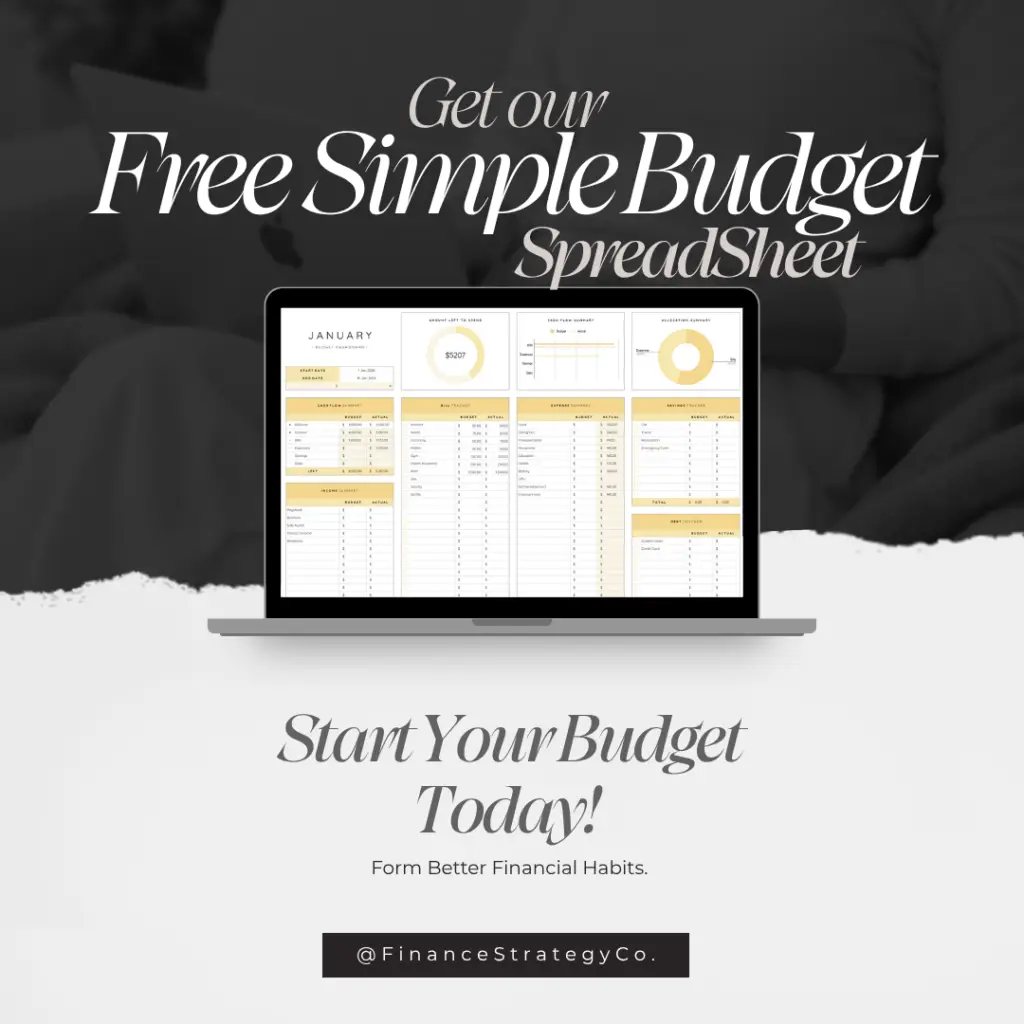
Finance Strategy Co. creates thoughtfully designed financial tools to help you organise your money, clarify your goals and build a financial system that fits your life.
Money management, elevated.