

You don't need perfect finances. You need a strategy that works for your life.
There is a quiet misconception about being “good with money.”
That you should always stick to your budget.
Never overspend.
Never make an impulse purchase.
Save every month.
Invest consistently.
Avoid debt.
Track every dollar.
Make the perfect financial decision every time.
And if you don’t?
You must be doing something wrong.
But what if that’s not what being good with money actually means?
What if financial confidence isn’t about perfection at all?
What if it’s about knowing what matters to you, understanding your money and having a strategy that allows you to make intentional decisions, even when life doesn’t go according to plan?
At Finance Strategy Co., we believe money management should feel empowering, not punishing.
Because your financial life is not a test you have to pass.
It’s a strategy you get to create.
Perfection Isn't the Goal
Let’s be honest.
Life isn’t predictable.
Unexpected expenses happen.
Plans change.
Income changes.
Priorities evolve.
Sometimes you spend more than expected.
Sometimes you save less than you wanted.
Sometimes you make a financial decision you later reconsider.
That’s life.
Being good with money doesn’t mean never making a mistake.
It means learning from your decisions and continuing to move forward.
A missed savings goal doesn’t erase months of progress.
One expensive weekend doesn’t destroy your financial future.
An imperfect month doesn’t mean your budget has failed.
Progress doesn’t require perfection.
What Does It Actually Mean to Be Good With Money?
Being good with money isn’t about having the biggest savings account.
It isn’t about earning the highest income.
It isn’t about owning the most investments.
And it certainly isn’t about looking financially perfect from the outside.
Being good with money can simply mean:
You know where your money is going.
You understand your priorities.
You spend intentionally.
You prepare for the future.
You make informed decisions.
You learn from your mistakes.
You have a plan for your goals.
You regularly check in with your finances.
It’s about awareness, not perfection.
Your Money Should Work for Your Life
A budget that looks perfect on paper but makes you miserable isn’t necessarily a successful budget.
Imagine creating a budget where:
You can’t enjoy dinner with friends.
You can’t travel.
You can’t buy something you genuinely value.
You constantly feel guilty about spending.
You feel restricted every time you open your bank account.
Technically, you might be “sticking to the plan.”
But is the plan actually supporting your life?
A financial strategy should create structure without taking away your ability to live.
The Difference Between Restriction and Intention
There is a powerful difference between saying:
“I can’t afford that.”
and:
“That’s not where I want to spend my money.”
The first can feel restrictive.
The second is intentional.
Intentional money management isn’t about constantly telling yourself no.
It’s about deciding what deserves a yes.
Your money becomes a reflection of your priorities.
You Are Allowed to Enjoy Your Money
This deserves to be said clearly.
Spending money isn’t automatically bad.
Buying a coffee isn’t a financial failure.
Going to dinner isn’t irresponsible.
Taking a holiday isn’t a waste.
Buying something beautiful isn’t automatically unnecessary.
The question is:
“Does this spending align with what matters to me?”
If it does, enjoy it.
If it doesn’t, reconsider it.
Financial confidence means being able to spend without constantly questioning your worth or your choices.
The Guilt Cycle
Many people fall into a cycle that looks like this:
Overspend
↓
Feel guilty
↓
Create an extremely restrictive budget
↓
Feel deprived
↓
Give up
↓
Overspend again
↓
Feel guilty
And the cycle continues.
The solution isn’t necessarily a stricter budget.
It may be a more realistic one.
Create a Budget You Can Actually Live With
Your budget should account for your real life.
Not your imaginary perfect life.
Include:
Bills
Groceries
Transport
Debt repayments
Savings
Investments
Entertainment
Socialising
Personal spending
Experiences
A sustainable budget has room for life.

Build a “Joy” Category
One way to make your budget more sustainable is to intentionally allocate money towards things you enjoy.
Call it whatever feels right:
Lifestyle
Fun Money
Joy
Personal
Experiences
Guilt-Free Spending
The name doesn’t matter.
The principle does.
Give yourself permission to enjoy money within the boundaries of your strategy.
Your Budget Doesn't Need to Be Perfect Every Month
Some months will be more expensive.
Perhaps it’s someone’s birthday.
Maybe you have car repairs.
You might take a holiday.
Perhaps Christmas arrives.
Your annual insurance is due.
Your circumstances change.
Your budget should be flexible enough to absorb real life.
This is where sinking funds can be particularly useful.
Instead of treating predictable annual expenses as emergencies, you can prepare for them ahead of time.
Progress Looks Different in Different Seasons
Your financial priorities won’t always stay the same.
There may be a season where you’re focused on:
Paying down debt.
Then a season where you’re focused on:
Building savings.
Then:
Buying a home.
Then:
Investing.
Then:
Travelling.
Then:
Preparing for retirement.
Your strategy can evolve as your life evolves.
You don’t have to use the same financial system forever.
Stop Comparing Your Financial Journey
One of the fastest ways to lose confidence with money is comparison.
You see someone who:
Owns a home.
Has investments.
Travels constantly.
Drives a luxury car.
Runs a successful business.
Has a large savings account.
And suddenly your own financial progress feels inadequate.
But you don’t know their complete financial picture.
You are comparing your behind-the-scenes to someone else’s highlight reel.
Your financial strategy should be based on:
Your income
Your responsibilities
Your goals
Your priorities
Your values
Your timeline
Your money journey belongs to you.
Financial Success Has No Universal Timeline
There is no rule saying you should:
Own a home by a certain age.
Have a particular net worth by 30.
Have investments by 25.
Be debt-free by 35.
Retire by 50.
Life doesn’t work that neatly.
Your starting point matters.
Your circumstances matter.
Your priorities matter.
Stop measuring your financial life against someone else’s timeline.

Mistakes Are Information
Made a purchase you regret?
Instead of thinking:
“I’m terrible with money.”
Ask:
“What can this teach me?”
Perhaps you discovered:
You spend more when you’re stressed.
You need a better grocery budget.
You weren’t planning for annual expenses.
You tend to shop when you’re bored.
You underestimated how much you spend socially.
Every financial mistake can become useful information.
Your Financial System Should Be Forgiving
A good financial system shouldn’t collapse because you overspent by $100 one month.
It should allow you to adjust.
Maybe you:
Reduce discretionary spending next week.
Move money between categories.
Use a sinking fund.
Delay a purchase.
Revisit your savings target.
Flexibility is a strength.
The Finance Strategy Method™
This is exactly why Finance Strategy Co. is built around:
KNOW → ORGANISE → PLAN → BUILD → THRIVE
You don’t need to be perfect at every stage.
KNOW
Understand where your money is going.
ORGANISE
Create structure around your finances.
PLAN
Give your money direction.
BUILD
Work towards your savings, debt and wealth goals.
THRIVE
Create a financial life that supports the person you want to become.
It’s a process, not a performance.
Know Your Numbers Without Obsessing Over Them
Financial awareness is important.
But you don’t need to spend every waking moment checking your bank account.
Create a simple rhythm.
Perhaps:
WEEKLY
A quick check-in on spending.
MONTHLY
Review your budget and financial goals.
QUARTERLY
Review your savings, debt and progress.
ANNUALLY
Review your broader financial strategy.
Consistency matters more than constant monitoring.
Create Financial Systems Instead of Relying on Willpower
Willpower is unreliable.
Systems are easier to maintain.
Instead of saying:
“I’ll remember to save.”
Automate it.
Instead of:
“I’ll remember when my bills are due.”
Create a bill calendar.
Instead of:
“I’ll try not to overspend.”
Create spending categories.
Instead of:
“I’ll deal with my debt eventually.”
Create a repayment plan.
Make the right decision the easy decision.
Automate Your Good Habits
Automation can help remove unnecessary decision-making.
You might automate:
Savings transfers
Bill payments
Debt repayments
Investment contributions
Superannuation contributions
The exact setup depends on your circumstances.
Your financial system should work quietly in the background.
You Don't Need to Track Every Coffee
This is a common misconception.
Tracking spending can be incredibly useful.
But there is a difference between:
Awareness
and
Obsession.
You might find it more useful to monitor broader categories:
Housing
Food
Transport
Lifestyle
Subscriptions
Debt
Savings
Rather than analysing every tiny purchase.
Choose a level of detail you can maintain.
Give Yourself Financial Permission
Try creating a simple rule:
“If it’s within my budget, I don’t need to feel guilty about spending it.”
This can completely change your relationship with money.
If you’ve:
Paid your bills.
Met your savings goals.
Made your planned debt repayments.
Funded your investments.
And have money allocated for lifestyle spending—
you are allowed to enjoy it.
Intentional Spending Is Not the Same as Cheap Spending
Being financially responsible doesn’t mean always choosing the cheapest option.
Sometimes the more expensive option provides significantly more value to you.
Perhaps you care deeply about:
Quality clothing.
Travel.
Dining experiences.
Fitness.
Education.
Your home.
Family experiences.
The goal isn’t:
“Spend as little as possible.”
It’s:
“Spend deliberately.”
Spend More on What Matters
Your financial strategy should identify what you value.
Perhaps your priorities are:
TRAVEL
You’d rather spend less on everyday shopping so you can travel more.
HOME
You’d rather invest in creating a beautiful home than spend heavily elsewhere.
EXPERIENCES
You value dinners, concerts and weekends away.
FUTURE
You want to prioritise investments and financial independence.
There is no universally correct answer.
Your priorities are yours to define.
Spend Less on What Doesn't Matter
Intentional spending also means recognising what isn’t important.
Maybe you’re paying for:
Subscriptions you don’t use.
Products you rarely enjoy.
Convenience spending you don’t value.
Impulse purchases.
Things you bought because everyone else had them.
Removing low-value spending can create room for high-value spending.
Your Money Mindset Matters
Your financial behaviour is influenced by more than mathematics.
Your money decisions can be shaped by:
Family experiences
Past financial mistakes
Fear
Comparison
Advertising
Social pressure
Emotions
Beliefs about money
Understanding these influences can help you make more conscious decisions.
Your financial strategy should work with your psychology, not against it.
Don't Turn Your Budget Into a Punishment
A budget isn’t supposed to tell you:
“You can’t have anything.”
It should tell you:
“Here’s what your money is available to do.”
That’s a very different mindset.
Your budget becomes a tool for:
Choice
Clarity
Prioritisation
Preparation
Progress
Budgeting becomes less about restriction and more about intention.
What to Do When You Go Over Budget
First:
Don’t panic.
Then:
Don’t abandon the entire budget.
Instead, ask:
Why did I overspend?
Was it:
An unexpected expense?
Poor planning?
Impulse spending?
An unrealistic category?
A temporary event?
Then decide what to do.
Adjust.
Don’t punish yourself.
The One-Month Rule
If your finances feel messy, don’t try to fix everything simultaneously.
Choose one month.
Make it your reset month.
Focus on:
Understanding your spending
Reviewing your subscriptions
Checking your bills
Setting savings goals
Reviewing your debt
Creating a realistic budget
Then repeat.
Financial organisation is built through small resets.
Your 30-Minute Money Reset
When you feel financially disconnected, take 30 minutes.
5 MINUTES
Check your account balances.
5 MINUTES
Review recent spending.
5 MINUTES
Check upcoming bills.
5 MINUTES
Review savings and debt.
5 MINUTES
Check your goals.
5 MINUTES
Decide on one financial action.
That’s it.
Thirty minutes can create clarity without taking over your life.
Celebrate Progress That Isn't Measured in Dollars
Financial progress isn’t only:
“How much money did I save?”
It can also be:
“I finally understand where my money goes.”
“I stopped using credit for unnecessary purchases.”
“I created my first emergency fund.”
“I started budgeting consistently.”
“I learned how investing works.”
“I stopped feeling guilty about spending.”
“I finally have a financial plan.”
These are meaningful achievements.
Financial Confidence Is a Skill
You aren’t born knowing how to manage money.
You learn.
You experiment.
You make mistakes.
You improve.
You adjust.
Financial confidence grows through experience.
You don’t need to wait until you know everything.
Start with what you know.
Then keep learning.
Your Financial Strategy Should Make You Feel More in Control
At the end of the day, a good financial system should help you answer:
Where is my money going?
What am I saving for?
What am I building?
What can I comfortably spend?
What matters most to me?
What should I do next?
When you can answer those questions, you have something more valuable than a perfect budget.
You have clarity.
The Luxury of Financial Confidence
Luxury isn’t necessarily having unlimited money.
It can be having the confidence to know:
Your bills are covered.
Your savings have a purpose.
Your goals are being funded.
Your spending reflects your values.
Your future is being considered.
And you don’t have to panic every time life throws you an unexpected expense.
Financial confidence is knowing your money has a plan.
You Don't Need to Be Perfect to Be Successful
You can:
Have an expensive month.
Buy something unnecessary.
Change your goals.
Miss a savings target.
Spend more than planned.
Make a financial mistake.
And still be good with money.
Because your financial success isn’t determined by one decision.
It’s determined by the patterns you build over time.
Think in Years, Not Days
One bad financial day doesn’t define your financial life.
One expensive month doesn’t determine your future.
One missed contribution doesn’t destroy your wealth-building journey.
Look at the bigger picture.
Ask:
Am I moving in the right direction?
If the answer is yes, keep going.
If the answer is no, adjust.
You don’t need perfection.
You need progress.
A Better Definition of “Good With Money”
Perhaps being good with money means:
Knowing
where you stand.
Organising
your finances.
Planning
for what matters.
Building
towards your future.
Thriving
without letting money control your life.
KNOW → ORGANISE → PLAN → BUILD → THRIVE
That is the Finance Strategy Method™.
Five Mindset Shifts to Make Today
01 – From “I need to be perfect.”
To:
“I need to be consistent.”
02 – From “I can’t spend.”
To:
“I choose where I spend.”
03 – From “I messed up.”
To:
“I learned something.”
04 – From “Everyone else is ahead.”
To:
“I’m building my own financial future.”
05 – From “I need more money.”
To:
“I need a better strategy for the money I have.”
Your Money. Your Strategy. Your Future.
Being good with money isn’t about creating a flawless financial life.
It’s about creating a life where your money has direction.
Where you understand your priorities.
Where your budget supports—not restricts—you.
Where saving and investing have a purpose.
Where spending can be enjoyed without guilt.
Where mistakes become lessons.
And where your financial strategy evolves alongside you.
You don’t need perfect finances.
You need a strategy that works for your life.
KNOW → ORGANISE → PLAN → BUILD → THRIVE
Know where you stand.
Organise your money.
Plan for what matters.
Build your financial future.
And create the freedom to thrive.
That’s the Finance Strategy Method™.
Because being good with money isn’t about being perfect.
It’s about being intentional.
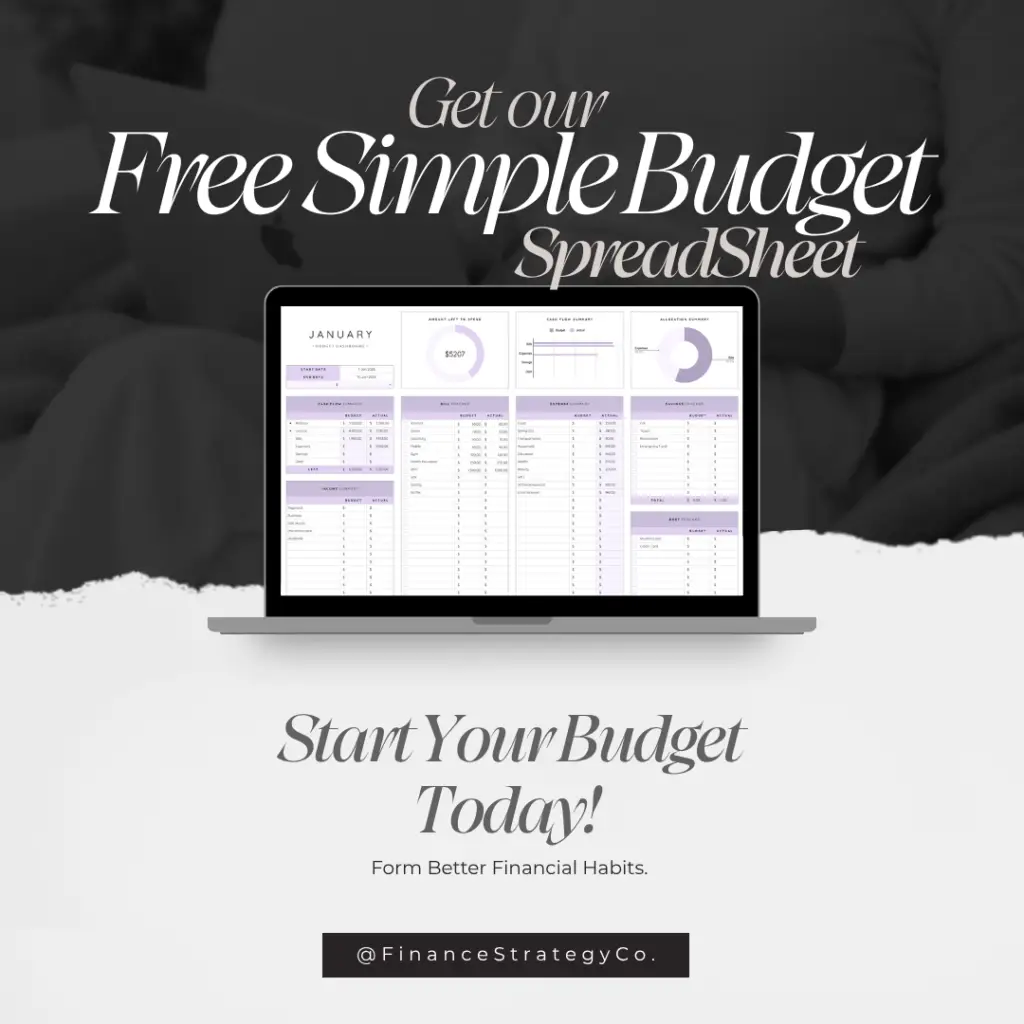
Ready to Build a Better Relationship With Your Money?
Finance Strategy Co. creates thoughtfully designed financial tools to help you organise your money, build better habits, plan your goals and create a financial system that works with your life, not against it.
Money management, elevated.