

Your money has different jobs. Give each dollar the right one.
Should you save your money or invest it?
It’s one of the most common questions when you’re trying to become better with money.
And the answer isn’t as simple as choosing one.
Saving and investing serve different purposes.
Saving is generally about protecting money and keeping it accessible for future needs.
Investing is generally about putting money into assets with the potential to grow over the long term.
Both can play an important role in your financial life.
At Finance Strategy Co., we believe managing money isn’t about following a rigid formula.
It’s about creating a strategy that reflects your goals, your lifestyle and the future you’re building.
Save with intention. Invest with purpose. Build with strategy.
Saving vs Investing: The Simple Difference
Let’s start with the basics.
SAVING
Saving means setting money aside for future use, generally in a form where it remains relatively accessible.
You might save for:
An emergency fund
A holiday
A new car
Annual expenses
A home deposit
A major purchase
Short-term goals
INVESTING
Investing means putting money into assets with the expectation that they may generate a return or increase in value over time.
Examples can include:
Shares
Exchange-traded funds
Managed funds
Property
Superannuation investments
Other investment assets
The important distinction is:
Saving is generally focused on accessibility and preserving capital.
Investing is generally focused on long-term growth.
Think of Your Money in Time Horizons
One of the easiest ways to decide whether you’re saving or investing is to ask:
“When will I need this money?”
This question can completely change your strategy.
MONEY FOR NOW
Your everyday spending money needs to remain accessible.
MONEY FOR SOON
Money you’ll need in the relatively near future may be better suited to savings or other lower-risk options, depending on your circumstances.
MONEY FOR LATER
Money you won’t need for many years may have more opportunity to be invested for long-term growth, depending on your goals and risk tolerance.
Your timeframe matters.
Why Saving Matters
Saving doesn’t always feel exciting.
There are no dramatic market charts.
No daily price movements.
No thrilling investment stories.
But savings provide something incredibly valuable:
Financial security.
An appropriate emergency fund can help you deal with unexpected expenses without immediately relying on credit or selling long-term investments.
Savings can also help you achieve short-term goals without taking unnecessary investment risk.
Cash gives you flexibility.
Why Investing Matters
If you’re thinking about your financial future over many years, simply keeping everything in cash may not be the only strategy to consider.
Investing gives your money an opportunity to participate in economic growth.
However, investments can rise and fall in value.
You can experience periods of significant volatility and may lose some or all of the money invested, depending on the investment.
Investing is not about avoiding risk.
It’s about understanding and managing risk in the context of your goals and timeframe.
Saving Isn't Investing
This distinction is important.
If you put $10,000 into a savings account, you’ve saved $10,000.
If you put $10,000 into an investment, you’ve invested $10,000.
The purpose is different.
Savings generally prioritise accessibility and stability.
Investments generally accept greater uncertainty in pursuit of potential long-term returns.
Neither is automatically better.
The right choice depends on the job your money needs to perform.
Investing Isn't Saving
It’s equally important to understand the other side.
An investment isn’t simply another savings account.
The value of an investment can fluctuate.
For example, if you invest in shares, the value of those shares can rise and fall.
You could have:
A positive year.
A negative year.
A period of significant volatility.
Long periods of growth.
Temporary losses.
Investing requires you to be comfortable with uncertainty.
That’s one reason your investment timeframe matters so much.

The Three Roles Your Money Can Play
At Finance Strategy Co., I like to think about money in three broad roles.
01 – LIVE
Money that supports your life today.
Bills
Groceries
Transport
Lifestyle
02 – PROTECT
Money that provides security and prepares you for upcoming expenses.
Emergency savings
Sinking funds
Short-term goals
03 – BUILD
Money directed towards your longer-term financial future.
Investments
Superannuation
Property
Other long-term assets
Your financial strategy needs all three.
Don't Invest Your Emergency Fund
Your emergency savings have a specific purpose.
They’re there because life is unpredictable.
If your emergency fund is invested in assets that can fluctuate, you could be forced to sell when markets are down.
That’s not ideal.
Your emergency fund should prioritise accessibility and resilience.
Keep your short-term safety net separate from your long-term wealth-building strategy.
Don't Keep Every Long-Term Dollar in Cash
The opposite can also create challenges.
If you’re saving for a goal that’s decades away and keep all of your money in cash, inflation can reduce its purchasing power over time.
For long-term goals, investing may provide an opportunity for greater growth, although that comes with investment risk.
Your strategy should reflect your timeframe.
What Is Inflation?
Inflation means the general price of goods and services increases over time.
Imagine something costs $100 today.
If prices rise over time, that same $100 may not buy the same amount in the future.
This is why simply holding cash for very long periods can have an opportunity cost.
Your money needs to grow if you want its purchasing power to keep pace with rising prices.
However, savings still play an essential role because accessibility and stability matter for short-term needs.
The Power of Compounding
One reason investing can be powerful over long periods is compounding.
In simple terms, investment returns can potentially generate additional returns over time.
For example:
You invest money.
That investment generates returns.
Those returns remain invested.
Future returns can then potentially be earned on both your original investment and previous returns.
Time can become one of your greatest financial assets.
This is one reason starting a long-term investment strategy earlier can potentially be valuable.
But Compounding Isn't Magic
Compounding doesn’t guarantee profits.
Investment returns vary.
Markets fluctuate.
Fees can reduce returns.
Taxes can affect outcomes.
And different investments carry different levels of risk.
Compounding rewards time and consistency, but it doesn’t remove investment risk.
Think long term rather than expecting a predictable straight line upwards.
How Much Should You Keep in Savings?
There isn’t one perfect amount for everyone.
Your savings needs can depend on:
Income
Expenses
Job security
Family circumstances
Debt
Upcoming expenses
Lifestyle
Financial goals
Rather than copying someone else’s number, consider:
“How much would I need to feel financially prepared for an unexpected change in my circumstances?”
Then build towards an appropriate target.
How Much Should You Invest?
There isn’t one universal investment percentage either.
Your investment contribution depends on:
Your income
Cash flow
Goals
Time horizon
Existing assets
Debt
Risk tolerance
Financial circumstances
The right amount for someone else may not be right for you.
Your investment strategy should be personal.
What Should You Save For?
Savings work particularly well for goals where you’ll need the money relatively soon.
Consider creating separate savings goals for:
EMERGENCIES
Unexpected expenses and financial disruptions.
ANNUAL EXPENSES
Insurance, registration, subscriptions and other predictable costs.
EXPERIENCES
Holidays, events and special occasions.
LARGE PURCHASES
Cars, appliances, technology or other major purchases.
HOME GOALS
A deposit or future property-related expenses.
LIFE EVENTS
Weddings, education, family commitments or other significant milestones.
Give your savings a purpose.

What Should You Invest For?
Investing can be particularly relevant to longer-term goals.
For example:
Retirement
Long-term financial independence
Future wealth
Building an investment portfolio
Long-term lifestyle flexibility
Generational wealth
The appropriate investments will depend on your circumstances.
Think about the destination before choosing the vehicle.
The Biggest Mistake: Investing Without a Plan
You don’t need to invest simply because:
Someone on social media is doing it.
A friend recommends a particular asset.
The market is trending.
You’ve heard about a “hot” investment.
Instead, ask:
What am I investing for?
When will I need the money?
How much risk can I tolerate?
What happens if the investment falls?
What fees will I pay?
Do I understand what I’m investing in?
Strategy comes before action.
The Second Biggest Mistake: Saving Without a Purpose
You can also become so focused on saving that you never ask what the money is actually for.
Saving $50,000 sounds great.
But if you’re constantly postponing everything you enjoy because you’re afraid to spend, your financial strategy may not be supporting your life.
Money should create security and enjoyment.
You don’t have to choose between the two.
You Can Save and Invest at the Same Time
This is perhaps the most important message.
You don’t have to:
“Finish saving before I invest.”
Or:
“Invest everything and stop saving.”
Instead, you can create a financial system where both happen.
For example:
Income
↓
Essential expenses
↓
Emergency savings
↓
Short-term savings goals
↓
Long-term investment contributions
↓
Intentional lifestyle spending
The exact allocation will depend on your circumstances.
Your money can work towards multiple goals simultaneously.
What About Paying Off Debt?
This is another important part of the conversation.
If you have high-cost debt, the interest you’re paying may significantly affect your financial position.
For some people, reducing expensive debt can be a priority before aggressively increasing investments.
But there isn’t one universal rule.
Consider:
Interest rates
Debt type
Investment timeframe
Risk
Cash flow
Tax considerations
Look at your entire financial picture rather than making decisions in isolation.
Saving and Investing Work Together
Think of your financial system like a foundation.
SAVINGS
Creates your financial buffer.
DEBT MANAGEMENT
Reduces financial pressure.
INVESTING
Builds long-term assets.
INCOME
Provides the resources to fund your strategy.
INTENTIONAL SPENDING
Allows you to enjoy your life.
Together, they create a more complete financial strategy.
A Simple Example
Imagine someone has $1,000 of surplus income available each month.
They might choose to divide it between:
Emergency savings
Short-term goals
Debt reduction
Long-term investments
Lifestyle
The exact amounts aren’t the point.
The principle is.
Your financial strategy doesn’t have to be all-or-nothing.
What If You're Starting With Nothing?
Start with your foundation.
You might begin by:
1. Understanding your cash flow.
Know what’s coming in and going out.
2. Creating a small financial buffer.
Start building accessible savings.
3. Managing high-cost debt.
Create a repayment strategy.
4. Establishing savings goals.
Give your money direction.
5. Learning about investing.
Understand the fundamentals before committing money.
6. Starting when you’re ready.
Even small, consistent contributions can create a habit.
You don’t need to be wealthy to begin building wealth.

What If You're Living Paycheck to Paycheck?
Don’t feel pressured to immediately become an investor.
Your first priority may be creating breathing room.
Look at:
Your essential expenses
Your debt repayments
Your savings
Your income
Your financial commitments
Find the smallest sustainable step you can take.
Perhaps it’s:
$10 a week.
$25 a week.
$50 a week.
Financial progress doesn’t have to begin with a large amount.
It begins with direction.
What If You Already Have Significant Savings?
If you have substantial cash savings beyond what you reasonably need for emergencies and upcoming goals, you may want to consider whether keeping all of it in cash aligns with your long-term objectives.
That doesn’t automatically mean investing everything.
Instead, consider:
Your goals
Time horizon
Risk tolerance
Tax considerations
Investment options
Liquidity needs
Your money should have a reason for being where it is.
Your Money Needs Different Jobs
This is the heart of intentional money management.
Instead of asking:
“Should I save or invest?”
Ask:
“What job does this money need to perform?”
If the job is:
Protect me → savings may be appropriate.
Fund a holiday next year → savings may be appropriate.
Prepare for an upcoming expense → savings may be appropriate.
Build long-term wealth → investing may be appropriate.
Support retirement → long-term investing and superannuation may play an important role.
Give your money a job before choosing the strategy.
The Role of Your Financial Vision
Your financial vision should sit above everything else.
Ask:
“What do I want my money to make possible?”
Maybe you want:
More freedom.
A beautiful home.
Travel.
More time with family.
Career flexibility.
Early retirement.
Business ownership.
Financial security.
A comfortable retirement.
Your financial vision determines what you’re building towards.
Saving and Investing Through the Finance Strategy Method™
This is where saving and investing fit beautifully into the Finance Strategy Method™.
KNOW
Understand your income, expenses, assets, liabilities and goals.
ORGANISE
Separate money for everyday spending, savings and long-term goals.
PLAN
Determine what you’re saving for and what you’re investing for.
BUILD
Save intentionally and invest appropriately for your circumstances.
THRIVE
Use your financial foundation to create greater freedom, choice and flexibility.
KNOW → ORGANISE → PLAN → BUILD → THRIVE
Your strategy determines what your money should do.
Five Questions Before You Save or Invest
Before deciding what to do with your money, ask:
01 – What is this money for?
Give it a purpose.
02 – When will I need it?
Determine your timeframe.
03 – Do I need immediate access?
Consider liquidity.
04 – How much risk am I comfortable taking?
Be honest about your ability to handle losses.
05 – Does this decision support my bigger financial strategy?
Look at the bigger picture.
Don't Chase the Highest Return
The highest potential return isn’t automatically the best choice.
Higher potential returns generally come with higher risk.
An investment that could produce significant growth could also experience significant losses.
The best financial strategy isn’t necessarily the most aggressive.
It’s the one that’s appropriate for your goals, timeframe and circumstances.
Don't Let Fear Keep You From Learning
Investing can seem intimidating.
There are unfamiliar terms.
Charts.
Markets.
Economic news.
Investment products.
Risk.
But you don’t need to become an expert overnight.
Start by learning:
What investing means
How different assets work
What diversification means
How risk works
What fees are
How long-term investing differs from speculation
Knowledge creates confidence.
Your Financial System Should Evolve
Your strategy today won’t necessarily be your strategy forever.
You may:
Get a pay rise.
Change careers.
Buy a home.
Start a business.
Have children.
Pay off debt.
Receive an inheritance.
Approach retirement.
Your financial priorities will change.
Your strategy should change with you.
Review your savings and investments periodically.
Saving Is Not “Less Than” Investing
This is an important mindset shift.
Someone with $20,000 in savings isn’t necessarily less financially sophisticated than someone with $20,000 invested.
Their money may simply have a different purpose.
A strong financial strategy isn’t about maximising returns on every dollar.
It’s about using each dollar appropriately.
Investing Is Not “Better” Than Saving
Likewise, investing isn’t automatically the superior choice.
If you’re saving for a goal next year, market volatility could work against you.
If you’re building an emergency fund, accessibility may matter more than growth.
The question isn’t “Which is better?”
The question is “Which is right for this money?”
Build Your Financial Strategy Around Your Life
Your money should fit your life.
Not the other way around.
If you love travel, create a travel fund.
If home ownership matters, build towards it.
If flexibility matters, prioritise financial resilience.
If long-term wealth matters, create an investment strategy.
If peace of mind matters, build your financial buffer.
Your financial strategy should reflect your values.
The Quiet Power of Financial Progress
Financial progress doesn’t always look impressive.
It can look like:
$50 automatically transferred into savings.
A debt balance falling.
An investment contribution being made.
Your emergency fund growing.
Your net worth increasing.
Your spending becoming more intentional.
Small decisions can create meaningful change over time.
The Luxury of Knowing Your Money Has a Purpose
There is something powerful about opening your bank account and knowing:
This money is for my future.
This money is for my security.
This money is for my goals.
This money is for my lifestyle.
This money is building something.
That’s financial clarity.
And financial clarity is a form of freedom.
Your Next Step
You don’t need to overhaul your finances today.
Instead, take 20 minutes and divide your money into three questions:
WHAT DO I NEED NOW?
Identify your everyday financial needs.
WHAT MIGHT I NEED SOON?
Identify your short-term goals and emergency savings needs.
WHAT AM I BUILDING FOR LATER?
Identify your long-term financial goals.
Then ask:
“Is my money currently positioned to support each of these jobs?”
If not, you have your starting point.
Saving Protects. Investing Builds.
Saving and investing aren’t enemies.
They aren’t competing philosophies.
They’re different tools.
Saving can provide security.
Investing can provide an opportunity for long-term growth.
Your financial strategy decides how they work together.
The goal isn’t to save everything.
The goal isn’t to invest everything.
The goal is to create a financial system that supports the life you want.
Your Money. Your Strategy. Your Future.
You don’t need to choose between living well today and building wealth for tomorrow.
You can create room for both.
Save for what matters.
Invest for the long term.
Manage debt intentionally.
Build financial resilience.
Spend on the things you genuinely value.
And keep your financial vision at the centre.
Because money isn’t the destination.
It’s the tool that helps you create the life you’re building.
KNOW → ORGANISE → PLAN → BUILD → THRIVE
Know your financial position.
Organise your money.
Plan your goals.
Build your assets.
And create the freedom to thrive.
That’s the Finance Strategy Method™.
And understanding the difference between saving and investing is an important step towards creating a financial strategy that works for you.
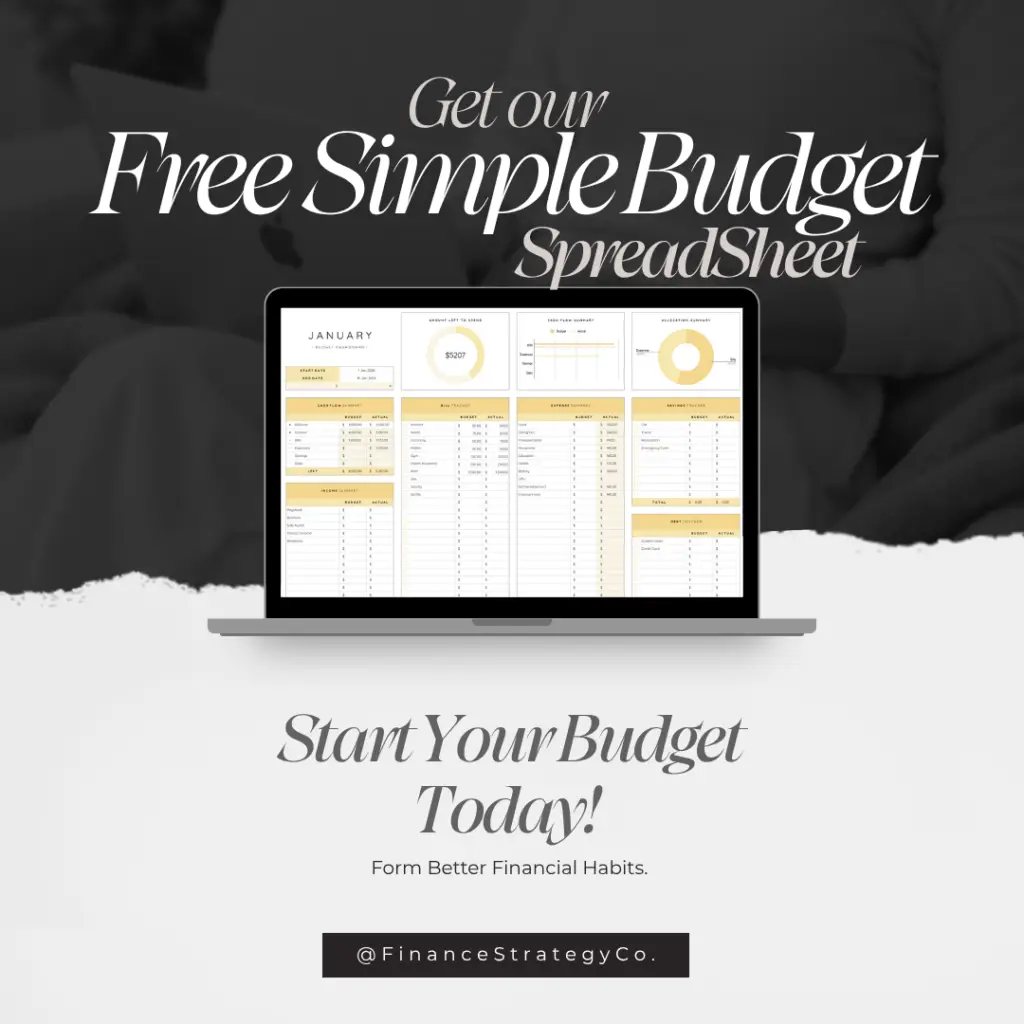
Ready to Build Your Financial Strategy?
Finance Strategy Co. creates thoughtfully designed financial tools to help you organise your money, plan your goals, track your progress and build a financial system around the life you actually want.
Money management, elevated.