
You can be good with money and still enjoy it.
Do you ever buy something you genuinely wanted, only to feel guilty about it afterwards?
Maybe you finally booked the holiday.
Bought the beautiful dress.
Went out for dinner.
Ordered the takeaway.
Spent a little more than usual on yourself.
And instead of enjoying it, you started doing the mental maths.
Should I have bought that?
Was that irresponsible?
I should have saved that money.
Maybe I shouldn’t spend anything else this month.
If this sounds familiar, you’re not alone.
We’ve been taught to think that financial responsibility looks like saying no.
No to the dinner.
No to the holiday.
No to the little luxuries.
No to the things that make life enjoyable.
But what if being good with money isn’t about saying no to everything?
What if it’s about knowing when you can say yes?
Because the goal of a healthy financial strategy isn’t to make you afraid of spending.
It’s to help you spend with confidence.
Money is a tool for your life.
You shouldn’t have to feel guilty every time you use it.
Spending isn't the problem. Spending without intention can be.
Let’s make one thing clear:
Spending money isn’t bad.
You need to spend money to live.
You also deserve to spend money on things that bring you happiness, comfort, connection, convenience and experiences.
The problem isn’t necessarily spending.
It’s spending that doesn’t align with your priorities, spending that creates financial stress or spending that leaves you wondering where your money went.
There is a difference between:
“I spent money.”
and
“I spent money on something that mattered to me.”
That difference is intentionality.
And intentional spending can completely change your relationship with money.
Why do we feel guilty about spending?
Money guilt rarely comes from the purchase itself.
Often, it comes from what we’ve learned to believe about money.
Maybe you grew up believing that spending was irresponsible.
Maybe you’ve always associated being financially responsible with saving every possible dollar.
Maybe you’ve experienced financial uncertainty and spending now feels unsafe.
Maybe you’ve worked incredibly hard for your money and feel like you should only use it for “important” things.
Maybe you compare yourself to people who seem further ahead financially.
Or perhaps you’re trying to achieve a big goal and every purchase feels like you’re taking money away from your future.
These feelings are worth paying attention to.
But they don’t necessarily mean that you’ve done something wrong.
Sometimes guilt is simply a sign that your money beliefs haven’t caught up with your financial reality.
Being financially responsible doesn't mean never spending.
There is a version of personal finance that tells you the answer to everything is:
Spend less.
But your financial life is more nuanced than that.
You have bills.
You have goals.
You have responsibilities.
You also have a life.
A financial strategy should make room for all of them.
A budget can help you understand what is coming in, what needs to go out and what you can intentionally allocate towards savings and spending. Tracking your spending can also help you understand your habits and make decisions with greater awareness.
But your budget shouldn’t become a list of everything you’re not allowed to buy.
Your budget is permission with a plan.
When you deliberately create room for enjoyment, spending can stop feeling like failure.
The difference between guilt and awareness
There is an important distinction between feeling guilty and being aware.
Guilt says:
“I shouldn’t have spent that.”
Awareness says:
“Was that spending aligned with what matters to me?”
Guilt says:
“I’m terrible with money.”
Awareness says:
“Something about this purchase didn’t feel right. Why?”
Guilt creates shame.
Awareness creates information.
And information gives you something you can actually work with.
So instead of judging every purchase, become curious about it.
Ask:
Did I actually want this?
Did I plan for it?
Can I comfortably afford it?
Does it support my priorities?
Would I make the same decision again?
The answers are far more useful than guilt.

01 - Know your numbers
It’s difficult to spend confidently when you don’t know where you stand.
Before you try to eliminate money guilt, create some financial clarity.
Know:
- Your income
- Your essential expenses
- Your regular bills
- Your debt repayments
- Your savings
- Your financial goals
- Your average discretionary spending
- Your upcoming larger expenses
You don’t need to memorise everything.
You simply need a clear picture.
Because uncertainty creates anxiety.
Clarity creates confidence.
When you know your bills are covered, your savings goals are being funded and your spending fits within your plan, a dinner out can simply be a dinner out.
Not a financial crisis.
02 - Create a guilt-free spending category
This might be one of the most powerful changes you make.
Create a category in your budget specifically for enjoyment.
Call it whatever feels right:
Fun Money
Joy
Lifestyle
Personal Spending
Guilt-Free Spending
The name doesn’t matter.
The intention does.
This is money you’ve deliberately allocated for the things that make your life enjoyable.
Coffee.
Restaurants.
Beauty.
Clothes.
Books.
Concerts.
Hobbies.
Weekend trips.
Whatever matters to you.
And once that money has been allocated, you don’t need to justify every dollar.
You planned for it.
That’s the difference.
03 - Give your spending a purpose
Instead of thinking about spending as money leaving your account, think about what that money is doing.
Your money might be:
Supporting your lifestyle.
Creating an experience.
Buying back your time.
Supporting your health.
Connecting you with people you love.
Making your home feel like home.
Helping you learn something new.
Creating memories.
Making everyday life easier.
Of course, not every purchase needs to be meaningful.
Sometimes you just want the shoes.
That’s okay too.
The point isn’t to make every purchase profound.
It’s to stop treating all spending as something to feel guilty about.
04 - Create your personal "Worth It" list
One of the easiest ways to spend with more confidence is to know what is actually worth your money.
Create a list called:
Worth It
Perhaps yours includes:
- Travel
- Quality clothing
- Dining with friends
- Fitness
- Skincare
- Books
- Home comforts
- Experiences
- Convenience
- Education
- Time-saving services
- Health
- Family experiences
Then create another:
Not For Me
Maybe:
- Trend purchases
- Things bought because they’re on sale
- Impulse shopping
- Duplicate products
- Unused subscriptions
- Spending to impress people
- Things you rarely use
These lists become your personal spending philosophy.
And suddenly, spending decisions become much easier.
You don’t have to ask:
“Should I spend money?”
You can ask:
“Is this the kind of thing I want my money to support?”
05 - Stop confusing frugality with financial success
Being frugal can be useful.
But constantly trying to spend the absolute minimum isn’t necessarily the same as being financially successful.
Imagine two purchases.
One costs $20 and you don’t really want it.
Another costs $100 and you use it constantly, genuinely love it and intentionally saved for it.
Which one was the better use of your money?
The answer isn’t always the cheaper one.
Price and value are not the same thing.
Sometimes spending more on something you genuinely value can be more aligned with your financial strategy than repeatedly buying cheaper alternatives you don’t actually want.
The goal isn’t:
Spend as little as possible.
The goal is:
Spend intentionally.
06 - Build your budget around your values
A budget becomes much easier to live with when it reflects your priorities.
Instead of starting with:
“What can I cut?”
Start with:
“What matters most to me?”
Maybe it’s:
Travel.
Then create a travel fund.
Maybe it’s:
Health.
Make room for the expenses that support it.
Maybe it’s:
Family.
Budget for dinners, experiences and time together.
Maybe it’s:
Financial security.
Prioritise savings and debt reduction.
Maybe it’s:
Freedom.
Build the financial margin that gives you more choices.
Your budget doesn’t have to look like someone else’s.
Your money should reflect your life.
07 - Give yourself a spending limit, and permission to spend it
A spending limit isn’t necessarily restrictive.
It can actually be freeing.
Imagine you decide:
I have $200 this week for lifestyle spending.
You spend $60 on dinner.
$40 on coffee and lunch.
$50 on something you’ve been wanting.
You still have $50 remaining.
Instead of wondering whether you should have spent the money, you can look at your plan and know:
This spending was within the amount I intentionally allocated.
That’s control.
Not because you didn’t spend.
Because you knew what you could spend.
08 - Stop making every purchase a financial referendum
You don’t need to analyse every $12 purchase like you’re presenting it to a board of directors.
Seriously.
If you have a financial system in place, you don’t need to turn every coffee into a moral debate.
Small purchases matter when they become patterns.
But you also need room for normal life.
There is a difference between:
Mindless spending
and
living your life.
If your essentials are covered, your financial priorities are being supported and you’ve intentionally allocated money for lifestyle spending, you can spend it.
And then enjoy it.
You don’t need to earn the right to enjoy your own money.
09 - Create spending boundaries before you need them
Sometimes guilt appears because you don’t have a clear boundary.
You might tell yourself:
“I’ll just try to spend less.”
That’s vague.
Instead, create personal rules that support your values.
For example:
I wait 24 hours before buying non-essential items over $100.
I don’t buy something simply because it’s on sale.
I check my budget before making a large purchase.
I don’t use credit for lifestyle spending I can’t comfortably afford.
I keep a dedicated holiday fund.
I allow myself a monthly amount for guilt-free spending.
These aren’t punishments.
They’re decisions you’ve made in advance.
And decisions made in advance can make spending feel much calmer.
10 - Stop comparing your spending to everyone else's
One of the fastest ways to create money guilt is comparison.
Someone is buying a house.
Someone is travelling constantly.
Someone has a designer wardrobe.
Someone drives a beautiful car.
Someone is posting their expensive dinner.
Someone seems to have it all figured out.
So you start questioning your own choices.
But you don’t know their full financial picture.
And more importantly:
Their priorities aren’t yours.
Maybe they spend heavily on travel and barely care about their home.
Maybe you value your home more.
Maybe they love fashion.
Maybe you value financial security.
Maybe they prioritise experiences.
Maybe you prioritise building wealth.
There is no universal definition of a “good” financial life.
Your money isn’t supposed to fund someone else’s version of success.
11 - Learn the difference between "I can't afford it" and "I don't want to prioritise it"
This is a subtle but powerful shift.
Sometimes the answer is genuinely:
I can’t afford this right now.
That’s important.
But sometimes the answer is:
I could afford this, but it’s not important enough to me.
That’s different.
And empowering.
You might technically be able to afford the expensive handbag.
But you’d rather use that money towards your holiday.
You might be able to upgrade your car.
But you’d rather build your savings.
You might be able to go out every weekend.
But you’d rather have more financial breathing room.
Saying no doesn’t have to feel like deprivation.
It can simply mean:
I’m choosing something else.
12 - Create a "future me" and "present me" balance
Financial guilt often comes from focusing too heavily on one side.
Some people live entirely for today.
Others live entirely for tomorrow.
Neither extreme creates a particularly satisfying financial life.
Your money can support both.
PRESENT YOU
Needs:
- Enjoyment
- Experiences
- Connection
- Comfort
- Lifestyle
- Fun
FUTURE YOU
Needs:
- Savings
- Financial security
- Goals
- Debt reduction
- Wealth building
- Financial flexibility
Your strategy is to create space for both.
Save for tomorrow.
Live today.
Plan for the future without forgetting that you’re currently living it.
13 - If you overspend, don't turn it into an identity
You will have moments when you spend more than planned.
You might have an expensive month.
You might make an impulse purchase.
You might completely forget about an upcoming expense.
It happens.
The mistake isn’t necessarily the problem.
What you do next matters more.
Instead of:
“I’m terrible with money.”
Try:
“What happened here?”
Was it emotional spending?
Poor planning?
An unexpected expense?
A social situation?
A lack of savings?
An unrealistic budget?
Once you understand the reason, you can adjust the system.
A spending mistake is information.
It doesn’t have to become your identity.
14 - Make your budget more realistic
Sometimes the reason you feel guilty about spending is because your budget is unrealistic.
You give yourself:
$50 for fun.
But your actual lifestyle requires $200.
So every month you overspend.
Then you feel guilty.
Then you promise to be stricter.
Then you overspend again.
The cycle continues.
Instead, look at your real spending.
What does your lifestyle actually cost?
Then create a plan that is realistic.
A budget should challenge you where appropriate.
But it shouldn’t require you to pretend you’re someone you’re not.
A realistic budget you can live with is more powerful than a perfect budget you constantly break.
15 - Build financial safety before expecting yourself to feel relaxed
Sometimes spending guilt isn’t really about spending.
It’s about not feeling financially safe.
If you don’t have much savings, have high-interest debt or are living very close to the edge each month, spending money on non-essentials may naturally feel uncomfortable.
In that situation, the answer isn’t to force yourself to spend without concern.
It’s to strengthen the foundation underneath your spending.
Start building:
Financial clarity.
A realistic budget.
Savings.
A financial buffer.
Debt-management strategies.
A plan for your future.
As your financial foundation becomes stronger, you may find that your relationship with spending changes too.

The Guilt-Free Spending Formula™
At Finance Strategy Co., we believe spending confidence can be built around four simple ideas:
EARN → PROTECT → PRIORITISE → ENJOY
EARN
Know what you’re working with.
Understand your income and financial reality.
PROTECT
Take care of your financial foundations.
Cover your essentials, build savings and manage your financial commitments.
PRIORITISE
Decide what matters.
Align your spending with your values, goals and lifestyle.
ENJOY
Allow yourself to use your money for the life you’re building.
Because money isn’t only for protecting the future.
It’s also for living.
The 30-Minute Guilt-Free Spending Reset
Feeling guilty about spending?
Take 30 minutes and reset your relationship with it.
MINUTES 1–5: CHECK YOUR NUMBERS
Look at:
- Current balance
- Upcoming bills
- Savings
- Debt repayments
- Available spending money
MINUTES 6–10: REVIEW YOUR RECENT SPENDING
Don’t judge.
Just notice.
What did you spend?
What felt worthwhile?
What didn’t?
MINUTES 11–15: DEFINE YOUR VALUES
Write down your top five lifestyle priorities.
What do you actually want your money to support?
MINUTES 16–20: CREATE YOUR “WORTH IT” LIST
What spending consistently brings value to your life?
Write it down.
MINUTES 21–25: CREATE YOUR “NOT FOR ME” LIST
What spending doesn’t feel aligned?
Write that down too.
MINUTES 26–30: GIVE YOUR MONEY PERMISSION
Set a realistic amount for lifestyle spending.
Then make a decision:
I am allowed to enjoy this money when I spend within my plan.
That’s your new rule.
Your spending should not require an apology
There is something incredibly freeing about being able to spend money without immediately feeling guilty.
Not because you’re spending recklessly.
Because you understand your finances.
You know your numbers.
You have a plan.
You know your priorities.
You’ve created boundaries.
You’ve made room for enjoyment.
And you’ve decided what matters to you.
That’s not irresponsible.
That’s intentional.
The quiet luxury of guilt-free spending
There is a version of financial freedom that doesn’t get talked about enough.
It’s not necessarily having millions in the bank.
It’s being able to buy the coffee without wondering if you ruined your budget.
It’s booking the holiday you’ve been saving for and actually enjoying it.
It’s buying something beautiful because you genuinely love it — not because you need to prove something.
It’s taking your family out for dinner without spending the entire evening calculating the cost.
It’s knowing when to say no.
And knowing when to say yes.
It’s being able to spend because you’ve already created a strategy for your money.
That’s financial confidence.
And honestly?
It feels luxurious.
You don't need to spend less. You need to spend with intention.
The goal isn’t to eliminate spending.
It’s to eliminate mindless spending, unnecessary guilt and the feeling that every dollar you spend is a dollar you’ve failed to save.
Your financial life can hold both:
Responsibility and enjoyment.
Saving and spending.
Goals and experiences.
Future you and present you.
You don’t have to choose one.
You simply need a strategy that makes room for both.
So the next time you spend money on something you genuinely value, pause before the guilt arrives.
Ask yourself:
Was it planned?
Can I afford it?
Does it matter to me?
Does it fit my priorities?
If the answer is yes, let yourself enjoy it.
No mental punishment.
No shame.
No second-guessing.
Just enjoy it.
Because being good with money isn’t about never spending.
It’s about knowing what your money is for.
Your Money. Your Strategy. Your Future.
Your money should support the life you’re building.
Not make you feel guilty for living it.
Create the savings.
Pay the bills.
Build the financial foundation.
Work towards your goals.
And then leave room for the things that make life feel like yours.
You don’t need permission from anyone else to decide what is worth your money.
You don’t need to spend like everyone around you.
And you don’t need to feel guilty for enjoying the money you’ve intentionally planned to spend.
Your money is yours to direct.
Spend it with purpose.
Spend it with confidence.
Spend it on what matters.
And when you choose to spend?
Let yourself enjoy it.
Finance Strategy Co.
Money, but make it intentional.
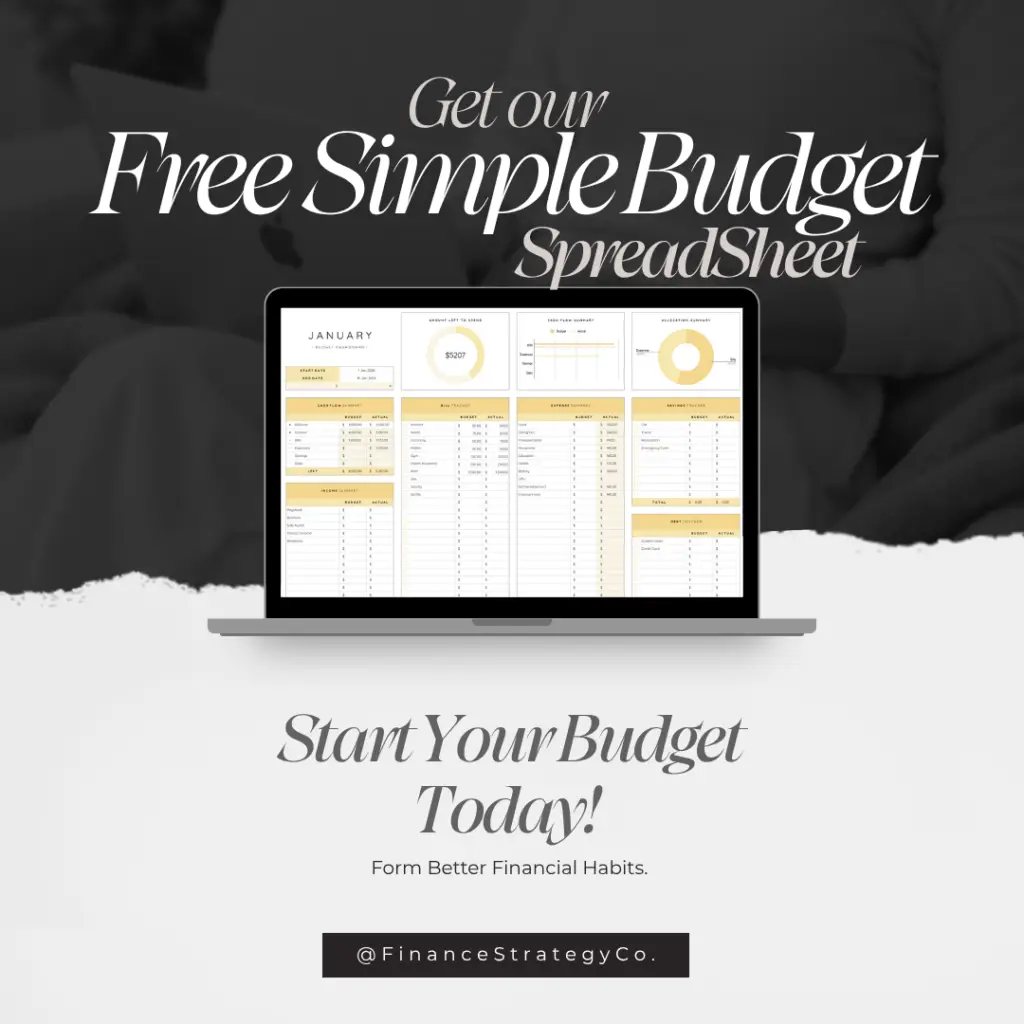
Ready to Make Your Money Feel More Organised?
Your budget is easier to maintain when your financial system is simple.
Explore Finance Strategy Co.'s thoughtfully designed budgeting and financial organisation tools to help you plan your spending, track your expenses, manage your goals and create a financial system that fits your life.
Your money deserves a strategy.