

Your money should do more than pay your bills. It should help create the life you're building.
Imagine opening your bank account and knowing exactly what your money is doing.
Your bills are covered.
Your savings are growing.
Your goals are being funded.
Your lifestyle is intentional.
And you have money available to enjoy the things that genuinely matter to you.
There is a sense of calm that comes from that kind of financial clarity.
You aren’t constantly asking:
“Where did my money go?”
Instead, you’re asking:
“What do I want my money to make possible?”
That’s a very different way of thinking about personal finance.
At Finance Strategy Co., we believe your money shouldn’t simply be something you manage.
It should be something you intentionally direct.
Because financial success isn’t just about having more money.
It’s about creating a financial strategy that supports the life you want to live.
Money Is a Tool, Not the Destination
Money can provide security.
It can create options.
It can buy time.
It can fund experiences.
It can support your family.
It can help you build a business.
It can create flexibility.
It can help you prepare for the unexpected.
But money itself isn’t usually the ultimate goal.
Think about what sits behind your financial goals.
You may want to save $20,000.
But perhaps what you really want is:
A home.
A holiday.
Career flexibility.
Financial security.
Freedom from debt.
More time with your family.
The ability to say yes to opportunities.
The number is only part of the story.
The real question is:
“What will this money allow me to do?”
What Does It Mean to Make Your Money Support Your Life?
It means creating a financial system where your money reflects your:
Values.
Priorities.
Lifestyle.
Goals.
Future plans.
Instead of automatically spending your income according to habit, you intentionally decide where it should go.
Your money might be divided between:
TODAY
Your everyday lifestyle and experiences.
FOUNDATION
Bills, commitments and financial security.
FUTURE
Savings and long-term goals.
FREEDOM
Building greater flexibility and choice.
The exact structure will depend on your circumstances.
The principle is simple: your money should have a purpose.
The Finance Strategy Co. Philosophy
This is the foundation of the Finance Strategy Method™:
KNOW → ORGANISE → PLAN → BUILD → THRIVE
KNOW
Understand your current financial position.
ORGANISE
Create structure around your money.
PLAN
Decide what matters most.
BUILD
Direct your money towards meaningful goals.
THRIVE
Use your financial progress to create a life you genuinely enjoy.
Notice where the framework ends.
Not with:
Save everything.
Not with:
Spend nothing.
But with:
THRIVE.
Because financial strategy should ultimately give your money a purpose.

01 - Define the Life You Actually Want
Before you create a financial strategy, define the destination.
Ask yourself:
What does a good life look like to me?
Don’t think about what you should want.
Think about what you genuinely value.
Perhaps your ideal life includes:
Travel.
A beautiful home.
More time with family.
Career freedom.
A successful business.
Slow mornings.
Great food.
Experiences.
Financial security.
Personal growth.
Flexibility.
Peace of mind.
There is no universal answer.
Your dream life doesn’t need to look impressive to anyone else.
It needs to feel meaningful to you.
02 - Separate Your Goals From Other People's Expectations
This is an important exercise.
We live in a world where success can look like:
A bigger house.
A luxury car.
Designer clothing.
Expensive holidays.
The newest technology.
A certain salary.
A particular lifestyle.
But ask yourself:
“Would I still want this if nobody else could see it?”
That question can be revealing.
You might discover that some of your financial goals came from comparison rather than genuine desire.
Your money should fund your values, not someone else’s definition of success.
03 - Identify Your Top Five Values
Choose five things that matter most to you.
For example:
01 — Freedom
Having the flexibility to make choices.
02 — Security
Knowing you can handle unexpected expenses.
03 — Experiences
Creating memories through travel and meaningful activities.
04 — Family
Having the ability to spend time and money on the people you love.
05 — Home
Creating a comfortable environment that feels like yours.
Now ask:
Does my spending reflect these values?
This is where things get interesting.
Your Bank Statement Tells a Story
Your bank statement isn’t simply a list of transactions.
It’s a reflection of your behaviour.
If you say:
“Travel is incredibly important to me.”
but almost nothing goes towards travel…
there may be a disconnect.
If you say:
“Financial security is my priority.”
but you’re regularly spending your savings…
there may be another disconnect.
This isn’t about guilt.
It’s about alignment.
Your goal is to make your financial behaviour match your stated priorities.
04 - Create Your Money Priorities
Once you understand your values, turn them into financial priorities.
For example:
PRIORITY ONE
Build an emergency fund.
PRIORITY TWO
Save for a holiday.
PRIORITY THREE
Reduce debt.
PRIORITY FOUR
Build long-term savings.
PRIORITY FIVE
Create more lifestyle flexibility.
Your priorities will be personal.
And they can change.
Your financial strategy should change as your life changes.
05 - Give Every Part of Your Income a Job
When your income arrives, don’t let it simply disappear into your everyday account.
Give it direction.
For example:
ESSENTIALS
Housing, utilities, groceries and transport.
FINANCIAL FOUNDATION
Emergency savings and important commitments.
FUTURE
Long-term goals and savings.
LIFESTYLE
Dining, entertainment, hobbies and personal spending.
EXPERIENCES
Travel, events and meaningful experiences.
The proportions will depend on your income and circumstances.
What matters is that your money has somewhere intentional to go.
06 - Create a Lifestyle Budget
A lifestyle budget gives enjoyment a legitimate place within your financial strategy.
Instead of constantly asking:
“Can I afford to spend money on this?”
you already know how much you’ve allocated for lifestyle spending.
Your category might include:
Restaurants
Coffee
Entertainment
Clothing
Beauty
Hobbies
Personal spending
Social activities
This isn’t irresponsible.
It’s intentional.
You are acknowledging that enjoying your money is part of the life you’re building.
07 - Spend More on What Matters
This is one of the most powerful financial mindset shifts.
You don’t necessarily need to spend less.
You need to become more selective.
Imagine you love travel but don’t particularly care about clothing.
You might:
Spend less on clothes.
Spend more on travel.
Or perhaps you love your home but rarely go out.
You might:
Invest more into your home.
Spend less on restaurants.
Maybe experiences are your priority.
Then create more room for them.
A good financial strategy doesn’t treat every category equally.
It prioritises what matters.
08 - Spend Less on What Doesn't Matter
Now identify the spending that doesn’t contribute meaningfully to your life.
This could be:
Unused subscriptions.
Impulse shopping.
Convenience spending.
Purchases made from boredom.
Things you bought because everyone else had them.
Lifestyle expenses you’ve simply never reconsidered.
Ask:
“If I stopped paying for this tomorrow, would I genuinely miss it?”
If the answer is no, redirect the money.
Money saved from low-value spending can become money invested in high-value living.
09 - Create Your “More Of / Less Of” List
This is a simple exercise with significant impact.
I WANT MORE OF:
I WANT LESS OF:
Now connect those answers to money.
If you want more travel:
Create a travel fund.
If you want more financial security:
Increase your emergency savings.
If you want more time:
Consider whether certain expenses or commitments can be reduced.
If you want more experiences:
Create an experiences category.
Turn lifestyle intentions into financial decisions.
10 - Build Goals Around Experiences
Instead of creating goals that only sound like numbers, give them meaning.
Rather than:
Save $5,000
try:
Save $5,000 for Europe.
Rather than:
Save $10,000
try:
Build a $10,000 freedom fund.
Rather than:
Save $3,000
try:
Create a $3,000 home fund.
A named goal creates an emotional connection.
You’re not simply saving money.
You’re building something.
11 - Use Sinking Funds to Fund Your Lifestyle
Some goals don’t need to be paid for all at once.
That’s where sinking funds become powerful.
Create dedicated funds for:
Travel
Christmas
Birthdays
Home
Car expenses
Beauty
Education
Experiences
Major purchases
Instead of being surprised when the expense arrives, you’re prepared.
Preparation turns future spending into planned spending.

12 - Protect Your Future Self
Supporting the life you want doesn’t only mean funding the present.
It also means protecting the future.
Consider your financial foundation.
This might include:
Emergency savings.
Debt reduction.
Long-term savings.
Retirement planning.
Appropriate insurance.
Investing where suitable.
Your specific strategy will depend on your circumstances.
The future deserves a place in today’s budget.
13 - Don't Sacrifice Your Entire Present for the Future
The opposite is also true.
You don’t want to create a financial strategy where every dollar is directed towards tomorrow.
You deserve to enjoy your life today.
Create room for:
Dinner with friends.
Travel.
Hobbies.
Celebrations.
Personal purchases.
Rest.
Experiences.
Financial planning isn’t about choosing between today and tomorrow.
It’s about finding a sustainable balance between them.
14 - Build a “Future Lifestyle” Fund
Think beyond traditional savings goals.
What do you want your future lifestyle to look like?
Maybe you want:
More travel.
More freedom.
A different home.
Reduced working hours.
Your own business.
A career change.
More time with family.
Create a financial goal around it.
Call it:
FUTURE LIFESTYLE
or
FREEDOM FUND
Then contribute consistently.
Even small contributions can reinforce the habit of building towards something meaningful.
15 - Don't Let Lifestyle Inflation Decide for You
When your income increases, your spending often increases too.
It’s natural.
But before automatically upgrading everything, pause.
Ask:
“What would actually improve my life?”
Maybe it’s:
More travel.
More savings.
A better home.
More flexibility.
Less debt.
More experiences.
Instead of allowing every pay rise to disappear into lifestyle inflation, intentionally decide where additional income should go.
Earn more.
But also make sure your financial position becomes stronger.
16 - Design Your Ideal Week
Here’s a different way to think about money.
Imagine your ideal week.
What would it include?
Maybe:
A slow morning.
A beautiful breakfast.
Time for exercise.
Work you enjoy.
Dinner with friends.
A weekend experience.
Time with family.
Now ask:
What does this lifestyle cost?
Some parts may cost money.
Others may require time rather than money.
This exercise helps you recognise something important:
The life you want isn’t simply a collection of purchases.
It’s a combination of time, money, experiences and choices.
17 - Understand Your Time-to-Money Relationship
Money and time are deeply connected.
Every dollar you spend represents resources you exchanged for it.
If you earn $30 after tax per hour, a $150 purchase represents roughly five hours of income before considering other factors.
This doesn’t mean every purchase needs to be converted into hours.
But occasionally, the perspective can be useful.
Ask:
“Is this worth what it took to earn the money?”
For something you genuinely value, the answer may be yes.
For something you barely care about, the answer may be no.
Spend your money in a way that respects your time.
18 - Define Your Version of Luxury
Luxury doesn’t have to mean excess.
For one person, luxury might be:
A five-star holiday.
For another:
A quiet Sunday morning.
For someone else:
A beautiful home.
Or:
The freedom to take Friday afternoon off.
Or:
Being debt-free.
Or:
Having six months of expenses saved.
Luxury is personal.
Define yours.
Then create a financial strategy that supports it.
19 - Create a “Worth It” List
Write down the things you consistently believe are worth your money.
ALWAYS WORTH IT
SOMETIMES WORTH IT
NOT WORTH IT
Then build your budget around that information.
This creates a much more personalised financial strategy.
You stop trying to optimise every dollar.
You start optimising for your life.
20 - Make Your Money Visible
A financial strategy is difficult to follow when you can’t see it.
Create a simple financial dashboard that allows you to track:
Income
Expenses
Savings
Goals
Debt
Net worth
Lifestyle spending
You don’t need to monitor every number every day.
A regular review is enough for most people.
Visibility creates awareness.
Awareness creates better decisions.
21 - Have a Monthly Money Date
Set aside 30 minutes each month.
Make yourself a coffee.
Put your phone away.
Open your budget.
Review your money.
Ask:
What worked this month?
What didn’t?
Where did I overspend?
What did I enjoy spending money on?
What do I want to change?
What am I currently building?
Am I still moving towards the life I want?
This doesn’t need to feel like an accounting exercise.
Make it a ritual.
22 - Review Your Goals Regularly
Your priorities will change.
What mattered five years ago might not matter now.
Maybe you once prioritised:
Buying a car.
Now you prioritise:
Travel.
Maybe you once prioritised:
Working as much as possible.
Now you prioritise:
Time and flexibility.
Maybe you once prioritised:
Building possessions.
Now you prioritise:
Experiences.
Your financial strategy should have room to evolve.
23 - Stop Chasing Someone Else's Financial Life
This may be one of the biggest barriers to financial contentment.
Someone else’s:
House.
Car.
Holiday.
Wardrobe.
Career.
Savings balance.
Investment portfolio.
Lifestyle.
…doesn’t tell you what your life should look like.
Comparison can make you spend money on things you don’t actually value.
Instead, define your own version of enough.
Then build towards it.
24 - Create Your Definition of “Enough”
Ask:
What is enough for me?
Enough income.
Enough savings.
Enough possessions.
Enough travel.
Enough work.
Enough spending.
Enough security.
This doesn’t mean giving up ambition.
It means understanding what you’re actually working towards.
Without a definition of enough, there is always another upgrade.
25 - Give Your Money a Bigger Purpose
Imagine looking at your financial accounts and knowing:
This account represents security.
This one represents travel.
This one represents my future.
This money represents my lifestyle.
This money represents freedom.
Your money becomes more than numbers.
It becomes a reflection of your priorities.

What If You Don't Earn Enough Yet?
You can still begin.
You don’t need a high income to create a financial strategy.
Start with what you have.
Focus on:
Awareness.
Organisation.
Priorities.
Small goals.
Intentional spending.
Consistent habits.
And where possible, consider ways to improve your income over time.
Strategy matters at every income level.
What If Your Goals Feel Too Big?
Break them down.
Instead of:
“I want financial freedom.”
Ask:
What would financial freedom look like for me?
Then:
What needs to happen first?
Then:
What can I do this month?
Then:
What can I do this week?
Big financial goals become much less intimidating when you turn them into small, repeatable actions.
Your Money Alignment Audit
Look at your current finances and ask:
INCOME
Does my income support my current lifestyle?
SPENDING
Does my spending reflect my values?
SAVINGS
Am I building towards something meaningful?
GOALS
Are my financial goals still relevant?
LIFESTYLE
Am I enjoying my money?
FUTURE
Am I protecting my future self?
FLEXIBILITY
Does my financial position give me choices?
You don’t need perfect answers.
You need honest ones.
The Three-Bucket Lifestyle Strategy
If you want a simple way to begin, think about your money in three broad buckets.
01 — LIVE
Money for today’s life.
Bills, essentials, lifestyle and experiences.
02 — BUILD
Money for your financial foundation.
Savings, debt reduction and other financial goals.
03 — CREATE
Money that helps build the future you want.
Long-term goals, opportunities and wealth-building where appropriate.
The exact amounts will depend on your circumstances.
The purpose is balance.
Your Money Should Support Your Energy Too
Money isn’t the only resource you have.
You also have:
Time.
Energy.
Attention.
A financial decision that saves $20 but consumes hours of your time may not always be the best decision.
A purchase that costs more but gives you significant value may be worth considering.
The goal isn’t to maximise every dollar.
It’s to create a life that works as a whole.
Spend With Intention
Before making a purchase, ask:
Does this support my life?
Does this reflect my values?
Is it worth the money?
Does it fit my strategy?
Will I still value it later?
If yes:
Enjoy it.
If no:
Redirect the money.
The goal isn’t to become someone who never spends.
It’s to become someone who spends with confidence.
Save With Intention
The same principle applies to saving.
Don’t save simply because you feel like you’re supposed to.
Give your savings meaning.
Instead of:
“I need to save more.”
Think:
“I’m building my freedom fund.”
“I’m creating financial security.”
“I’m funding our next holiday.”
“I’m preparing for my future.”
A goal gives your savings direction.
Plan With Intention
Planning doesn’t mean knowing exactly what your life will look like in ten years.
Life changes.
Your income changes.
Your priorities change.
Your circumstances change.
Your strategy should be flexible enough to change with them.
Plan for the life you want while leaving room for the life you haven’t imagined yet.
Build With Intention
Every financial decision is an opportunity to build.
You can build:
Savings.
Security.
Freedom.
Experiences.
Opportunities.
Wealth.
Time.
Choice.
The goal is not simply to accumulate.
It’s to create options.
Thrive With Intention
This is the part we often forget.
Once you’ve created financial structure, allow yourself to experience the benefits.
Take the holiday.
Enjoy the dinner.
Spend time with people you love.
Buy the thing you’ve intentionally saved for.
Take the day off.
Celebrate your progress.
Don’t spend your entire life preparing to live it.
The Finance Strategy Method™
Your money strategy can be summarised simply:
KNOW
Know your money.
ORGANISE
Organise your financial life.
PLAN
Plan around what matters.
BUILD
Build towards your goals.
THRIVE
Enjoy the life you’re creating.
This is the philosophy behind Finance Strategy Co.
We don’t believe money management should feel like punishment.
We believe it should feel like possibility.
Your Money. Your Strategy. Your Future.
Your financial life doesn’t need to look like anyone else’s.
Maybe your dream life is luxurious.
Maybe it’s simple.
Maybe it’s adventurous.
Maybe it’s peaceful.
Maybe it’s ambitious.
Maybe it’s a combination of all of these.
Whatever it looks like, your money can play a role in creating it.
Your job isn’t to spend every dollar perfectly.
Your job is to make intentional decisions about what those dollars can make possible.
The Real Measure of Financial Success
Financial success isn’t simply:
How much you earn.
How much you save.
How much you own.
It can also be measured by:
How much choice you have.
How much financial stress you’ve reduced.
How well your money reflects your values.
How prepared you are for the unexpected.
How much freedom you’ve created.
How intentionally you can enjoy your life.
That is a much richer definition of financial success.
Start Today
You don’t need a completely new financial life.
Start with one decision.
Look at your money and ask:
“Is this supporting the life I want?”
If the answer is yes:
Keep going.
If the answer is no:
Change one thing.
Redirect one expense.
Create one savings goal.
Cancel one subscription.
Start one sinking fund.
Increase one contribution.
Plan one experience.
Small changes become powerful when they are repeated.
Your Life Deserves a Financial Strategy
Your money shouldn’t simply disappear into expenses.
It should help create something.
A home.
A holiday.
Security.
Freedom.
Experiences.
Opportunities.
Time.
Peace of mind.
A future you feel excited about.
Your money has potential.
Give it direction.
The Art of Financial Alignment
There is something incredibly powerful about knowing your money and your life are moving in the same direction.
You’re not saving for the sake of saving.
You’re not budgeting for the sake of budgeting.
You’re not spending because everyone else is.
You’re making decisions because they support something bigger.
Your money has a purpose.
Your goals have meaning.
Your lifestyle has intention.
And your financial strategy connects them all.
The Life You Want Starts With What You Do With Your Money Today
You don’t need to wait until you earn more.
You don’t need to wait until you’re debt-free.
You don’t need to wait until you have a certain amount in savings.
You can start creating alignment today.
Know where your money is going.
Organise it.
Decide what matters.
Build towards it.
And give yourself permission to enjoy the journey.
KNOW.
ORGANISE.
PLAN.
BUILD.
THRIVE.
That’s the Finance Strategy Method™.
And that’s how you begin turning your money into a strategy for the life you want.
Ready to Make Your Money Work With You?
Your financial strategy should feel as intentional as the life you're building.
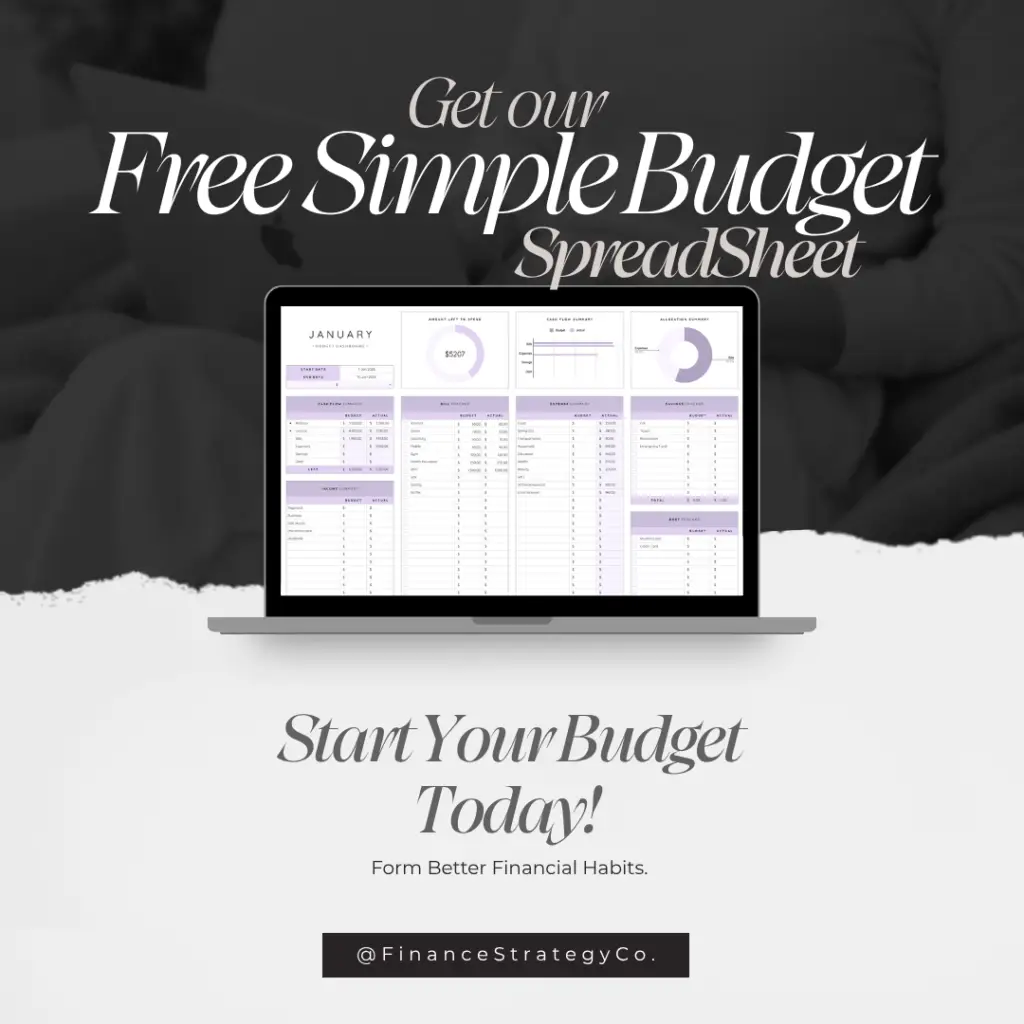
Explore the Finance Strategy Co. collection of thoughtfully designed budgeting, savings and financial planning tools created to help you organise your money, clarify your priorities and build a financial system around the life you want.
Money management, elevated.