
A budget shouldn't tell you how to live. It should help you afford the life you actually want.
For years, budgeting has been presented as a list of restrictions.
Spend less.
Cut back.
Stop buying coffee.
Cancel subscriptions.
Say no to dinners.
Save everything you can.
And while there is a place for reducing unnecessary expenses, a budget built entirely around restriction can quickly become something you resent.
Because here’s the truth:
Your financial life should still feel like your life.
You should be able to enjoy dinner with friends.
Take a holiday.
Buy something beautiful.
Invest in your home.
Spend money on your hobbies.
Create experiences with the people you love.
And still make progress towards your financial goals.
That’s where a lifestyle budget comes in.
At Finance Strategy Co., we believe your budget should be designed around your values, priorities and vision for the future.
Not someone else’s version of financial success.
Money management, elevated.
What Is a Lifestyle Budget?
A lifestyle budget is a financial plan designed around how you actually want to live.
Instead of asking:
“How little can I spend?”
you ask:
“How do I want to use my money?”
A lifestyle budget considers more than bills and savings.
It makes intentional room for:
- Essential expenses
- Financial commitments
- Savings
- Debt reduction
- Experiences
- Hobbies
- Personal spending
- Travel
- Entertainment
- Lifestyle choices
- Future goals
The exact categories will look different for everyone.
Your lifestyle budget should reflect your lifestyle.
Why Traditional Budgets Often Feel Restrictive
A traditional budget can sometimes focus heavily on what you shouldn’t spend.
That can create an unhealthy cycle:
Create an extremely restrictive budget.
↓
Follow it for a while.
↓
Feel deprived.
↓
Overspend.
↓
Feel guilty.
↓
Create an even stricter budget.
A lifestyle budget takes a different approach.
Instead of removing everything enjoyable, you intentionally decide what deserves a place.
The goal isn’t financial perfection.
It’s financial alignment.
The Finance Strategy Co. Approach
A lifestyle budget fits naturally into the Finance Strategy Method™:
KNOW → ORGANISE → PLAN → BUILD → THRIVE
KNOW
Understand your income, expenses, habits and priorities.
ORGANISE
Create a clear structure for your money.
PLAN
Decide what you want your money to make possible.
BUILD
Direct money towards savings, goals and your future.
THRIVE
Enjoy your money while continuing to move forward.
A lifestyle budget isn’t simply a spreadsheet.
It’s a strategy for living well within your financial reality.

01 - Define Your Ideal Lifestyle
Before opening a spreadsheet, think about your life.
Ask yourself:
What do I want more of?
What do I want less of?
What experiences matter to me?
What makes me feel fulfilled?
What does financial freedom look like for me?
What do I want my money to make possible?
Your answers might include:
Travel.
A beautiful home.
More time with family.
Dining out.
Health and wellbeing.
Career flexibility.
Financial security.
Experiences.
Hobbies.
Personal development.
There is no right answer.
Your lifestyle budget starts with your definition of a good life.
02 - Identify Your Financial Priorities
Choose your top priorities.
For example:
01 — Financial Security
Building savings and creating a financial buffer.
02 — Lifestyle
Enjoying the present and creating meaningful experiences.
03 — Future Goals
Saving towards major purchases or long-term objectives.
04 — Freedom
Creating greater flexibility and choice.
05 — Experiences
Travel, events and time with the people you love.
Your priorities can change over time.
That’s perfectly normal.
A financial strategy should evolve as your life evolves.
03 - Know Your Income
Start with your expected income.
Depending on your circumstances, this could include:
- Salary
- Business income
- Freelance income
- Government payments
- Investment income
- Other regular income
If your income varies, consider working with a conservative estimate rather than assuming you’ll always earn your highest amount.
Build your lifestyle around income you can reasonably rely on.
04 - Calculate Your Essential Expenses
These are the expenses required to maintain your everyday life.
Examples include:
Housing
Utilities
Groceries
Transport
Insurance
Healthcare
Essential debt repayments
Basic household expenses
These form the foundation of your budget.
Know what your life needs before deciding what your life wants.
05 - Identify Your Lifestyle Expenses
Now comes the part traditional budgeting often gets wrong.
Your lifestyle matters too.
Consider:
Restaurants
Cafés
Entertainment
Hobbies
Beauty
Clothing
Subscriptions
Travel
Personal spending
Social activities
These aren’t automatically unnecessary expenses.
They’re part of your life.
The question isn’t whether you should spend money on them.
The question is how much is appropriate for you.
06 - Build Your Financial Foundation
Before allocating heavily towards lifestyle upgrades, make sure your financial foundation is receiving attention.
This might include:
- Emergency savings
- Important financial commitments
- Debt reduction
- Upcoming expenses
- Long-term savings
Your exact priorities will depend on your circumstances.
Think of this as the infrastructure underneath your lifestyle.
A beautiful lifestyle is easier to enjoy when it’s financially supported.
07 - Create Your “Enjoyment” Category
Give enjoyment a dedicated place in your budget.
Call it whatever feels right:
Lifestyle
Fun Money
Personal
Enjoyment
Freedom
Lifestyle Fund
The name matters less than the intention.
This money is specifically available for things you enjoy.
When enjoyment is planned, it doesn’t need to feel like a financial mistake.
08 - Decide What Is Worth Paying For
This is where your lifestyle budget becomes personal.
Ask:
What do I genuinely love spending money on?
Maybe it’s travel.
Maybe it’s restaurants.
Maybe it’s fashion.
Maybe it’s your home.
Maybe it’s beauty.
Maybe it’s books.
Maybe it’s fitness.
Maybe it’s weekends away.
Maybe it’s simply having the flexibility to say yes to plans.
Now ask:
What do I spend money on that I barely value?
Those are the areas worth reconsidering.
Don’t cut what you love.
Cut what you don’t value.
09 - Create Your “Worth It” List
Make three categories:
ALWAYS WORTH IT
Things that consistently bring you value.
SOMETIMES WORTH IT
Things you enjoy occasionally.
NOT WORTH IT
Things you buy out of habit, convenience or impulse.
For example:
ALWAYS WORTH IT
Travel.
Quality food.
Experiences with family.
SOMETIMES WORTH IT
New clothes.
Beauty treatments.
Entertainment.
NOT WORTH IT
Unused subscriptions.
Random online shopping.
Purchases made because something is discounted.
Your list will be completely personal.
There is no universal lifestyle budget.
10 - Create Your Lifestyle Budget Categories
A simple structure could look like this:
ESSENTIALS
Housing
Utilities
Groceries
Transport
Insurance
FINANCIAL FOUNDATION
Emergency savings
Debt reduction
Important financial commitments
FUTURE
Long-term savings
Major goals
Investing where appropriate
LIFESTYLE
Dining
Entertainment
Hobbies
Shopping
Beauty
Personal spending
EXPERIENCES
Travel
Events
Weekends away
Special occasions
The categories should reflect your own priorities.
11 - Use Percentages as a Guide, Not a Rule
You may have heard of budgeting frameworks such as the 50/30/20 rule.
These can be useful starting points.
But they don’t need to dictate your life.
Your housing costs may be higher.
Your income may fluctuate.
Your financial goals may be aggressive.
You may value travel more than shopping.
You may have significant debt.
Your budget should fit your circumstances.
Use budgeting frameworks as inspiration rather than a rigid formula.
12 - Give Every Dollar a Purpose
One of the simplest ways to create clarity is to assign your income a destination.
For example:
Income
↓
Essentials
↓
Financial Foundation
↓
Future Goals
↓
Lifestyle
↓
Experiences
The exact allocation will vary.
The principle remains:
Your money should have somewhere to go before you decide where it went.

13 - Plan for Irregular Expenses
Your lifestyle budget shouldn’t only consider monthly expenses.
Life happens throughout the year.
You may have:
Car registration
Insurance
Birthdays
Christmas
School expenses
Annual memberships
Travel
Home maintenance
These expenses can be managed through sinking funds.
Instead of allowing them to disrupt your monthly budget, gradually set money aside.
Prepare for the expenses you already know are coming.
14 - Create a Lifestyle Sinking Fund
You can also create sinking funds specifically for lifestyle goals.
For example:
TRAVEL
Save throughout the year for your next holiday.
HOME
Build towards furniture, décor or improvements.
EXPERIENCES
Save for concerts, events or special occasions.
PERSONAL
Prepare for larger personal purchases.
A sinking fund turns a lifestyle desire into a financial plan.
15 - Budget for the Life You Want, Not the Life You Have Today
This is where your budget can become a powerful planning tool.
Perhaps you currently don’t travel much.
But you want travel to become a bigger part of your life.
Instead of waiting until you magically “have more money,” start creating space for it.
Even a small travel allocation tells your money:
“This matters to me.”
The same applies to:
Home ownership.
Career flexibility.
Education.
Business ownership.
Experiences.
Financial freedom.
Your budget can begin building the future before you arrive there.
16 - Create a “Future Lifestyle” Category
Your current lifestyle isn’t necessarily your final lifestyle.
Perhaps you want to:
- Work fewer hours
- Travel more
- Move somewhere new
- Start a business
- Upgrade your home
- Take more time off
- Retire earlier
- Have greater financial flexibility
Create savings goals around those ambitions.
Call it:
Future Lifestyle
Freedom Fund
Dream Fund
Future Me
This transforms your budget from a tool for managing today’s money into a tool for designing tomorrow.
17 - Give Yourself Permission to Spend
This might be one of the most important parts of a sustainable budget.
If you’ve deliberately allocated money towards lifestyle spending, use it.
You don’t need to feel guilty because you bought dinner.
You don’t need to feel guilty because you went shopping.
You don’t need to feel guilty because you booked a weekend away.
If the spending fits within your strategy and doesn’t compromise important priorities:
Enjoy it.
A budget isn’t successful because you spend nothing.
It’s successful because your spending is intentional.
18 - Avoid Lifestyle Inflation
As your income increases, it’s tempting to immediately increase your lifestyle.
A larger salary can become:
A larger home.
A newer car.
More subscriptions.
More dining out.
More shopping.
More expensive holidays.
And suddenly, despite earning more, you don’t feel significantly wealthier.
Instead, consider dividing income increases between:
Lifestyle
Savings
Financial goals
Future opportunities
You can absolutely improve your lifestyle.
Just make sure your financial position improves alongside it.
19 - Create Your “Luxury Without Excess” Strategy
Luxury doesn’t need to mean spending more.
Sometimes it means choosing better.
Instead of constantly purchasing:
More clothes
Choose pieces you genuinely love.
Instead of:
More entertainment
Choose experiences you’ll remember.
Instead of:
More possessions
Create a home you enjoy being in.
Instead of:
Constant convenience spending
Spend intentionally on the conveniences that genuinely improve your life.
Luxury is often about quality, intention and experience, not excess.
20 - Build Your Personal Spending Philosophy
Create a few rules that reflect your values.
For example:
I spend generously on experiences.
I save before making major purchases.
I don’t buy things simply because they’re discounted.
I prioritise quality over quantity.
I budget for travel.
I protect my financial goals.
I allow myself guilt-free spending within my lifestyle budget.
Your rules don’t need to look like anyone else’s.
They’re your financial philosophy.

21 - Review Your Budget Every Month
Your lifestyle budget isn’t something you create once and forget.
Each month, review:
What worked?
What didn’t?
Did I overspend anywhere?
Did I underspend because the category isn’t important to me?
Are my priorities still the same?
Did an unexpected expense appear?
Do I need to adjust my savings?
This isn’t about judging yourself.
It’s about refining your system.
22 - Don't Budget Based on Your Best Month
If your income varies, avoid building your lifestyle around your highest-earning month.
Instead, consider a realistic baseline.
Then, when you earn more, you can deliberately decide what happens to the additional money.
Perhaps:
50% → Future goals
30% → Savings
20% → Lifestyle
Those percentages are simply an example.
Your strategy should reflect your circumstances.
Stability is more valuable than a budget that only works when everything goes perfectly.
23 - Create a “Yes” Budget
This is one of the most enjoyable ways to think about lifestyle budgeting.
Instead of creating a budget full of:
NO
NO
NO
Create a budget around:
YES.
Yes to travel.
Yes to dinner with friends.
Yes to your hobbies.
Yes to your home.
Yes to financial security.
Yes to your future.
The question becomes:
“What do I want my money to say yes to?”
That’s a much more inspiring way to budget.
The Lifestyle Budget Example
Imagine someone has a monthly take-home income of $5,000.
Their budget might look something like:
ESSENTIALS
$2,500
FINANCIAL FOUNDATION
$500
FUTURE GOALS
$750
LIFESTYLE
$750
EXPERIENCES
$500
This is simply an illustrative example.
Your numbers may look completely different.
The important part is that the budget has room for:
Today.
Tomorrow.
Security.
Enjoyment.
Balance creates sustainability.
What If Your Lifestyle Costs More Than Your Income?
This is where your strategy becomes especially important.
If your desired lifestyle currently costs more than you can comfortably afford, don’t abandon the vision.
Instead, identify the gap.
Ask:
What can I reduce?
What can I delay?
What can I save towards?
What can I prioritise?
Can I increase my income?
Which parts of my lifestyle matter most?
You may not be able to afford everything immediately.
But you can decide what comes first.
Your Lifestyle Budget Audit
Take your last 30 days of spending.
For every expense, ask:
KEEP
This genuinely adds value.
REDUCE
I enjoy it, but I could spend less.
REMOVE
I don’t value this anymore.
REDIRECT
This money could support a more important goal.
This simple exercise can reveal significant opportunities without making your lifestyle feel deprived.
The “Worth It” Test
Before a significant lifestyle purchase, ask:
Does this fit my budget?
Do I genuinely value it?
Will I still value it later?
Is there something else I’d rather use the money for?
Does this purchase support the life I’m creating?
If the answer is yes:
Enjoy the purchase.
If the answer is no:
Keep the money for something that matters more.
The Most Important Rule of a Lifestyle Budget
Don’t create a budget for someone else’s life.
Your friend might love designer clothing.
You might prefer travel.
Someone else might spend heavily on restaurants.
You might prefer investing in your home.
Another person might prioritise early retirement.
You might prioritise flexibility today.
There is no universal definition of a successful financial life.
Your money strategy should be as individual as you are.
The Psychology of a Lifestyle Budget
A good budget isn’t simply mathematical.
It’s psychological.
If your budget constantly tells you:
“You can’t.”
eventually, you may stop listening.
But if your budget tells you:
“Here’s what matters to you, and here’s how we’re going to fund it.”
you create something much more sustainable.
You’re not fighting your lifestyle.
You’re designing it.
Your Budget Should Feel Like Freedom
This may sound counterintuitive.
But the right budget can actually create more freedom.
When you know your bills are covered…
When you know you’re saving…
When you know your goals are being funded…
When you have money available for enjoyment…
You can spend with significantly less anxiety.
Structure creates freedom.
That’s the beauty of a lifestyle budget.
The Luxury of Financial Clarity
There is a quiet luxury in opening your bank account and knowing exactly what your money is doing.
You know:
What’s for bills.
What’s for savings.
What’s for your future.
What’s available to enjoy.
What’s building your goals.
You aren’t constantly wondering whether you can afford something.
You already have a strategy.
That is financial clarity.
Build a Life That Feels Good, and Is Financially Sustainable
The goal isn’t to create the most impressive lifestyle.
It’s to create one that feels meaningful to you.
Maybe that’s:
A beautiful home.
Annual travel.
Slow mornings.
Good food.
Time with family.
Career flexibility.
Financial security.
Experiences.
Personal freedom.
Whatever your version looks like, give it a financial strategy.
Because the life you want deserves more than a vague wish.
It deserves a plan.
The Finance Strategy Method™
Your lifestyle budget is part of a bigger picture.
KNOW
Understand your money and your current lifestyle.
ORGANISE
Give your income and expenses structure.
PLAN
Decide what deserves your money.
BUILD
Save, prepare and work towards your future.
THRIVE
Enjoy the life your financial strategy is helping you create.
This is the Finance Strategy Co. philosophy.
Money isn’t simply something to manage.
It’s something to intentionally direct.
Your Money. Your Lifestyle. Your Future.
A lifestyle budget isn’t about spending less just for the sake of spending less.
It’s about making sure your money is going where it matters.
Spend on what you love.
Save for what you want.
Prepare for what you know is coming.
Reduce what doesn’t add value.
Protect your future.
And enjoy your present.
You don’t need a smaller life to have a better financial life.
You need a smarter strategy.
The Art of Living Well With Your Money
Financial success doesn’t have to look like deprivation.
It can look like:
A fully funded holiday.
A comfortable home.
A healthy savings account.
A dinner with people you love.
A beautiful purchase you planned for.
A financial buffer when life surprises you.
The freedom to make choices.
That’s what intentional money management can create.
Not a life where you never spend.
A life where you know exactly what your spending is creating.
Start Designing Your Lifestyle Budget Today
You don’t need to rebuild your entire financial life overnight.
Start with three questions:
01 — What matters most to me?
02 — Where is my money currently going?
03 — What do I want my money to make possible?
Then begin building your budget around those answers.
One category at a time.
One goal at a time.
One intentional decision at a time.
KNOW.
ORGANISE.
PLAN.
BUILD.
THRIVE.
That is the Finance Strategy Method™.
And that’s how you create a financial life that doesn’t simply look good on paper.
It feels good to live.
Ready to Elevate Your Money Strategy?
Your lifestyle deserves a financial system designed around it.
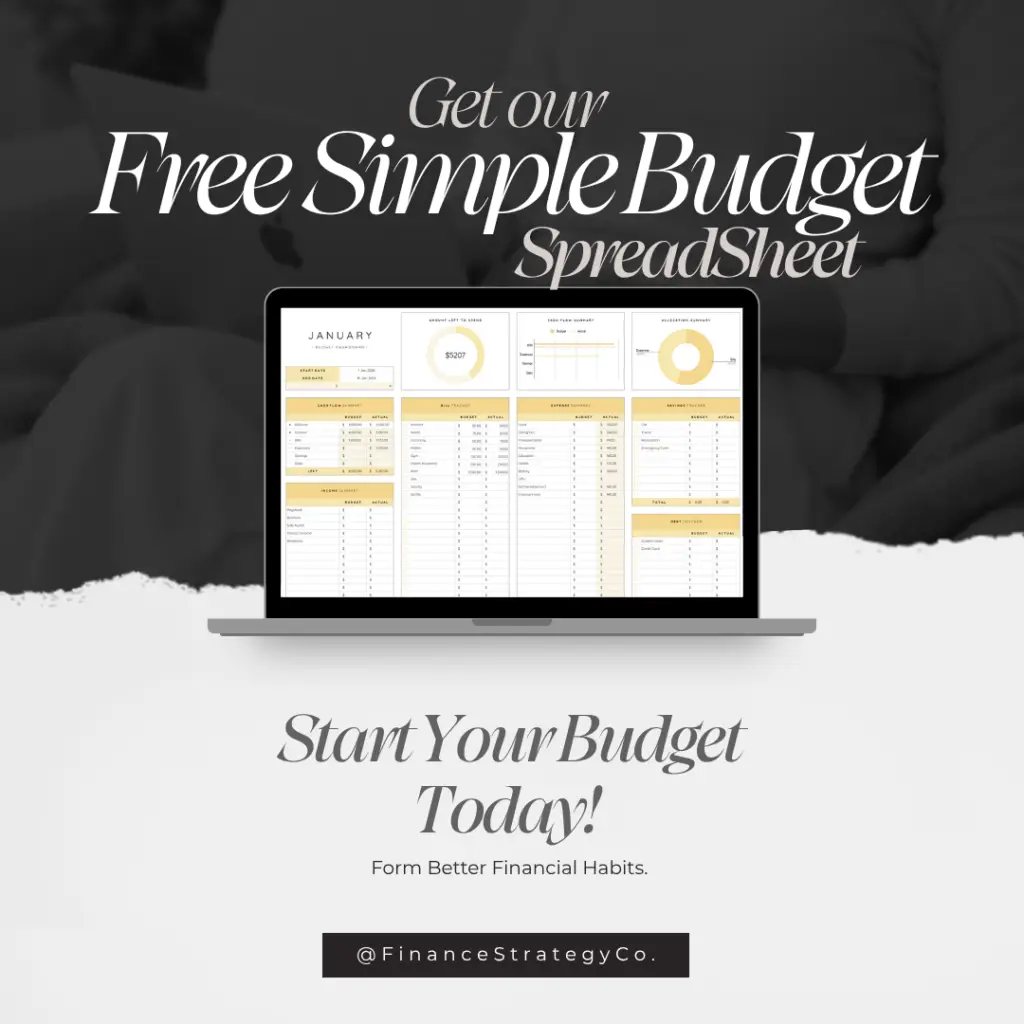
Explore the Finance Strategy Co. collection of thoughtfully designed budgeting, savings and financial planning tools created to help you organise your money, clarify your goals and create a financial strategy that supports the life you want.
Money management, elevated.