
Spend less on what doesn't matter. Spend intentionally on what does.
What if your spending could tell the story of the life you're trying to create?
Not the life social media tells you to want.
Not the lifestyle your friends have.
Not the version of success you’re expected to pursue.
Your life.
Your priorities.
Your values.
Your vision for the future.
Every time you spend money, you’re making a decision about what matters to you.
Some purchases create convenience.
Some create memories.
Some create security.
Some create opportunity.
And some simply disappear without adding much value to your life.
At Finance Strategy Co., we believe intentional spending isn’t about spending less for the sake of spending less.
It’s about making your money feel aligned.
Because when your spending reflects your values, your money starts working towards the life you actually want.
What Does It Mean to Spend According to Your Values?
Your values are the principles and priorities that matter most to you.
They might include:
Family
Freedom
Travel
Health
Home
Education
Experiences
Creativity
Security
Career
Community
Personal growth
Financial independence
Your values are personal.
There is no universal list.
What matters to someone else doesn’t have to matter to you.
And that is where intentional spending begins.
Your Spending Is a Reflection of Your Priorities
Take a look at your bank statement.
It tells a story.
Maybe your money is going towards:
Dining out.
Online shopping.
Subscriptions.
Travel.
Your home.
Fitness.
Entertainment.
Investments.
Savings.
Education.
Debt.
Some of those expenses may be deeply aligned with your values.
Others may not be.
The goal isn’t to judge your spending.
It’s to understand it.
The Difference Between Spending and Intentional Spending
Spending is simply exchanging money for something.
Intentional spending adds another question:
“Is this worth it to me?”
Before purchasing something, consider:
Does it bring genuine value?
Does it support my priorities?
Would I choose it again?
Does it move me towards or away from my goals?
Am I buying it because I want it, or because I feel I should?
Intentional spending creates a pause between desire and decision.
You Don't Have to Spend Less Everywhere
This is one of the biggest misconceptions about budgeting.
You don’t necessarily need to cut everything.
Instead, you can become more selective.
Perhaps you decide:
Spend more on:
Travel.
Quality food.
Your home.
Fitness.
Education.
Family experiences.
Spend less on:
Unused subscriptions.
Impulse purchases.
Trends you don’t genuinely like.
Convenience spending you don’t value.
Things that create clutter.
The goal is not deprivation.
It’s prioritisation.
Find Your “Worth It” Categories
Think about the things you consistently enjoy spending money on.
Maybe it’s:
TRAVEL
You value seeing new places and creating memories.
HOME
You value having a beautiful, comfortable environment.
HEALTH
You value investing in your physical and mental wellbeing.
EXPERIENCES
You value dinners, concerts and time with people you love.
EDUCATION
You value learning and personal development.
FREEDOM
You value having savings that give you options.
These are your “worth it” categories.
Find Your “Not Worth It” Categories
Now consider the opposite.
What spending regularly leaves you thinking:
“Why did I buy that?”
“I don’t even use this.”
“I only bought it because it was on sale.”
“I forgot I even had this subscription.”
“I could have put that money towards something I actually wanted.”
These purchases aren’t necessarily wrong.
But if they repeatedly don’t add value, they’re opportunities.
You can redirect that money towards something you genuinely care about.
Your Values Can Change
Your priorities aren’t fixed.
What mattered to you at 20 may not matter at 30.
What mattered before buying a home may change after buying one.
Your priorities may shift when you:
Change careers.
Start a business.
Have children.
Travel.
Move house.
Approach retirement.
Your spending strategy should evolve with you.

Create Your Personal Values List
Take a few minutes and choose your top five values.
For example:
Freedom
Family
Health
Travel
Security
Then ask:
“Does my spending reflect these five things?”
You might be surprised by what you discover.
The Values–Spending Audit
Here’s a simple exercise you can use to bring your spending into alignment.
STEP 1 – Choose Your Values
Select your five most important priorities.
STEP 2 – Review Your Spending
Look through the last 30 days of transactions.
STEP 3 – Categorise
For each major expense, ask:
Aligned
Does this support my values?
Neutral
Is this necessary but not particularly meaningful?
Misaligned
Does this consistently take money away from things I care about?
STEP 4 – Look for Patterns
Don’t focus on one purchase.
Look at the overall picture.
STEP 5 – Redirect
Identify spending you could reduce and where that money could go instead.
Your Bank Statement Is a Mirror
This exercise isn’t about feeling guilty.
It’s about creating awareness.
Imagine saying:
“I value travel.”
But you spend hundreds every month on online shopping you barely remember.
Or:
“I value financial security.”
But most of your discretionary income disappears before you contribute to savings.
Or:
“I value experiences with my family.”
But your money is consistently going towards things that don’t create those experiences.
Your stated values and your financial behaviour should have a conversation.
Spending Alignment Doesn't Mean Perfect Alignment
You don’t need every dollar to perfectly reflect your values.
Some expenses are simply necessary.
You need:
Housing.
Utilities.
Food.
Transport.
Insurance.
Healthcare.
Other essentials.
Not every dollar needs to be meaningful.
The goal is to become more intentional with the money you have discretionary control over.
Build a Budget Around Your Values
Instead of creating a generic budget, start with your priorities.
Your budget might include:
ESSENTIALS
The expenses required to support your life.
SECURITY
Emergency savings and financial buffers.
FUTURE
Long-term savings and investing.
VALUES
The things you genuinely care about.
FLEXIBILITY
Money available for unexpected or spontaneous choices.
A values-based budget gives your money more meaning.
Create a “Values” Budget Category
You could take this one step further.
Create a specific category called:
Values
Then allocate money towards your highest priorities.
For example:
Travel – $200
Health – $100
Experiences – $150
Future freedom – $200
The numbers will look different for everyone.
The principle is what matters.
You are intentionally directing money towards the life you value.
Stop Budgeting for an Imaginary Version of Yourself
This is a common budgeting mistake.
You create a budget based on who you think you should be.
Perhaps you decide:
“I’ll never eat out.”
“I won’t spend money on clothes.”
“I’ll never buy coffee.”
“I’ll stop travelling.”
“I’ll completely eliminate entertainment.”
It looks financially responsible.
But if it doesn’t reflect your actual life, it won’t last.
Create a budget for the person you actually are, and the person you’re becoming.
Don't Let Other People's Priorities Become Your Expenses
You don’t need:
The newest phone.
The designer handbag.
The luxury car.
The expensive holiday.
The latest trend.
The perfectly decorated home.
Unless those things genuinely matter to you.
Luxury is personal.
For one person, luxury might be a five-star holiday.
For another, it might be working four days a week.
For someone else, it might be having six months of expenses saved.
Spend according to your definition of luxury.

Intentional Spending Can Feel Luxurious
There is something incredibly satisfying about knowing:
“I chose this.”
Not:
“I bought this because everyone else has it.”
Not:
“I bought this because I was stressed.”
Not:
“I bought this because it was on sale.”
But:
“I decided this was worth my money.”
That’s intentional spending.
The Cost Per Use Test
When considering a larger purchase, ask:
“How often will I realistically use this?”
A $500 item used once may feel expensive.
A $500 item used hundreds of times may provide significantly more value.
This isn’t about making every purchase mathematical.
It’s simply a useful way to consider value.
Price is only one part of the equation.
The “Would I Buy It Again?” Test
Look at your existing purchases.
Ask:
“If I didn’t already own this, would I buy it again today?”
If the answer is no, you’ve learned something.
Maybe the purchase was:
An impulse.
A trend.
A poor fit.
A one-time experiment.
Or simply something your priorities have changed around.
Your past spending can teach you about your future priorities.
The “What Am I Really Buying?” Question
Sometimes the thing we’re purchasing isn’t actually what we want.
Maybe you’re buying:
A new outfit because you want confidence.
A holiday because you need rest.
A takeaway because you’re exhausted.
A luxury item because you want recognition.
A new gadget because you’re bored.
Ask yourself:
“What am I really looking for?”
Sometimes you need the purchase.
Sometimes you need something else.
Emotional Spending Isn't a Character Flaw
We all make emotional purchases.
Stress.
Boredom.
Celebration.
Sadness.
Excitement.
Social pressure.
Can all influence spending.
Instead of judging yourself, become curious.
What emotions tend to trigger your spending?
Once you understand your patterns, you can create better strategies.
Create a Pause Before Impulse Purchases
You don’t have to eliminate spontaneous spending.
But you can create a pause.
Try:
The 24-Hour Rule
Wait a day before buying non-essential items.
The 48-Hour Rule
Use a longer pause for larger purchases.
The Wishlist
Add it to a list instead of buying immediately.
The Question
Ask:
“Would I still want this if it wasn’t on sale?”
A pause creates space for intention.
Use Your Wishlist as a Filter
Create one place for things you want.
Instead of buying immediately, add them to your wishlist.
Review it later.
You may discover:
You still want it.
You don’t care anymore.
You found a better option.
You’d rather use the money elsewhere.
Delayed spending can reveal genuine priorities.
Spend More on Experiences If Experiences Matter to You
If your values include:
Travel.
Adventure.
Family.
Friendship.
Memories.
Then your budget should make room for those things.
You don’t need to justify them simply because they aren’t tangible assets.
A meaningful life has value beyond your bank balance.
Spend More on Quality If Quality Matters to You
Being intentional doesn’t always mean choosing the cheapest option.
Sometimes a higher-quality product:
Lasts longer.
Works better.
Gets used more.
Creates more enjoyment.
Reduces replacement costs.
If quality genuinely matters to you, it can be reasonable to reflect that in your spending.
Intentional spending isn’t cheap spending.

Spend Less on Convenience If It Doesn't Add Enough Value
Convenience can be wonderful.
But convenience spending can also quietly become a large part of your budget.
Think:
Food delivery.
Rideshares.
Express shipping.
Subscription services.
Convenience purchases.
Ask:
“Is this convenience worth the money to me?”
Sometimes the answer will be yes.
Sometimes no.
The goal is conscious choice.
Align Your Spending With Your Future Self
Your values aren’t only about today.
Think about the person you want to become.
Perhaps future you wants:
A home.
Financial independence.
More travel.
A business.
More time.
A comfortable retirement.
Ask:
“Would future me be happy that I spent this money?”
That question can be surprisingly powerful.
Create a “Future Me” Category
Alongside your lifestyle spending, create a category for your future.
It could include:
Savings
Investments
Debt reduction
Education
Business
Home deposit
Every contribution is a vote for your future self.
Your Spending Should Support Both Today and Tomorrow
Intentional spending isn’t about choosing between your present and your future.
A healthy financial strategy creates space for both.
TODAY
Enjoy your life.
TOMORROW
Prepare for what’s ahead.
LATER
Build long-term wealth and freedom.
Your money can support multiple versions of you.
What If Your Values and Your Budget Don't Match?
Don’t panic.
This is useful information.
Maybe you value travel but don’t currently have enough money for it.
That doesn’t mean travel isn’t a value.
It means you may need a strategy.
You could:
Create a travel sinking fund.
Reduce low-value spending.
Increase your income.
Adjust the timing.
Choose a lower-cost experience.
Values create direction.
Your financial strategy creates the path.
What If Everything Feels Important?
This is common.
If everything is a priority, nothing is.
Choose your top three.
For example:
01 – Financial security
02 – Travel
03 Health
Then build your spending around those priorities.
You can still spend elsewhere.
But your most important values receive intentional attention.
Your Values Can Help You Say No
One of the most powerful benefits of knowing your values is that saying no becomes easier.
You can say:
“No, I’d rather save for my holiday.”
“No, I don’t need another subscription.”
“No, that isn’t worth the money to me.”
“No, I’d rather put that towards my home.”
You’re not missing out.
You’re choosing something else.
Create Your Personal Money Rules
Values can become simple financial rules.
For example:
“I prioritise experiences over things.”
“I save before I spend.”
“I buy fewer, better-quality items.”
“I don’t spend money to impress people.”
“I invest in my future every month.”
“I spend generously on the people I love.”
These aren’t rules for everyone.
They’re rules for you.
The Finance Strategy Method™
This is where values-based spending fits into your wider financial strategy.
KNOW → ORGANISE → PLAN → BUILD → THRIVE
KNOW
Understand where your money is going.
ORGANISE
Create categories that reflect your real life.
PLAN
Identify your values and financial priorities.
BUILD
Direct money towards savings, debt reduction and long-term wealth.
THRIVE
Use your financial resources to create a life that feels meaningful.
Your spending is part of your strategy.
A Values-Based Money Reset
If your spending currently feels disconnected from your priorities, try this simple reset.
STEP 1
Write down your five most important values.
STEP 2
Review your last month’s spending.
STEP 3
Circle purchases that genuinely added value.
STEP 4
Highlight spending that didn’t.
STEP 5
Choose three categories to reduce.
STEP 6
Redirect that money towards your values.
STEP 7
Review your progress next month.
You don’t need to transform everything overnight.
Alignment is built through small decisions.
10 Questions to Help Align Your Spending With Your Values
Ask yourself:
01
What matters most to me?
02
What do I want more of in my life?
03
What do I want less of?
04
Where does my money currently go?
05
Which expenses genuinely improve my life?
06
Which expenses do I regret?
07
What am I willing to spend more on?
08
What am I willing to spend less on?
09
What am I building for my future?
10
Does my spending reflect the person I want to become?
Your answers can become your personal spending strategy.
Your Money Tells a Story
Every financial decision contributes to the story you’re creating.
A savings contribution says:
My future matters.
An investment contribution says:
I’m building something long term.
A holiday says:
Experiences matter to me.
A family dinner says:
Connection matters.
Paying off debt says:
Freedom matters.
Buying something beautiful that you genuinely value says:
Enjoyment matters too.
There is no single right story.
Write yours intentionally.
The Art of Spending Without Regret
Regret often comes from spending that feels disconnected from what we actually value.
Intentional spending changes the question.
Instead of:
“Can I afford this?”
Also ask:
“Do I value this?”
Because something can be affordable and still not be worth it.
And something can be expensive and still be deeply meaningful.
Affordability is about whether you can pay.
Alignment is about whether you want to.
The Goal Isn't to Spend Perfectly
You will still make spontaneous purchases.
You will still occasionally overspend.
You will still buy something you don’t need.
That’s okay.
Intentional spending isn’t perfection.
It’s awareness.
When you notice your spending drifting away from your priorities, you simply realign.
Your Financial Life Should Feel Like Yours
There is no perfect budget.
No perfect lifestyle.
No perfect spending ratio.
No universal definition of financial success.
There is only the strategy that fits you.
The goal is to create a financial life where:
Your money supports your values.
Your spending reflects your priorities.
Your savings support your goals.
Your investments support your future.
And your financial system gives you room to enjoy today.
The Quiet Luxury of Aligned Spending
Imagine opening your bank account and knowing your money is going towards things you genuinely care about.
Not because you spend more.
Because you spend better.
Less clutter.
Less impulse.
Less comparison.
Less guilt.
More intention.
More clarity.
More meaning.
That is the quiet luxury of financial alignment.
Your Money. Your Values. Your Life.
Your money doesn’t need to impress anyone.
It needs to support you.
The life you want.
The experiences you value.
The people you love.
The future you’re building.
Spend less on what doesn’t matter.
Spend intentionally on what does.
Because when your money reflects your values, budgeting becomes more than a financial exercise.
It becomes a way of designing your life.
KNOW → ORGANISE → PLAN → BUILD → THRIVE
Know what matters.
Organise your money around it.
Plan for your priorities.
Build towards your future.
And create the freedom to thrive.
That’s the Finance Strategy Method™.
Because your money isn’t just about what you can buy.
It’s about what your money can make possible.
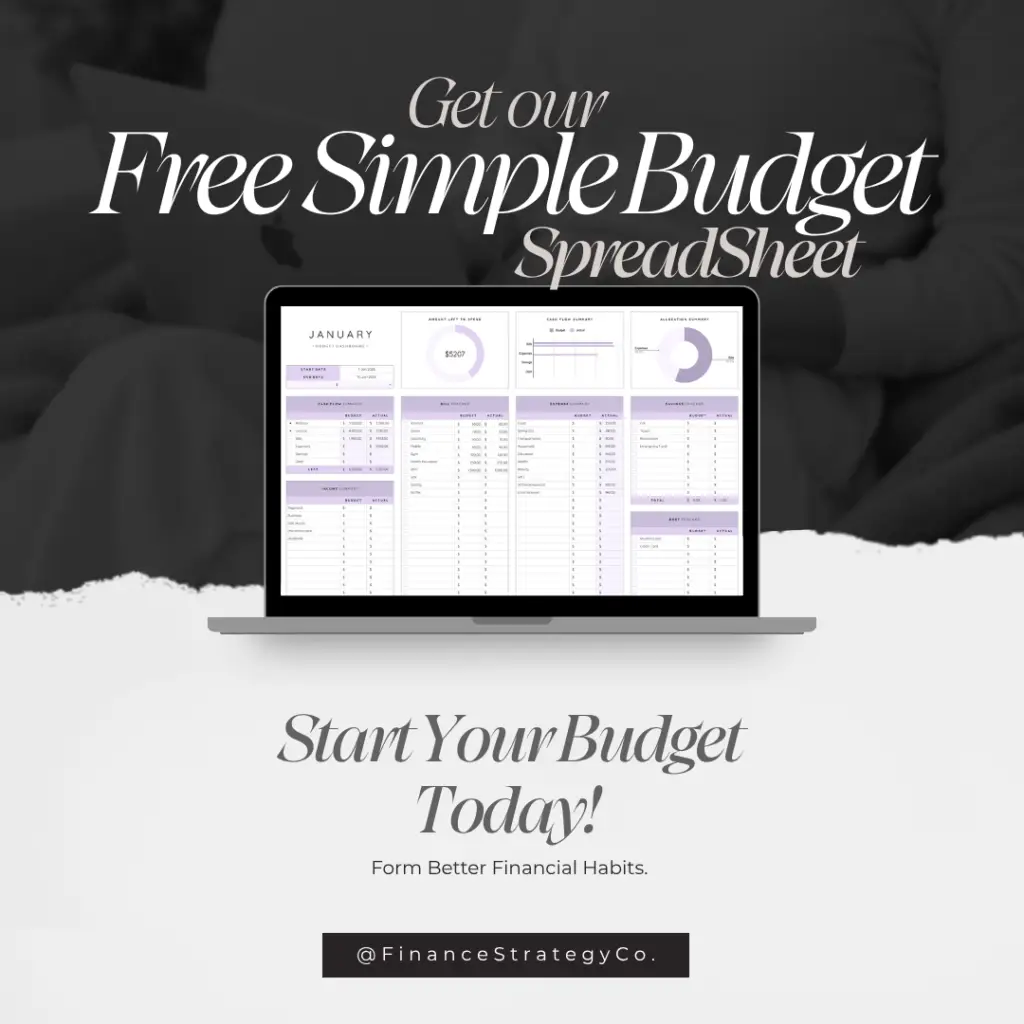
Ready to Make Your Money More Intentional?
Finance Strategy Co. creates thoughtfully designed financial tools to help you organise your money, build better habits, plan your goals and create a financial system that reflects the life you actually want.
Money management, elevated.