
Spend with purpose. Choose with confidence. Create a life that feels like yours.
There is a difference between spending money and spending intentionally.
We spend money every day.
On groceries.
Coffee.
Bills.
Clothes.
Entertainment.
Subscriptions.
Experiences.
Convenience.
And the occasional purchase we absolutely didn’t plan to make.
But how often do we stop and ask:
“Does this spending actually support the life I want?”
That’s the heart of intentional spending.
It isn’t about spending less on everything.
It isn’t about removing every luxury from your life.
And it certainly isn’t about feeling guilty whenever you buy something you enjoy.
Intentional spending is about becoming selective with your money.
It’s deciding what deserves a place in your financial life — and confidently letting go of what doesn’t.
At Finance Strategy Co., we believe money should be used with purpose.
Because when your spending reflects your values, your financial life begins to feel less restrictive and far more empowering.
What Is Intentional Spending?
Intentional spending means making purchasing decisions based on your values, priorities and financial goals, rather than simply spending out of habit, impulse or social pressure.
Instead of asking:
“Can I afford this?”
you begin asking:
“Is this worth it to me?”
That small change can completely transform the way you think about money.
You may decide that dining at your favourite restaurant is absolutely worth the money.
You may decide that travel is one of your highest priorities.
You may happily spend money on quality clothing.
You may decide that your morning coffee is part of the lifestyle you enjoy.
At the same time, you may realise that you’re spending hundreds of dollars each month on things you barely notice.
Intentional spending isn’t about judging your choices.
It’s about understanding them.
The Difference Between Cheap and Intentional
This distinction matters.
Being cheap often means focusing primarily on spending as little as possible.
Intentional spending asks a different question:
“What provides the greatest value to me?”
Sometimes that means spending less.
Sometimes it means spending more.
Imagine you purchase three inexpensive items because they’re on sale, but none of them are something you genuinely need.
Alternatively, you save for several weeks and purchase one high-quality item that you’ve wanted for months.
The second purchase may cost more.
But it could provide significantly more value.
Intentional spending isn’t about the lowest price.
It’s about the right price for something you genuinely value.
Why Intentional Spending Matters
Without intention, spending can become automatic.
You see something.
You want it.
You buy it.
You move on.
Then another purchase happens.
And another.
None of these purchases may seem significant individually.
But together, they can quietly consume a substantial amount of your income.
Intentional spending creates a pause.
It gives you the opportunity to ask:
Do I need this?
Do I want this?
Can I comfortably afford it?
Does it align with my priorities?
Will I still value it later?
That pause can be incredibly powerful.
The Finance Strategy Co. Philosophy
At Finance Strategy Co., we don’t believe financial success should mean creating a life you don’t enjoy.
Instead, we believe your money should support your priorities.
That philosophy fits naturally within the:
KNOW → ORGANISE → PLAN → BUILD → THRIVE
framework.
KNOW
Understand where your money is currently going.
ORGANISE
Create structure around your spending.
PLAN
Decide what deserves priority.
BUILD
Direct money towards your financial goals.
THRIVE
Enjoy your money with greater confidence and intention.
Intentional spending isn’t restriction.
It’s alignment.

01 - Define What Matters to You
Before you can spend intentionally, you need to understand what you’re spending for.
Ask yourself:
What do I value most?
Maybe your answer is:
Travel.
Family.
Your home.
Experiences.
Health.
Freedom.
Education.
Creativity.
Security.
Quality.
Time.
Your values are personal.
There is no perfect list.
Your spending priorities should reflect your life, not someone else’s.
02 - Create Your Personal Money Priorities
Choose your top five.
For example:
01 — Financial Security
Building savings and reducing financial stress.
02 — Travel
Creating meaningful experiences.
03 — Home
Creating a space you genuinely love.
04 — Experiences
Spending time with people who matter.
05 — Freedom
Building greater flexibility for the future.
Now compare your priorities with your spending.
Does your money reflect what you say matters?
If travel is your number-one priority but you spend more on impulse shopping than travel, there may be an opportunity to realign your finances.
03 - Discover Your “Worth It” Categories
Create three lists.
ALWAYS WORTH IT
The things you genuinely value.
SOMETIMES WORTH IT
Things you enjoy but don’t need frequently.
NOT WORTH IT
Things you regularly purchase but rarely appreciate afterwards.
For example:
ALWAYS WORTH IT
Travel.
Dinner with close friends.
Quality skincare.
SOMETIMES WORTH IT
New clothing.
Concerts.
Home décor.
NOT WORTH IT
Random online purchases.
Unused subscriptions.
Impulse purchases made from boredom.
Your list will look different.
That’s exactly the point.
Intentional spending is personal.
04 - Audit Your Last 30 Days
Want to discover your spending patterns?
Look backwards.
Review your last month of transactions.
Don’t judge anything.
Simply observe.
Categorise your spending into:
Essentials
Lifestyle
Goals
Impulse
Convenience
Subscriptions
Experiences
Then ask:
What surprised me?
What brought me genuine value?
What would I happily spend money on again?
What could I have skipped?
Where did convenience replace intention?
This exercise isn’t about guilt.
It’s about awareness.
05 - Identify Your Financial Leaks
Financial leaks are small spending habits that can quietly drain your money.
They might include:
- Forgotten subscriptions
- Frequent takeaway
- Online shopping
- Convenience purchases
- Unused memberships
- Duplicate services
- Small impulse purchases
- Automatic renewals
None of these expenses are automatically “bad.”
The question is:
Are they worth it to you?
If not, redirect that money.
Even a modest recurring expense can become meaningful when redirected towards a goal.
06 - Introduce the “Pause Before You Purchase”
One of the simplest intentional spending habits is creating a pause.
For small purchases, give yourself a few minutes.
For larger purchases, consider waiting 24–48 hours.
Ask:
Do I genuinely want this?
Do I need it?
Do I already own something similar?
Can I afford it without compromising my priorities?
Would I buy it at full price?
Where will it be six months from now?
Sometimes you’ll decide not to buy it.
Other times, you’ll still want it.
That’s okay.
The goal isn’t to eliminate spending.
It’s to make the decision conscious.
07 - Stop Shopping Because Something Is “On Sale”
A discount isn’t a saving if you didn’t need the item.
This is one of the most powerful spending mindset shifts.
Instead of:
“It’s 40% off!”
ask:
“Would I have bought this if it wasn’t discounted?”
If the answer is no, you’re not necessarily saving 40%.
You’re potentially spending 60% on something you didn’t plan to buy.
A sale is only valuable when the purchase itself is valuable.

08 - Create a Lifestyle Budget
Intentional spending doesn’t mean removing enjoyment from your budget.
Quite the opposite.
Create space for it.
Your lifestyle budget could include:
- Dining out
- Entertainment
- Hobbies
- Travel
- Beauty
- Clothing
- Personal spending
- Experiences
The amount will depend on your income, obligations and financial goals.
Give enjoyment a place in your strategy.
When you have a defined amount available, spending can feel far more intentional.
09 - Create a “Luxury List”
This is a beautiful way to bring the Finance Strategy Co. philosophy into your finances.
Write down the experiences and purchases that make your life feel elevated.
Perhaps:
A beautiful dinner.
A weekend away.
Fresh flowers.
Quality clothing.
A peaceful morning.
A beautiful home.
A massage.
Travel.
Time with family.
Then decide which luxuries are genuinely meaningful.
Luxury becomes more valuable when it’s intentional.
10 - Choose Quality Over Quantity
Sometimes spending intentionally means buying fewer things.
Instead of purchasing several items simply because they’re inexpensive, consider saving for one item that genuinely meets your needs.
This can apply to:
- Clothing
- Furniture
- Technology
- Homewares
- Beauty
- Travel
- Experiences
Quality doesn’t always mean expensive.
And expensive doesn’t automatically mean quality.
The goal is simply to consider:
Value over volume.
11 - Create a Wishlist
Instead of buying something immediately, add it to a wishlist.
Include:
Item
Price
Date added
Why I want it
Priority
Then revisit the list later.
You may discover that you no longer want some items.
Others may remain priorities.
Time is one of the best filters for unnecessary spending.
12 - Give Large Purchases a Strategy
Large purchases deserve more than a quick decision.
Before buying, consider:
COST
What is the total cost?
VALUE
How much value will it provide?
TIMING
Do you need it now?
OPPORTUNITY COST
What else could this money do?
CASH FLOW
Can you comfortably afford it?
GOALS
Will it delay an important financial goal?
You don’t necessarily need to say no.
You simply need to understand the decision.
13 - Use Sinking Funds for Lifestyle Goals
Want to travel?
Create a travel fund.
Want to upgrade your home?
Create a home fund.
Want to prepare for Christmas?
Create a Christmas fund.
Want to purchase something significant?
Create a dedicated savings goal.
This turns:
“I want that.”
into:
“I’m intentionally building towards that.”
That’s a very different relationship with money.
14 - Make Your Money Reflect Your Values
Here’s a simple exercise.
Look at your monthly spending.
Then look at your top five values.
Now ask:
“Does my spending reflect these values?”
If family is important, are you creating financial space for experiences together?
If freedom matters, are you building savings?
If travel matters, are you funding your travel goals?
If security matters, are you building your financial foundation?
If your home matters, are you intentionally investing in it?
Your bank statement is a reflection of your priorities.
Make sure you recognise yourself in it.
15 - Learn the Difference Between Wanting and Valuing
Wanting something is temporary.
Valuing something is deeper.
You might want a new handbag today.
But do you value owning it?
You might want to order takeaway because you’re tired.
But would you value that expense tomorrow?
You might want to book an expensive holiday.
But does the experience genuinely align with what matters to you?
Wanting is a feeling.
Valuing is a decision.
Learning the difference can transform your spending.
16 - Stop Using Spending as a Reward
Sometimes we spend because we feel:
Stressed.
Bored.
Successful.
Sad.
Tired.
Celebratory.
Spending isn’t inherently wrong.
But when purchasing becomes our automatic emotional response, it can make intentional money management difficult.
Before purchasing, ask:
“What am I actually looking for right now?”
Perhaps you need rest.
Connection.
A change of environment.
Something enjoyable.
A reward.
Once you understand the underlying need, you can decide whether spending money is genuinely the best solution.
17 - Build a “No Regret” Spending System
After every significant purchase, ask:
Was it worth it?
If yes, remember why.
If no, learn from it.
Don’t shame yourself.
Use the information.
Over time, you’ll begin to understand your personal spending patterns.
You’ll learn what consistently brings you value.
And you’ll become better at recognising purchases that don’t.
Financial awareness is built through observation.
18 - Use the “Future Me” Test
Before making a purchase, imagine yourself one month from now.
Ask:
Will future me be glad I bought this?
Or:
Will future me wish I had kept the money?
This doesn’t mean always choosing the cheaper option.
It means considering the decision beyond the immediate moment.
Sometimes future you will be grateful for the experience.
Sometimes future you will be grateful for the money you kept.
Give your future self a voice.
19 - Create Financial Boundaries
Intentional spending becomes easier when you have clear boundaries.
You might decide:
I don’t shop when I’m emotional.
I wait before making large purchases.
I don’t buy something simply because it’s discounted.
I review subscriptions every few months.
I budget for experiences I value.
I save before making major lifestyle upgrades.
I don’t spend to impress other people.
Your boundaries should reflect your values.
Boundaries create freedom because they remove unnecessary decisions.
Intentional Spending Doesn't Mean Never Spending
This is perhaps the most important message.
You can spend money.
You can enjoy luxury.
You can travel.
You can buy beautiful things.
You can eat at your favourite restaurant.
You can enjoy your life.
Intentional spending doesn’t remove pleasure.
It removes the spending you don’t actually value.
And that distinction can make a huge difference.
The Luxury of Knowing Your Money Has Purpose
There is a quiet confidence that comes from knowing where your money is going.
You aren’t wondering where your pay disappeared.
You’re not constantly regretting purchases.
You’re not afraid to spend.
You’re not trying to follow someone else’s financial lifestyle.
Instead, you know:
What you value.
What you’re saving for.
What you’re willing to spend on.
What you don’t care about.
That’s financial clarity.
And clarity is a form of freedom.
The Art of Saying No
Intentional spending also means becoming comfortable with saying no.
No to the purchase that doesn’t matter.
No to spending because everyone else is doing it.
No to upgrading simply because something newer exists.
No to buying something because you’re having a bad day.
No to lifestyle inflation that doesn’t actually improve your life.
And sometimes:
No to something you genuinely want — because another goal matters more right now.
Saying no isn’t deprivation.
It’s prioritisation.
The Art of Saying Yes
And then there are the yeses.
Yes to the holiday you’ve been saving for.
Yes to dinner with people you love.
Yes to the experience you’ll remember for years.
Yes to the beautiful item you’ve deliberately saved for.
Yes to investing in your home.
Yes to the things that genuinely make your life richer.
Intentional spending isn’t about having fewer yeses.
It’s about making your yeses more meaningful.
Build a Financial Life You Don't Need to Escape From
A financial strategy shouldn’t exist purely to help you accumulate money.
It should help you create a life you actually enjoy living.
That’s why intentional spending matters.
When your financial strategy reflects your values, you don’t have to constantly fight between:
Saving vs spending.
Future vs present.
Security vs enjoyment.
Instead, you create a system where each has a place.
Your future gets funded.
Your present gets enjoyed.
Your priorities get protected.
The Finance Strategy Method™
This is the heart of the Finance Strategy Co. approach:
KNOW
Understand your spending habits and financial position.
ORGANISE
Create structure around your money.
PLAN
Decide what matters most.
BUILD
Direct your money towards meaningful goals.
THRIVE
Enjoy the life your financial strategy is helping you create.
Intentional spending sits beautifully within every stage.
Because your spending tells you where you are.
Your organisation gives you clarity.
Your plan gives you direction.
Your savings build your future.
And your lifestyle gives the entire strategy a purpose.
Your Money. Your Values. Your Life.
You don’t need to become someone who never spends money.
You don’t need to eliminate every luxury.
You don’t need to feel guilty about enjoying your income.
You simply need to become more intentional about where your money goes.
Spend on what you love.
Save for what matters.
Plan for what you want.
Remove what doesn’t add value.
And allow your financial decisions to reflect the life you’re creating.
Because your money tells a story.
Make sure it’s a story you actually want to live.
The Real Luxury of Intentional Spending
The real luxury isn’t buying everything you want.
It’s having the clarity to know what you truly want.
It’s having enough structure to afford the things that matter.
It’s being able to say no without feeling like you’re missing out.
It’s being able to say yes without financial guilt.
It’s knowing your spending aligns with your values.
That’s the art of intentional spending.
And ultimately, it’s not about having more.
It’s about making more of what you have matter.
Ready to Make Your Money More Intentional?
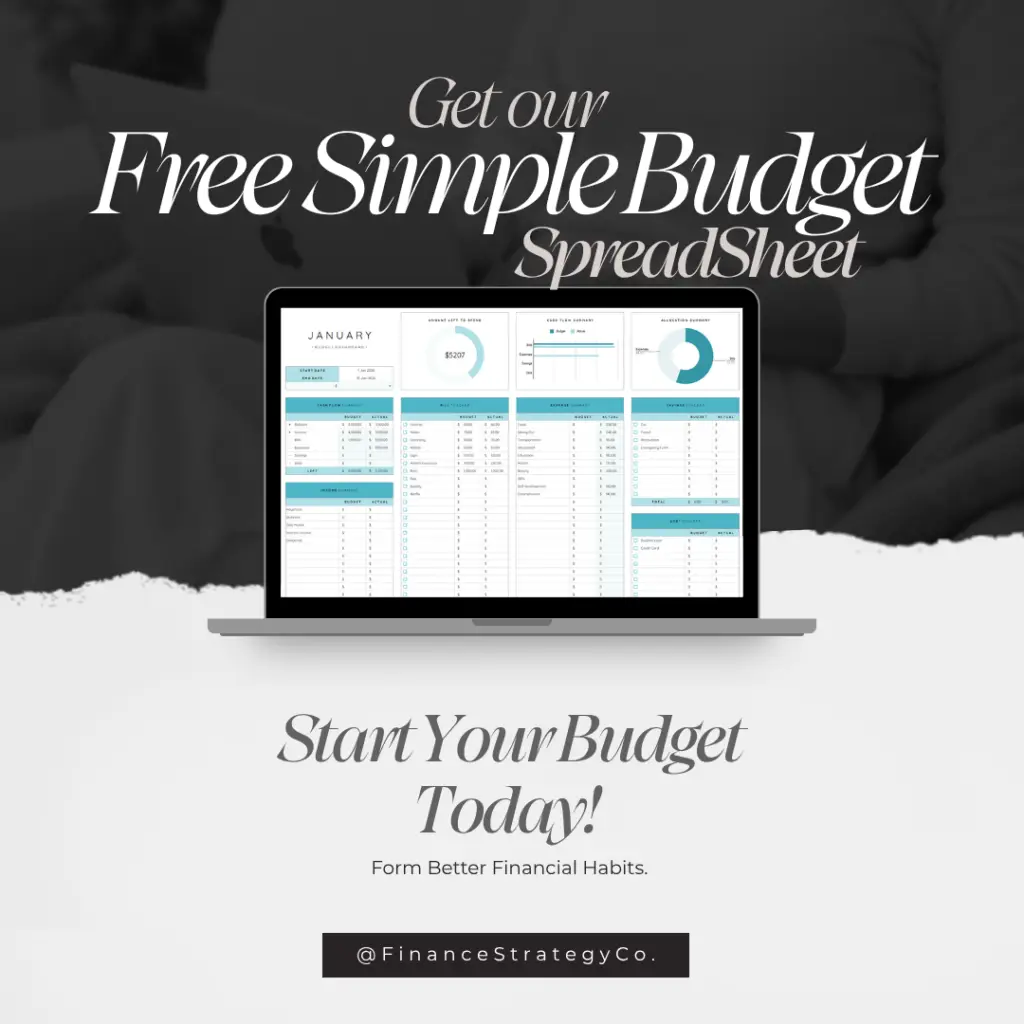
Your spending strategy becomes much easier when your financial system is organised around your goals.
Explore the Finance Strategy Co. collection of thoughtfully designed budgeting, savings and financial planning tools created to help you organise your money, track your goals and make confident financial decisions.
Money management, elevated.