

Your money doesn't need more rules. It needs a strategy designed around your life.
There is a difference between managing your money and having a money strategy.
Managing your money is knowing what bills need to be paid.
It’s checking your bank account.
It’s creating a budget.
It’s paying down a credit card.
It’s transferring money into savings.
All of these things matter.
But a personal money strategy goes one step further.
It asks:
What do I actually want my money to help me create?
Because your money isn’t just about numbers in an account.
It’s connected to your choices, your priorities, your freedom and the future you’re building.
At Finance Strategy Co., we believe your financial life should be intentional.
Not perfect.
Not restrictive.
Not dictated by someone else’s definition of success.
Your money. Your strategy. Your future.
Let’s create one.
What Is a Personal Money Strategy?
A personal money strategy is your individual plan for how you will earn, organise, spend, save and build your money in a way that supports your priorities.
Think of it as your financial roadmap.
Your strategy can include:
- Your spending plan
- Savings goals
- Emergency fund
- Debt strategy
- Sinking funds
- Financial priorities
- Wealth-building goals
- Lifestyle spending
- Major financial milestones
- Short-term and long-term goals
But there’s one important difference between a strategy and a collection of financial goals.
A strategy connects the pieces.
Instead of simply saying:
“I want to save more.”
You decide:
“I want to save $10,000 for my future home, so I’m going to automate $400 each month into a dedicated savings account and review my progress monthly.”
That’s a strategy.
It’s specific.
It’s intentional.
And it gives your money direction.
Why You Need a Money Strategy
Without a strategy, it’s easy to make financial decisions one at a time.
You pay the bill.
Buy the thing.
Transfer what’s left into savings.
Pay the credit card.
Repeat.
You may technically be managing your money, but you aren’t necessarily moving towards a bigger picture.
A strategy changes that.
It helps you make today’s financial decisions with tomorrow in mind.
Instead of asking:
“Can I afford this?”
You can start asking:
“Does this fit my strategy?”
That is a powerful shift.

The Finance Strategy Method™
At Finance Strategy Co., we believe your financial strategy can be built around five simple stages:
KNOW → ORGANISE → PLAN → BUILD → THRIVE
KNOW
Understand your current financial position.
ORGANISE
Create structure around your money.
PLAN
Give your money clear priorities.
BUILD
Strengthen your financial foundation and work towards long-term goals.
THRIVE
Use your money intentionally to create the life you want.
Your personal money strategy doesn’t need to be complicated.
It simply needs to connect these five pieces.
01 - Know Where You Stand
Before you can create a strategy, you need to know your starting point.
Think of this as your financial baseline.
Look at:
Your income
How much money comes into your household?
If your income changes, use a realistic or conservative estimate rather than assuming your highest possible income every month.
Your expenses
How much does your lifestyle currently cost?
Look at your actual spending rather than what you think you spend.
Your savings
What money do you currently have available?
Your debt
What balances do you owe and what repayments are required?
Your assets
What do you own that contributes to your overall financial position?
Your financial commitments
What ongoing obligations need to be considered?
Don’t worry about making changes yet.
First, understand the picture.
Clarity comes before strategy.
02 - Define What Financial Success Means to You
This is where your money strategy becomes personal.
Financial success doesn’t have one universal definition.
For one person, it might mean owning a home.
For another, it might mean travelling regularly without using debt.
Someone else might value flexibility, working fewer hours or building a business.
You might simply want enough savings that an unexpected expense no longer causes panic.
Ask yourself:
What would make me feel financially secure?
What would I love to be able to afford?
What do I want my money to make possible?
What does financial freedom look like for me?
What do I want my life to look like in five or ten years?
Don’t start with numbers.
Start with vision.
Your financial strategy should support the life you actually want.
03 - Identify Your Financial Priorities
You probably have multiple financial goals.
The challenge is that you can’t necessarily prioritise all of them equally.
This is where strategy becomes important.
Consider dividing your goals into three categories.
NOW
Things that need your attention today.
For example:
- Paying essential expenses
- Managing high-priority debt
- Building a starter emergency fund
- Getting your budget under control
NEXT
Goals you’re actively working towards.
For example:
- Building a larger emergency fund
- Saving for a holiday
- Paying down debt
- Saving for a car
- Building a house deposit
LATER
Long-term financial goals.
For example:
- Investing
- Retirement
- Building wealth
- Financial independence
- Long-term lifestyle goals
This creates a hierarchy.
Not everything needs to happen at once.
04 - Build Your Financial Foundation
Before focusing heavily on long-term wealth, create a strong foundation.
Your foundation may include:
A realistic budget
Know how much you need for your lifestyle.
An emergency fund
Create a financial buffer appropriate to your circumstances.
Appropriate insurance
Protect yourself and the things that matter to you.
A debt repayment strategy
Understand which debts you’re prioritising and why.
Sinking funds
Prepare for predictable but irregular expenses.
Financial organisation
Know where your accounts, bills and important financial documents are.
Your foundation isn’t glamorous.
But it matters.
Wealth is easier to build when your financial foundation is stable.
05 - Create Your Lifestyle Budget
Here’s where Finance Strategy Co. takes a different approach to traditional budgeting.
Your financial strategy shouldn’t require you to stop enjoying your life.
Your lifestyle belongs in your financial plan.
Think about what genuinely matters to you.
Perhaps it’s:
Travel.
Dining out.
Fashion.
Beauty.
Fitness.
Hobbies.
Family experiences.
Your home.
Entertainment.
You don’t need to eliminate everything that isn’t essential.
Instead, decide what deserves a place in your budget.
Intentional spending is not about spending less.
It’s about spending better.

06 - Give Your Money a Job
One of the simplest ways to make your money strategy practical is to assign your income different purposes.
For example:
LIVE
Your essential expenses.
ENJOY
Your lifestyle spending.
PROTECT
Your emergency savings and financial security.
BUILD
Debt reduction, investing and long-term wealth building.
DREAM
Your meaningful financial goals.
Your categories don’t have to look exactly like this.
The important thing is that your money has direction.
Instead of reaching the end of the month and asking:
“Where did my money go?”
You can look at your finances and say:
“I know exactly what my money is doing.”
07 - Automate Your Strategy
A strategy becomes much more powerful when you make it easier to follow.
Where appropriate, automate recurring financial actions.
For example:
- Savings transfers
- Bill payments
- Debt repayments
- Investment contributions
- Transfers to sinking funds
Automation helps reduce the number of decisions you need to make.
If your goal is to save $500 a month, you don’t want to rely on remembering to save whatever happens to be left at the end of the month.
Make your strategy happen automatically where possible.
08 - Create Financial Goals That Actually Mean Something
A financial goal shouldn’t simply be:
“Save more money.”
Make it meaningful.
Instead:
“Build a $5,000 emergency fund by December.”
Or:
“Save $8,000 towards our holiday over the next 12 months.”
Or:
“Pay an additional $200 per month towards my highest-priority debt.”
A strong goal has:
A specific outcome
A timeframe
A reason
A plan
A way to measure progress
And don’t underestimate the importance of the reason.
Numbers are easier to stay committed to when they represent something you genuinely care about.
09 - Build a Financial Buffer
A good money strategy needs breathing room.
Life doesn’t always cooperate with your budget.
Your car needs repairs.
The washing machine breaks.
Your insurance increases.
You have an unexpected medical expense.
A family event comes up.
This is why building financial resilience matters.
Your strategy should include some form of buffer appropriate to your circumstances.
That might include:
- Emergency savings
- A cash buffer
- Sinking funds
- Flexible spending
- Insurance protection
Don’t build a strategy that only works when everything goes perfectly.
Build one that can handle real life.
10 - Create Your Financial Calendar
Your money strategy should account for the future.
Create a calendar containing important financial dates.
Include:
Paydays
Bill due dates
Insurance renewals
Registration
Subscriptions
Annual memberships
Birthdays
Christmas
Travel
School expenses
Financial reviews
Savings milestones
This gives you visibility.
And visibility allows you to prepare.
The goal isn’t to predict everything.
It’s to avoid being surprised by the things you already know are coming.
11 - Create Your Money Rules
A personal money strategy becomes even easier when you establish a few simple rules.
These aren’t restrictions.
They’re decision-making principles.
For example:
“I wait 48 hours before making a non-essential purchase over $200.”
“I check my budget before booking travel.”
“I automatically transfer money to savings every payday.”
“I don’t use debt for lifestyle spending.”
“I review my subscriptions every three months.”
“I have a weekly money reset.”
Your rules should reflect your goals.
Create rules that make your future self easier to protect.

12 - Review Your Strategy Monthly
Your financial strategy isn’t something you create once and forget about.
Your life changes.
Your income changes.
Your expenses change.
Your goals change.
Your priorities change.
So your strategy should evolve too.
Once a month, ask:
What’s working?
Keep it.
What’s not working?
Change it.
What has changed?
Update it.
What am I proud of?
Acknowledge it.
What’s my next priority?
Focus on it.
You don’t need to rebuild your entire financial system every month.
Small adjustments create sustainable progress.
Your Personal Money Strategy Template
If you’re ready to create your own strategy, start here.
MY FINANCIAL VISION
What does financial freedom mean to me?
Write your answer.
MY CURRENT POSITION
Monthly income:
$__________
Monthly essential expenses:
$__________
Savings:
$__________
Debt:
$__________
Other financial commitments:
$__________
MY TOP THREE PRIORITIES
1. __________________
2. __________________
3. __________________
MY SHORT-TERM GOAL
What do I want to achieve within the next 12 months?
Goal: __________________
Target: $__________
Deadline: __________
MY LONG-TERM GOAL
What am I ultimately working towards?
Goal: __________________
Why it matters: __________________
MY MONEY RULES
MY MONTHLY MONEY RITUAL
I will review my financial strategy on:
Date: __________________
The Difference Between a Goal and a Strategy
This is one of the most important concepts to understand.
A goal says:
“I want to save $10,000.”
A strategy says:
“I want to save $10,000 within 12 months, so I’ll automate $835 per month into my savings account, reduce unnecessary recurring expenses and review my progress at the end of every month.”
The goal tells you where you’re going.
The strategy tells you how you’re getting there.
You need both.
What If Your Strategy Isn't Working?
Don’t assume you’re the problem.
Sometimes the strategy needs to change.
If you’re consistently overspending your grocery budget, perhaps the budget is unrealistic.
If you’re constantly transferring money out of your savings account, perhaps you’re saving for the wrong things or haven’t accounted for irregular expenses.
If you can’t stick to your financial routine, perhaps it’s too complicated.
Instead of asking:
“Why can’t I stick to my budget?”
Ask:
“What does my system need to make this easier?”
That’s a much more productive question.
Your Money Strategy Should Feel Like You
This may be the most important principle of all.
Your strategy doesn’t need to look like someone else’s.
You don’t have to follow the same budget percentages.
You don’t have to have the same financial goals.
You don’t have to stop spending money on things you enjoy.
You don’t have to become obsessed with saving.
And you don’t need to have everything figured out today.
Your strategy should evolve with your life.
There will be seasons where you focus heavily on saving.
Seasons where you’re paying down debt.
Seasons where you’re investing in your career.
Seasons where you’re travelling.
Seasons where you’re rebuilding.
That’s normal.
Financial strategy is not about perfection.
It’s about direction.
The Luxury of Having a Financial Strategy
There is something incredibly empowering about knowing your money has a purpose.
You don’t have to wonder whether you’re doing enough.
You have a plan.
You don’t have to feel guilty about every purchase.
You know what’s intentional.
You don’t have to constantly worry about upcoming expenses.
You’ve prepared for them.
You don’t have to hope your future will work out.
You’re actively building towards it.
That’s the real luxury.
Not simply having more money.
Having clarity about the money you already have.
Your Money. Your Strategy. Your Future.
Creating a personal money strategy doesn’t require you to completely transform your finances overnight.
Start with clarity.
Know where you are.
Define what matters.
Choose your priorities.
Build your foundation.
Create your lifestyle budget.
Give your money a purpose.
Automate what you can.
Review your progress.
Adjust when life changes.
And keep moving forward.
KNOW.
ORGANISE.
PLAN.
BUILD.
THRIVE.
That’s the Finance Strategy Co. approach.
Because your financial life deserves more than a collection of random money decisions.
It deserves a strategy.
And that strategy should help you build a life that feels intentional, secure and completely your own.
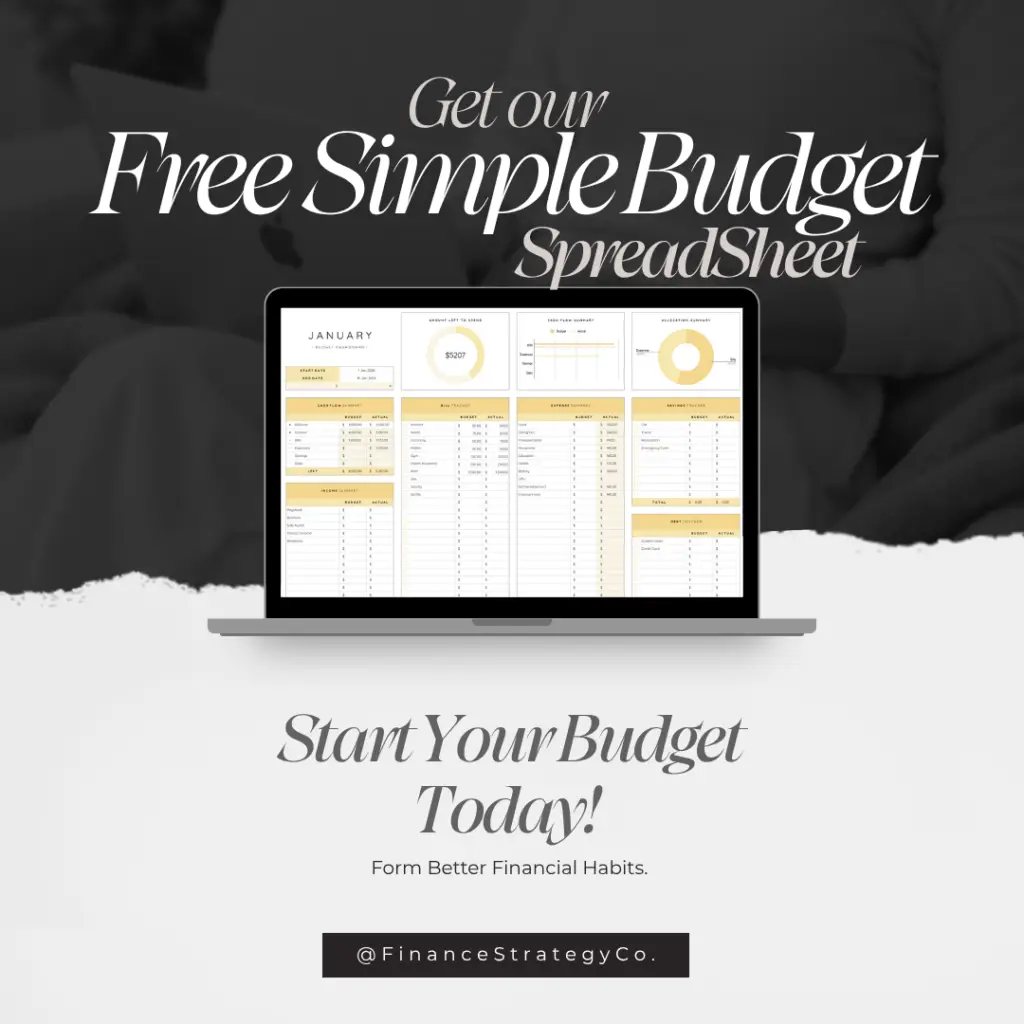
Ready to Build Your Money Strategy?
You don't have to build your financial system from scratch.
The Finance Strategy Co. collection is designed to help you organise your money, track your progress, plan your goals and create a financial system that works beautifully with your lifestyle.
Money management, elevated.