
Debt doesn't have to define your financial future.
Debt can feel heavy.
It can sit quietly in the background of your finances, influencing what you spend, what you save and what you feel you can afford.
You may know you want to pay it off, but without a clear strategy, debt repayment can become a cycle of making payments without feeling like you’re actually getting ahead.
But becoming debt-free isn’t about being perfect.
It’s about having a plan.
A debt freedom strategy gives your money direction. It helps you understand what you owe, decide what matters most and create a realistic path towards reducing your financial obligations.
At Finance Strategy Co., we believe managing money should feel intentional—not overwhelming.
Because debt freedom isn’t simply about owing less.
It’s about creating more choice for your future.
What Is a Debt Freedom Strategy?
A debt freedom strategy is a structured plan for understanding, managing and ultimately reducing your debts.
It brings together:
What you owe
What your debts cost
What you can realistically repay
Which debts to prioritise
How you’ll stay motivated
What you’ll do with the money once debt is gone
The goal isn’t simply:
“Pay off my debt.”
It’s:
“Create a financial strategy that moves me towards freedom.”
Why Debt Freedom Matters
Debt can affect more than your bank account.
It can influence your:
Cash flow
Savings capacity
Financial goals
Investment opportunities
Lifestyle choices
Financial confidence
When a significant portion of your income is committed to debt repayments, there may be less available for the things you’re trying to build.
Reducing debt can therefore create financial breathing room.
Less debt can mean more options.
Debt Doesn't Make You a Financial Failure
Before creating your strategy, leave the shame behind.
People take on debt for many reasons.
Education.
Housing.
Transportation.
Unexpected expenses.
Family circumstances.
Business opportunities.
Lifestyle spending.
Financial emergencies.
Sometimes debt is intentional.
Sometimes it isn’t.
Your current debt balance is information—not a measure of your worth.
The important question isn’t:
“How did I get here?”
It’s:
“What can I do from here?”

01 - Know Exactly What You Owe
This is the KNOW stage of the Finance Strategy Method™.
Before you can create a strategy, you need a complete picture.
List every debt you currently have.
Include:
Credit cards
Personal loans
Car loans
Buy-now-pay-later balances
Home loans
Student-related debt
Other financial obligations
For each debt, record:
Current balance
Interest rate
Minimum repayment
Repayment frequency
Due date
Remaining term
Now you can see the whole picture.
Clarity comes before strategy.
02 - Separate Your Debts by Type
Not every debt should automatically be treated the same way.
Create broad categories.
HIGH-COST DEBT
Debt with relatively high interest rates can be particularly expensive and may deserve priority.
LOWER-COST DEBT
Some debts may have lower interest costs and different repayment structures.
LONG-TERM DEBT
A mortgage, for example, may operate very differently from a credit card.
GOVERNMENT OR STUDENT-RELATED DEBT
These may have different rules and repayment arrangements.
Don’t assume every debt should be attacked in exactly the same way.
Understand the terms first.
03 - Know Your Interest Rates
Interest matters.
Two debts with identical balances can have very different financial costs if their interest rates differ.
For example:
Debt A: $5,000 at a high interest rate
Debt B: $5,000 at a much lower interest rate
Although the balances are identical, the cost of carrying each debt can be very different.
Your interest rate can help determine your repayment priority.
Check the current terms of each debt rather than relying on memory.
04 - Calculate Your Minimum Repayments
Add up the minimum repayments across your debts.
For example:
Credit card: $100
Personal loan: $200
Car loan: $350
Other debt: $150
Total minimum repayments: $800 per month
Now you know how much of your monthly cash flow is already committed.
This is important because your debt strategy needs to work within your actual budget.
05 - Create a Realistic Budget
Debt repayment doesn’t exist in isolation.
Your budget needs to account for:
Housing
Utilities
Groceries
Transport
Insurance
Debt repayments
Savings
Lifestyle
Other commitments
Your goal is to understand:
“How much can I realistically direct towards debt each month?”
Not the amount you wish you could repay.
Not the amount someone online says you should repay.
The amount that fits your actual life.
06 - Find Your Debt Repayment Capacity
Once your essential expenses and minimum debt repayments are covered, determine whether you have additional money available.
For example:
Monthly income: $5,500
Essential expenses: $3,500
Minimum debt repayments: $800
Remaining: $1,200
You might decide that some of that $1,200 goes towards:
Additional debt repayment
Savings
Investments
Lifestyle
The exact allocation depends on your circumstances.
Your strategy should be ambitious enough to create progress but realistic enough to maintain.
07 - Choose Your Debt Repayment Method
Two commonly discussed approaches are the debt avalanche and debt snowball.
The Debt Avalanche
With the avalanche approach, you generally focus additional repayments on the debt with the highest interest rate while maintaining required minimum repayments on other debts.
Once that debt is cleared, you redirect the payment towards the next priority.
The potential advantage:
You may reduce the amount of interest paid over time.
The Debt Snowball
With the snowball approach, you generally focus on the smallest debt balance first, while continuing required minimum repayments on other debts.
Once the smallest debt is cleared, you redirect that payment towards the next debt.
The potential advantage:
You can achieve smaller wins earlier, which may provide motivation.
Which Strategy Is Better?
There isn’t one answer for everyone.
The avalanche method can make mathematical sense when interest costs are the primary consideration.
The snowball method can appeal to people who are motivated by quick wins.
The best strategy is one you understand and can consistently follow.
You can also adapt your approach based on your circumstances.
The objective is progress.
08 - Stop Adding Unnecessary Debt
Paying down debt while continually adding new balances can make progress difficult.
Before taking on new debt, ask:
“Is this purchase worth extending my debt freedom journey?”
You don’t need to eliminate every form of borrowing.
But becoming intentional about new debt can make a significant difference.
Before using credit, consider:
Do I need this?
Can I afford the repayment?
What will it cost me in interest?
Will this delay another financial goal?
Awareness creates better decisions.
09 - Create a Buffer While Paying Down Debt
Debt repayment is important.
But having absolutely no cash buffer can leave you vulnerable to unexpected expenses.
Imagine you’re aggressively paying down debt and have no savings.
Then your car breaks down.
Or an essential appliance needs replacing.
Without a buffer, you may need to borrow again.
This can create a frustrating cycle.
Consider building an appropriate emergency fund while working towards debt reduction.
The right balance will depend on your circumstances.
10 - Automate Your Repayments
Make your debt strategy easier to maintain.
Set up automatic repayments where appropriate.
For example:
PAYDAY
Income arrives.
↓
ESSENTIALS
Bills and necessities are funded.
↓
DEBT
Your planned repayment occurs.
↓
SAVINGS
Your savings contribution occurs.
↓
LIFESTYLE
You have money available for intentional spending.
Automation turns your strategy into a system.
11 - Create a Debt-Free Date
A target date can make your goal tangible.
Instead of saying:
“I want to pay off my debt.”
Create a target:
“I want to be free from this debt by ______.”
Your date should be realistic.
You can then work backwards.
If you have $12,000 remaining and aim to repay it over a certain timeframe, calculate the approximate amount required each month.
Remember that interest and fees can affect the actual repayment required.
A date gives your goal direction.

12 - Break the Goal Into Milestones
Debt freedom can feel far away when you only focus on the final number.
Instead, create milestones.
$10,000 → $7,500 → $5,000 → $2,500 → $0
Celebrate each stage.
Not with a large purchase that creates new debt.
But by acknowledging your progress.
Financial progress deserves to be recognised.
13 - Track Your Debt Balance
Create a simple debt tracker.
Record your balance regularly.
For example:
| Month | Debt Balance |
|---|---|
| January | $18,000 |
| February | $17,300 |
| March | $16,500 |
| April | $15,600 |
| May | $14,700 |
Seeing the balance decline can make progress visible.
What gets tracked becomes easier to understand.
14 - Don't Forget Your Other Financial Goals
Debt repayment matters.
But your life doesn’t stop while you’re paying off debt.
You may also want to:
Build an emergency fund
Save for a home
Travel
Invest
Build your superannuation
Start a business
Enjoy your lifestyle
This is why a debt freedom strategy should sit inside your broader financial plan.
Debt freedom is not the entire strategy.
It’s one part of it.
15 - Give Every Extra Dollar a Job
Found $100 in your budget?
Received a bonus?
Got a tax refund?
Earned extra income?
Instead of automatically spending it, ask:
“What would make the biggest difference to my financial position?”
Perhaps it’s:
Debt reduction
Emergency savings
Investing
A financial goal
Something meaningful for your lifestyle
Intentional allocation creates progress.
16 - Watch Your Lifestyle Inflation
As your income increases, it can be tempting to increase your spending immediately.
A pay rise can disappear surprisingly quickly.
Instead, consider dividing additional income between:
Debt reduction
Savings
Investments
Lifestyle upgrades
You don’t need to deprive yourself.
Let your income growth improve both your present and your future.
17 - Consider Whether Consolidation Makes Sense
Debt consolidation can sometimes simplify multiple debts into one repayment.
But consolidation isn’t automatically beneficial.
You need to consider:
Interest rate
Fees
Loan term
Total cost
Repayment requirements
Potential penalties
A lower monthly repayment isn’t necessarily cheaper overall if the debt is stretched over a longer period.
Always look at the total cost, not just the monthly payment.
18 - Review Your Interest Rates
Interest rates and lending conditions can change.
Review your debts periodically.
Ask:
“Am I still getting reasonable terms for my circumstances?”
If you’re considering refinancing or switching products, understand all fees, conditions and potential costs before making a decision.
Small differences in interest can matter over time.
19 - Increase Your Debt Repayment Capacity
There are two broad ways to accelerate debt freedom.
Spend strategically.
Look for expenses that aren’t adding enough value.
Earn more.
Consider:
Salary growth
Additional work
Freelancing
Business income
Selling unused items
Developing valuable skills
You don’t necessarily need to cut your lifestyle dramatically.
Increasing your financial capacity can be just as powerful as reducing expenses.
20 - Decide What Happens When a Debt Is Gone
This is one of the most important steps.
Imagine you’ve just paid off a $400 monthly car loan.
That $400 is now available.
What happens next?
If it simply disappears into lifestyle spending, your financial position may not change significantly.
Instead, redirect some or all of it towards:
Savings
Investments
Another debt
Superannuation
A long-term financial goal
Don’t let freed-up cash flow disappear.
Give it a new purpose.

Your Debt Payment Can Become Your Wealth Contribution
This is where debt freedom connects directly to wealth building.
Imagine you were paying $500 a month towards a debt.
Once the debt is gone, that $500 becomes available.
You could redirect it towards building assets.
Debt repayment creates capacity.
Wealth building gives that capacity a new destination.
This transition can be incredibly powerful.
Debt Freedom Is Not About Never Borrowing Again
Being debt-free doesn’t necessarily mean you’ll never use credit or borrow money again.
Life circumstances change.
You may eventually choose to purchase a home.
You may use business finance.
You may take on another form of lending.
The goal isn’t to fear debt.
The goal is to understand it.
Before borrowing, consider:
Why am I borrowing?
Can I comfortably afford it?
What is the total cost?
How does it fit into my financial plan?
Will it help or hinder my bigger goals?
Build a Financial Buffer After Debt Freedom
Once your high-priority debts are cleared, don’t immediately increase your lifestyle to consume the additional cash flow.
Instead, consider strengthening your financial foundation.
Build savings.
Increase investments.
Review your superannuation.
Build sinking funds.
Create long-term goals.
Your debt-free moment can become the beginning of your wealth-building chapter.
What Debt Freedom Can Give You
Paying off debt can create more than a zero balance.
It can create:
CASH FLOW
More of your income becomes available.
FLEXIBILITY
You have more options when making financial decisions.
CONFIDENCE
You understand your finances better.
CAPACITY
You can direct money towards other goals.
PEACE OF MIND
You may feel less financial pressure.
FREEDOM
You have greater control over where your money goes.
That’s why debt freedom can be about much more than numbers.
Your Debt Freedom Strategy
Let’s bring everything together.
KNOW
List every debt.
Understand balances, interest rates and minimum repayments.
↓
ORGANISE
Create a budget.
Automate repayments.
Separate short-term savings from debt repayments.
↓
PLAN
Choose your repayment strategy.
Set a target date.
Create milestones.
↓
BUILD
Reduce debt.
Build savings.
Increase your financial capacity.
↓
THRIVE
Redirect freed-up cash flow towards the life and wealth you want to create.
KNOW → ORGANISE → PLAN → BUILD → THRIVE
That’s the Finance Strategy Method™.
A Simple Debt Freedom Framework
If you’re feeling overwhelmed, start here.
01 – LIST IT
Write down everything you owe.
02 – UNDERSTAND IT
Know the interest rate, minimum repayment and terms.
03 – PRIORITISE IT
Choose your repayment approach.
04 – FUND IT
Create room in your budget.
05 – AUTOMATE IT
Make repayments consistent.
06 – TRACK IT
Watch your balance decline.
07 – REDIRECT IT
Once a debt is gone, give the freed-up money a new purpose.
Simple. Structured. Intentional.
Five Questions to Ask Yourself
Take a moment and ask:
01 – What debt is costing me the most?
02 – How much can I realistically repay each month?
03 – Which repayment strategy will keep me motivated?
04 – What will I do with the money once my debt is gone?
05 – What does financial freedom actually mean to me?
That final question matters.
Because debt freedom isn’t simply about reaching $0.
It’s about what becomes possible afterwards.
Don't Let Debt Become Your Identity
You are not your credit card balance.
You are not your mortgage.
You are not your loan balance.
You are not the financial decisions you made five years ago.
You are the person making decisions today.
Every repayment is progress.
Every intentional choice matters.
Every financial habit you build creates a stronger foundation.
The Emotional Side of Debt Freedom
Debt can carry emotions with it.
Guilt.
Fear.
Stress.
Regret.
Embarrassment.
But constantly punishing yourself won’t repay the balance.
A strategy will.
Instead of asking:
“Why did I do this?”
Try asking:
“What can I do next?”
That small change in perspective can move you from shame to action.
Your Debt-Free Life Should Have a Plan Too
Imagine the day you make your final repayment.
What happens next?
Don’t wait until then to decide.
Create your next chapter now.
Perhaps your freed-up money will go towards:
Building wealth
Investing
Superannuation
A home deposit
Travel
Starting a business
Financial independence
More lifestyle flexibility
Debt freedom should lead somewhere.
From Debt Freedom to Wealth Creation
There is a beautiful transition that can happen.
At first, your focus is:
“How do I stop owing money?”
Then it becomes:
“How do I build something?”
You move from repayment to accumulation.
From reducing liabilities to building assets.
From financial pressure to financial opportunity.
That is where your strategy evolves.
Financial Freedom Is Personal
For one person, financial freedom might mean having no consumer debt.
For another, it might mean owning a home outright.
For someone else, it might mean having enough investments to reduce their reliance on employment.
There is no universal definition.
Define it for yourself.
Ask:
“If money gave me more freedom, what would I do with it?”
That answer can become your financial vision.
Create Your Own Definition of Debt Freedom
Complete this sentence:
“When I am debt-free, I will have the freedom to…”
Maybe you’ll:
Travel.
Save.
Invest.
Work less.
Start something new.
Support your family.
Sleep better.
Spend without financial pressure.
Your reason is what makes the strategy meaningful.
The Luxury of Financial Freedom
Luxury isn’t always about having more.
Sometimes it’s about needing less.
Less financial pressure.
Less debt.
Less uncertainty.
Less dependence on credit.
Less anxiety around unexpected expenses.
And more:
Choice.
Flexibility.
Security.
Confidence.
Freedom.
That is a kind of luxury money can create.
Start Where You Are
You don’t have to eliminate your debt this month.
You don’t have to create the perfect repayment strategy.
You don’t have to change everything at once.
Start with one action.
List your debts.
Then understand them.
Then choose your priority.
Then create your plan.
Then take the next step.
Progress is built one decision at a time.
Your Money. Your Strategy. Your Future.
Debt freedom isn’t about living a smaller life.
It’s about creating more room for the life you actually want.
A strong debt strategy can help you move from:
Pressure → Clarity
Clarity → Control
Control → Progress
Progress → Freedom
And once you create that freedom, you can decide what comes next.
Because your money should support your future, not keep you trapped in your past.
KNOW → ORGANISE → PLAN → BUILD → THRIVE
Know what you owe.
Organise your money.
Plan your way forward.
Build your financial foundation.
And create the freedom to thrive.
That’s the Finance Strategy Method™.
And your debt freedom journey starts with one simple decision:
Create a strategy.
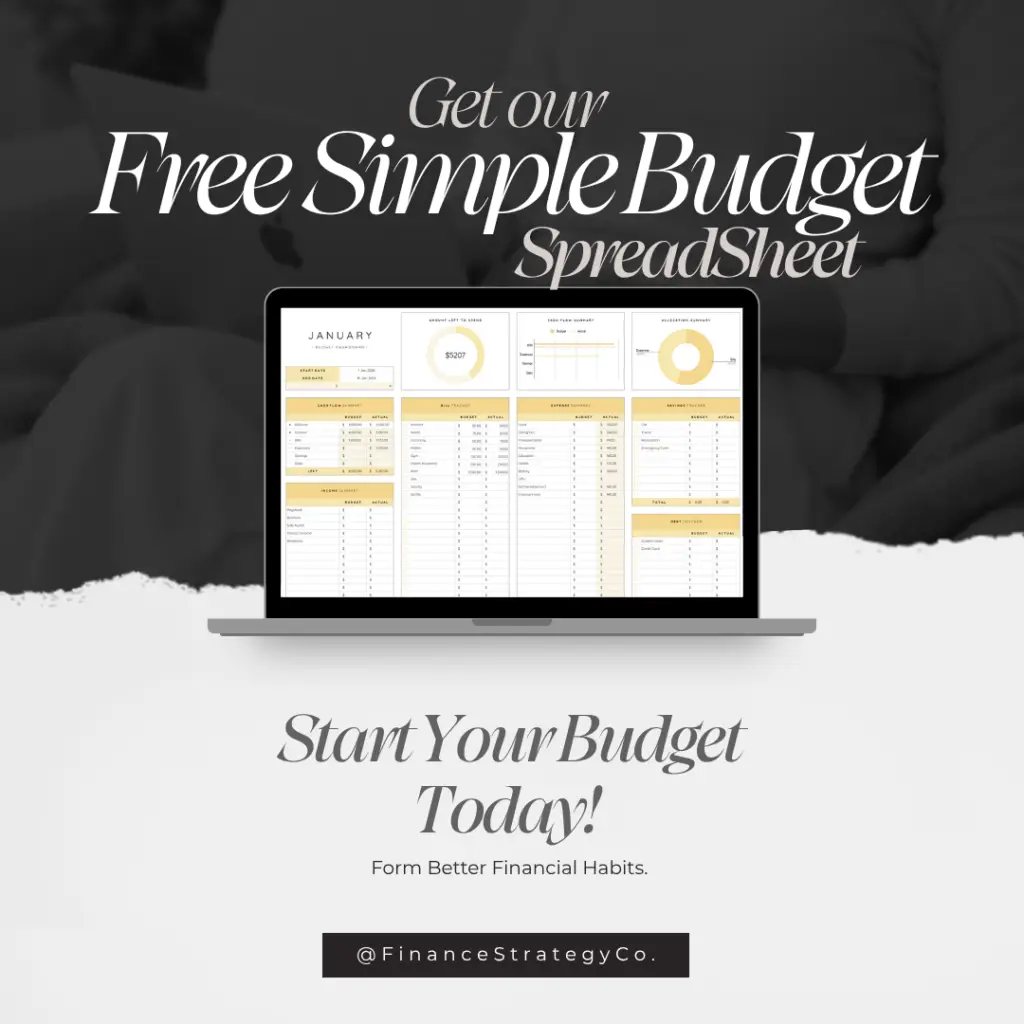
Ready to Take Control of Your Money?
Finance Strategy Co. creates thoughtfully designed financial tools to help you organise your money, track your debt, plan your goals and build a financial strategy around the life you actually want.
Money management, elevated.