
Because your budget should support your life, not make you feel like you're living less of it.
A budget can be one of the most powerful tools in your financial life.
But let’s be honest: the word budget can sometimes feel restrictive.
It can bring to mind cutting back, saying no, tracking every purchase and wondering whether you can afford the things you actually enjoy.
At Finance Strategy Co., we see budgeting differently.
A budget isn’t a punishment.
It’s a plan for your money.
A good budget doesn’t tell you that you can’t enjoy your morning coffee, book the holiday, buy something beautiful or go out for dinner.
It helps you decide what matters enough to make room for.
Because your financial strategy should fit the life you’re actually living, and the life you’re intentionally creating.
Your Budget Should Fit Your Life
There is no perfect budget.
There is no magic percentage that will work for everyone.
And there certainly isn’t a single budgeting method that can account for every income, lifestyle, family, goal and priority.
Your budget should reflect you.
Your income.
Your commitments.
Your goals.
Your values.
Your lifestyle.
Your definition of financial success.
If you create a budget that looks perfect on paper but feels impossible to live with, it’s unlikely to last.
The goal isn’t to create the most disciplined budget.
The goal is to create a sustainable one.
What Does a Lifestyle-Friendly Budget Look Like?
A lifestyle-friendly budget gives every part of your financial life a place.
It makes room for:
Your essentials
The things you need to live and maintain your household.
Your financial priorities
Savings, debt repayments and other important commitments.
Your lifestyle
Dining out, entertainment, hobbies, beauty, travel and the things that bring enjoyment to your life.
Your future
Long-term goals, financial security and wealth building.
Your flexibility
Because life doesn’t always follow a spreadsheet.
The perfect budget isn’t one where you spend nothing.
It’s one where your spending reflects what matters to you

01 - Know What You're Working With
Before creating your budget, start with clarity.
Look at your actual numbers.
Start with your income.
Calculate the money you expect to receive during your budgeting period.
Depending on your circumstances, this could include:
- Salary or wages
- Business income
- Freelance income
- Government payments
- Investment income
- Other regular income
If your income changes from month to month, consider creating your budget around a conservative income estimate and adjusting as your actual income becomes clearer.
Then look at your expenses.
Review your recent spending rather than guessing.
Look at your bank statements and identify what you’re actually spending on.
You may discover expenses you’ve completely forgotten about.
You may also discover that your spending isn’t as problematic as you thought.
The purpose isn’t to judge your spending.
It’s to understand it.
You can’t create an intentional financial strategy without knowing where you’re starting.
02 - Separate Your Needs, Priorities and Wants
One of the simplest ways to create a realistic budget is to stop putting every expense into the same bucket.
Think about your spending in three layers.
Your Essentials
These are expenses you generally need to maintain your life.
For example:
- Housing
- Utilities
- Groceries
- Transport
- Insurance
- Healthcare
- Minimum debt repayments
These form the foundation of your budget.
Your Priorities
These are the financial goals that matter to your future.
For example:
- Emergency savings
- Extra debt repayments
- House deposit
- Holiday fund
- Retirement savings
- Investing
- Other financial goals
Your priorities turn your budget from a list of expenses into a financial strategy.
Your Lifestyle
This is where intentional spending comes in.
Your lifestyle spending might include:
- Restaurants
- Coffee
- Clothes
- Beauty
- Entertainment
- Travel
- Hobbies
- Fitness
- Social activities
These expenses aren’t automatically “bad.”
Enjoying your money is part of having a financial life.
The question isn’t:
“How can I eliminate everything enjoyable?”
Instead ask:
“Which things genuinely add value to my life?”
Then make room for them.
03 - Identify What Matters Most to You
This is where your budget starts becoming personal.
Ask yourself:
What do I value?
Maybe you love travelling.
Maybe your priority is your home.
Maybe you value experiences more than possessions.
Maybe you love eating out.
Maybe you’re focused on becoming debt free.
Maybe financial security gives you the greatest sense of freedom.
There is no wrong answer.
Two people with exactly the same income could have completely different budgets, and both could be financially responsible.
Your budget should reflect your values, not someone else’s lifestyle.
04 - Give Every Dollar a Purpose
Once you’ve identified your priorities, give your income direction.
Think of your money as having different jobs.
Some money pays the bills.
Some supports your lifestyle.
Some protects your future.
Some helps you reach your goals.
Instead of simply asking:
“How much can I spend?”
Ask:
“What job do I want my money to do?”
This small shift can completely change the way you approach budgeting.
Your budget becomes less about restriction and more about allocation.
05 - Build Your Fixed Expenses First
Start with the expenses that don’t change very much.
These might include:
- Rent or mortgage
- Insurance
- Phone
- Internet
- Loan repayments
- Subscriptions
- School or childcare expenses
- Regular bills
Knowing these commitments gives you a clearer picture of what income remains available for your other priorities.
Don’t forget annual and irregular expenses.
Some expenses don’t arrive every month, but that doesn’t mean they aren’t part of your financial life.
Think about:
- Car registration
- Insurance renewals
- Birthdays
- Christmas
- Medical expenses
- Home maintenance
- Annual subscriptions
- Holidays
This is where sinking funds can become incredibly useful.
Instead of being surprised by a $600 expense once a year, you can gradually prepare for it.
06 - Make Room for the Life You Enjoy
Now for the part that makes your budget feel like your budget.
Create a realistic lifestyle category.
You might call it:
Lifestyle
or
Personal Spending
or even:
Enjoy
Give yourself permission to spend within this category.
The amount will depend entirely on your circumstances.
The important thing is that you aren’t pretending you will suddenly stop enjoying the things you love.
If you regularly spend money on coffee, dinners, skincare, books, fitness or socialising, ignoring those expenses won’t make them disappear.
Build them into the plan.
A realistic budget accounts for real life.

07 - Automate Your Priorities
One of the easiest ways to make your budget work harder for you is to automate where possible.
Consider setting up automatic transfers towards your:
Emergency fund
Savings goals
Sinking funds
Debt repayments
Investment goals
The benefit is simple.
You’re not relying on remembering to save every payday.
You’re creating a system that helps your intentions become actions.
Make the right financial decision the easy decision.
08 - Give Yourself a Buffer
One of the biggest mistakes people make when creating a budget is allocating every dollar perfectly.
On paper, it can look fantastic.
In reality, life happens.
The grocery bill is higher than expected.
The car needs attention.
A friend invites you to dinner.
Something needs replacing.
Instead of creating a budget with absolutely no flexibility, consider leaving some room for the unexpected.
A little breathing room can make your budget much more sustainable.
Your financial system doesn’t need to predict every possible expense.
It simply needs to help you respond to them.
09 - Choose a Budgeting Method That Fits You
There are many ways to budget.
The important thing is finding a method that you can actually maintain.
The 50/30/20 Method
A popular framework that divides income between needs, wants and financial goals.
It’s a useful starting point, but it isn’t a rule you have to follow perfectly.
Zero-Based Budgeting
Every dollar is assigned a purpose.
This can be useful if you enjoy having a detailed view of your money.
Pay Yourself First
Savings and financial goals are prioritised before discretionary spending.
This can work particularly well if building savings is one of your major priorities.
The Simple Budget
You may prefer a straightforward system that tracks:
Income → Essentials → Financial Goals → Lifestyle → Remaining Buffer
Sometimes simple is better.
Choose the system you will actually use.
The best budget is not the most impressive one.
It’s the one you can return to consistently.
10 - Create a Weekly Money Ritual
A budget becomes much easier to maintain when you turn it into a routine.
At Finance Strategy Co., we love the idea of a:
Sunday Money Reset™
Set aside 15–20 minutes each week.
Review:
What did I spend?
What’s coming up?
Are my bills covered?
Am I on track with my goals?
Do I need to adjust anything?
That’s it.
You don’t need to spend hours analysing your finances.
Consistency is more powerful than perfection.
11 - Review Your Budget Every Month
Your first budget won’t be perfect.
And it doesn’t need to be.
At the end of each month, look at what actually happened.
Ask yourself:
What worked?
Keep it.
What didn’t?
Change it.
What surprised me?
Plan for it.
Where did I overspend?
Look for the reason rather than simply blaming yourself.
Did my priorities change?
If they did, your budget can change too.
Your budget should be a living document.
Your life changes.
Your income changes.
Your priorities change.
Your financial strategy should evolve with you.

What If Your Budget Doesn't Balance?
Don’t panic.
This is information, not failure.
If your expenses are higher than your income, start by reviewing your spending.
Look for:
- Unused subscriptions
- Recurring expenses
- Lifestyle spending
- Opportunities to reduce bills
- Expenses that could be temporarily paused
- Income opportunities
But don’t immediately cut everything you enjoy.
Ask yourself:
What can I reduce?
What can I remove?
What can I renegotiate?
What can I prioritise?
What can I change?
The goal is to create a sustainable balance.
How to Budget for the Things You Love
This is where intentional spending becomes powerful.
Imagine travel is one of your biggest priorities.
Instead of spending randomly throughout the month and hoping there’s enough left over for a holiday, make travel part of your financial strategy.
Create a dedicated savings goal.
Then your everyday spending decisions become clearer.
You might decide:
“I’d rather put $100 towards my travel fund than spend $100 on something I won’t remember in six months.”
That’s not deprivation.
That’s intentional spending.
A Budget Isn't Supposed to Make You Feel Poor
This deserves repeating.
A budget isn’t about proving how little you can spend.
It’s about making conscious choices.
You can be financially responsible and enjoy your life.
You can save and travel.
You can work towards financial security and buy something beautiful.
You can pay down debt and enjoy dinner with friends.
The balance will look different for everyone.
Financial confidence comes from knowing your choices are intentional.
The Finance Strategy Co. Lifestyle Budget
If you’re not sure where to begin, try building your budget around five simple areas:
01 – LIVE
Your essential expenses.
02 – ENJOY
Your lifestyle and discretionary spending.
03 – PROTECT
Emergency savings and financial security.
04 – BUILD
Debt reduction, investing and long-term wealth building.
05 – DREAM
The goals that make you excited about your future.
This creates something more meaningful than a traditional expense list.
It creates a financial plan for your life.
The Signs Your Budget Fits Your Lifestyle
You’ll know you’ve created a sustainable budget when:
You can pay your regular expenses without constantly worrying.
You’re making progress towards meaningful goals.
You know how much you can comfortably spend.
You’re prepared for upcoming expenses.
You don’t feel guilty every time you enjoy yourself.
You can adjust when life changes.
You actually want to use your budget.
And perhaps most importantly:
Your budget gives you more confidence – not more anxiety.
Your Money, Your Strategy
There is no perfect budget.
There is only a budget that works for your life right now.
Start with your real numbers.
Understand your priorities.
Make room for what you love.
Plan for what you know is coming.
Build financial security.
And leave enough flexibility for life to happen.
Then review, refine and repeat.
Know your money.
Organise your finances.
Plan for what matters.
Build your future.
Thrive in the life you’re creating.
That’s the Finance Strategy Co. way.
Because budgeting isn’t about living less.
It’s about making your money work intentionally for the life you want.
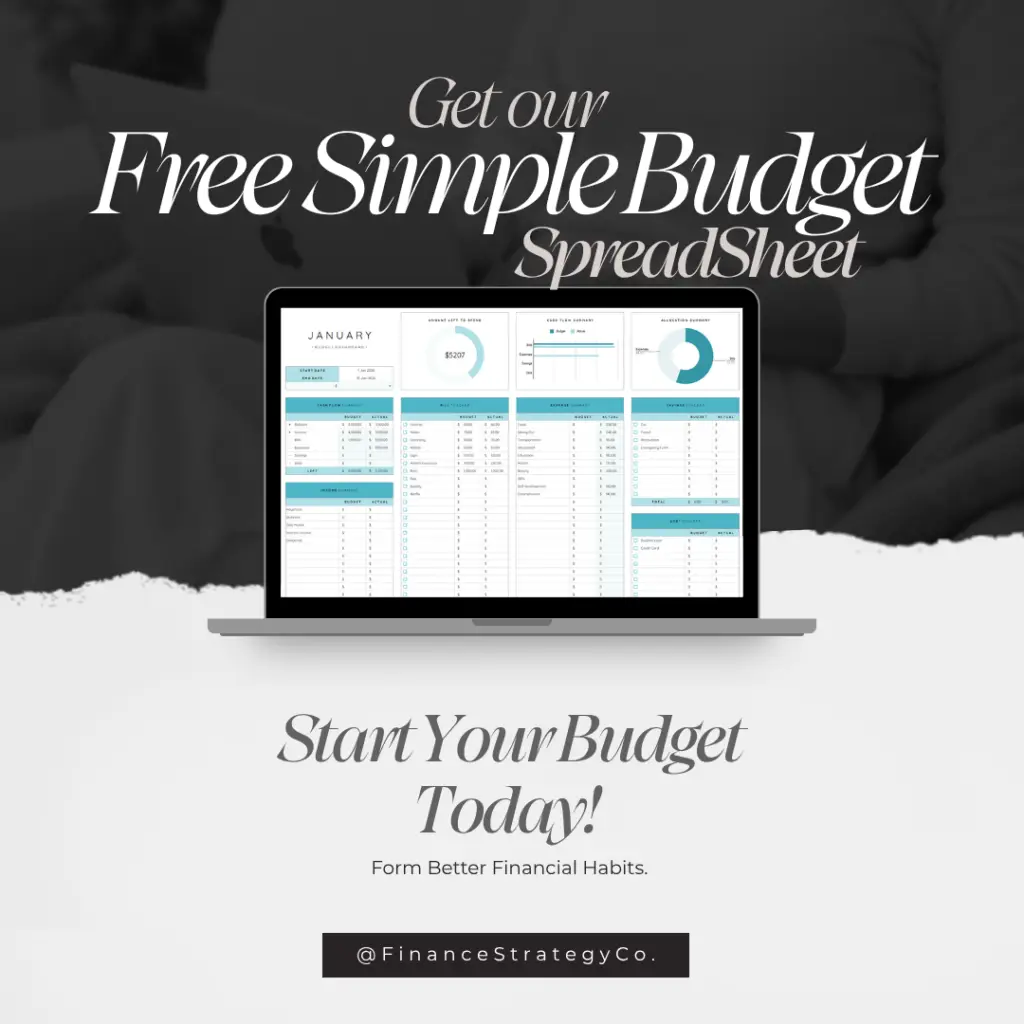
Ready to Make Your Money Feel More Organised?
Your budget is easier to maintain when your financial system is simple.
Explore Finance Strategy Co.'s thoughtfully designed budgeting and financial organisation tools to help you plan your spending, track your expenses, manage your goals and create a financial system that fits your life.
Your money deserves a strategy.