
Twelve months. One strategy. A clearer financial future.
A new year can feel like a blank page.
New goals.
New opportunities.
New plans.
And perhaps a quiet thought that this could be the year you finally feel more organised with your money.
But instead of creating another list of financial resolutions that fades by February, what if you approached the next twelve months differently?
What if you created a financial plan designed around the life you actually want?
A one-year financial plan gives your money direction.
It helps you see what’s coming, prepare for your priorities and make intentional decisions throughout the year.
It isn’t about restricting every dollar.
It isn’t about creating a perfect budget.
And it certainly isn’t about removing the things you enjoy.
It’s about knowing where you’re going before the year takes you there.
At Finance Strategy Co., we believe money management should feel intentional, elevated and empowering.
Your financial year deserves a strategy.
What Is a One-Year Financial Plan?
A one-year financial plan is a 12-month roadmap for your money.
It brings together your:
Income
Expenses
Savings
Debt
Financial goals
Major upcoming expenses
Lifestyle priorities
Long-term plans
Rather than looking at your finances one month at a time, you zoom out and look at the entire year.
This allows you to see patterns and opportunities that aren’t always obvious when you’re only looking at the current month.
Your monthly budget manages the present.
Your one-year financial plan gives the present a purpose.
Why Create a One-Year Financial Plan?
Life rarely happens in neat monthly intervals.
You might know that:
Your car registration is due later in the year.
Insurance needs to be paid annually.
Christmas is coming.
You have a holiday planned.
Your children have school expenses.
A major birthday is approaching.
You want to renovate your home.
You have a debt repayment target.
You want to build your savings.
Without a plan, these expenses can feel like surprises.
With a plan, many of them become predictable.
Planning turns financial surprises into financial decisions.
The Finance Strategy Method™
At Finance Strategy Co., our approach to money is built around five stages:
KNOW → ORGANISE → PLAN → BUILD → THRIVE
A one-year financial plan fits beautifully within this framework.
KNOW
Understand your current financial position.
ORGANISE
Create structure around your money.
PLAN
Decide what matters during the year ahead.
BUILD
Direct your money towards your priorities.
THRIVE
Use your progress to create more freedom and enjoyment.
Your annual financial plan becomes the bridge between intention and action.
01 - Start With Where You Are
Before planning the next twelve months, understand your current financial position.
Review:
Monthly income
Regular expenses
Savings
Debt
Subscriptions
Annual expenses
Financial commitments
Current financial goals
You don’t need to judge the numbers.
You simply need to understand them.
You can’t create a meaningful financial strategy without knowing your starting point.
02 - Review the Previous Year
Before looking forward, look back.
Ask yourself:
What went well financially?
What didn’t?
What expenses surprised me?
What did I spend too much on?
What did I wish I had saved more for?
Which financial habits helped me?
Which habits worked against me?
What am I proud of?
This isn’t about criticising yourself.
It’s about collecting information.
Your past financial behaviour can teach you how to create a better financial year.
03 - Choose Your Financial Theme for the Year
Instead of beginning with a huge list of goals, choose a theme.
Perhaps your theme is:
THE YEAR OF SECURITY
Build savings and strengthen your financial foundation.
Or:
THE YEAR OF FREEDOM
Focus on debt reduction and increasing financial flexibility.
Or:
THE YEAR OF BUILDING
Focus on savings, investing and long-term wealth.
Or:
THE YEAR OF INTENTIONAL SPENDING
Reduce unnecessary spending and redirect money towards what matters.
Or:
THE YEAR OF EXPERIENCES
Prioritise travel, family and meaningful experiences.
Your theme becomes a filter for your decisions.
When an opportunity comes up, ask: “Does this support my financial year?”

04 - Define What You Want Your Year to Feel Like
This is where your financial plan becomes more personal.
Ask yourself:
How do I want to feel about money twelve months from now?
Perhaps:
Calm.
Confident.
Organised.
Secure.
Free.
In control.
Excited.
Prepared.
Write down three words.
Then ask:
What would need to change financially for me to feel this way?
Your answer may reveal your priorities.
05 - Choose Your Top Three Financial Goals
You don’t need twenty goals.
Choose three meaningful priorities for the year.
For example:
GOAL 01 — BUILD
Build a $10,000 emergency fund.
GOAL 02 — REDUCE
Reduce debt by $8,000.
GOAL 03 — EXPERIENCE
Save $5,000 for a holiday.
Or your goals could be:
Save for a home deposit.
Build a business fund.
Increase retirement contributions.
Create a financial buffer.
Fund a major purchase.
Choose goals that genuinely matter to you.
06 - Give Each Goal a Reason
A financial goal becomes much more powerful when it has meaning.
Instead of:
“Save $10,000.”
Try:
“Save $10,000 so I feel financially secure and prepared for unexpected expenses.”
Instead of:
“Save $5,000.”
Try:
“Save $5,000 so I can take the holiday I’ve been dreaming about.”
Instead of:
“Pay off debt.”
Try:
“Reduce my debt so I can create more freedom with my future income.”
The number tells you what.
The reason tells you why.
You need both.
07 - Map Out Your Big Annual Expenses
This is one of the most valuable parts of an annual financial plan.
Look across the entire year and identify known expenses.
Think about:
Car registration
Insurance
School expenses
Birthdays
Christmas
Holidays
Medical or dental expenses
Home maintenance
Annual subscriptions
Memberships
Major purchases
Events
Travel
Write down:
What
When
Estimated cost
Now divide the estimated cost across the months available to save.
Planning ahead makes large expenses feel smaller.
08 - Create Your Annual Sinking Funds
Once you’ve identified your irregular expenses, create sinking funds.
For example:
HOLIDAY FUND
Goal: $4,800
Timeframe: 12 months
Monthly contribution: $400
CAR FUND
Goal: $1,200
Timeframe: 12 months
Monthly contribution: $100
CHRISTMAS FUND
Goal: $1,500
Timeframe: 10 months
Monthly contribution: $150
The exact numbers will depend on your circumstances.
The principle is simple:
Save gradually for expenses you know are coming.
09 - Create Your Annual Savings Target
Now look at the year as a whole.
How much would you like to save?
It could be:
$5,000
$10,000
$20,000
Or another amount that makes sense for you.
Then break it down.
For example:
Annual goal: $12,000
Monthly target: $1,000
Weekly target: approximately $231
Breaking the goal into smaller amounts can make it feel much more achievable.
A large annual goal becomes manageable when you turn it into smaller actions.
10 - Build Your Emergency Fund
Your one-year plan should consider your financial safety net.
If you don’t have an emergency fund yet, make building one a priority.
If you already have one, decide whether you’d like to strengthen it.
Your target should reflect your personal circumstances, expenses and level of financial security.
An emergency fund gives your annual plan breathing room.
Because even the best financial strategy needs room for the unexpected.
11 - Create a Debt Strategy
If debt is one of your priorities, give it a place in your annual plan.
List:
Current balance
Interest rate
Minimum repayment
Target repayment
Desired balance by year-end
For example:
January
Debt: $15,000
June
Target: $11,000
December
Target: $7,000
You can then track progress throughout the year.
Give your debt a destination.
12 - Review Your Subscriptions
A new financial year can be a perfect opportunity to review recurring expenses.
Go through your:
Streaming services
Apps
Software
Memberships
Subscriptions
Delivery services
Cloud storage
Ask:
Am I still using this?
Does it still provide value?
Would I purchase it again today?
You don’t need to cancel everything.
Keep what genuinely adds value.
Remove what doesn’t.
13 - Create a Lifestyle Budget
A financial plan shouldn’t be entirely about cutting costs.
Your life deserves space in your financial strategy.
Create room for:
Dining out
Travel
Beauty
Fashion
Entertainment
Hobbies
Socialising
Experiences
Intentional spending is still intentional.
The goal isn’t to spend as little as possible.
It’s to spend in a way that supports the life you value.
14 - Plan for the Life You Want to Live This Year
Ask yourself:
What do I want to experience this year?
Maybe it’s:
A weekend away.
A major holiday.
More dinners with friends.
A new hobby.
A home project.
A special celebration.
More time with family.
A personal development goal.
Write them down.
Then give them a place in your financial plan.
Don’t make your future the only thing you’re saving for.
Make room for your life now.

15 - Create a Monthly Money Strategy
Your annual plan provides the big picture.
Your monthly budget brings it to life.
At the beginning of each month, ask:
What is happening this month?
What expenses are coming?
What financial goal am I focusing on?
What savings need to happen?
What lifestyle spending do I want to allow?
This creates a simple rhythm.
Annual vision.
Monthly action.
16 - Create a Quarterly Money Reset
You don’t need to wait until December to discover whether your plan is working.
Every three months, review:
Income
Expenses
Savings
Debt
Goals
Lifestyle
Upcoming expenses
Ask:
Am I on track?
What has changed?
What needs adjusting?
What have I achieved?
What should I prioritise next?
A quarterly reset keeps your strategy relevant.
17 - Create a “Money Date”
Make financial planning an experience.
Choose a quiet morning or evening.
Make your favourite drink.
Open your financial dashboard.
Put your phone away.
Review your numbers.
Look at your goals.
Plan the next month.
Make money management something you look forward to.
It doesn’t have to feel clinical.
It can feel intentional.
18 - Create Your Annual Financial Dashboard
Your dashboard could include:
INCOME
Annual income
EXPENSES
Annual spending
SAVINGS
Total saved
DEBT
Total debt reduced
GOALS
Progress towards financial goals
NET WORTH
Change over the year
LIFESTYLE
Major experiences funded
This gives you a visual snapshot of your financial year.
What gets measured becomes easier to manage.
19 - Set a Net Worth Goal
Net worth is simply the value of what you own minus what you owe.
You don’t need to obsess over it.
But tracking it annually can help you see the bigger picture.
Your goal might be:
Increase savings
Reduce debt
Grow assets
Improve your overall financial position
The goal isn’t necessarily to reach a specific number by comparing yourself to someone else.
It’s about building from your own starting point.
20 - Plan for Your Future Self
A one-year financial plan isn’t only about the next twelve months.
Some decisions you make today will affect your future.
Consider:
Long-term savings
Superannuation
Investing
Debt reduction
Career goals
Business goals
Retirement planning
Depending on your circumstances, professional financial advice may be appropriate for decisions around investing, retirement and wealth-building.
Your future deserves a seat at the table.
21 - Create a “Future Freedom” Goal
Consider creating one goal that exists purely to create greater future choice.
It might be:
A larger savings buffer.
A debt-free target.
A long-term investment strategy.
A career-change fund.
A business fund.
A financial independence goal.
You may not know exactly how you’ll use this money.
That’s okay.
You’re building options.
And options are one of the most valuable things money can provide.
22 - Automate Your Financial Plan
Where appropriate, automate the financial behaviours you want to maintain.
For example:
Savings transfers
Bill payments
Debt repayments
Regular contributions
Sinking fund transfers
Automation can reduce the number of financial decisions you need to make each month.
Build the system once.
Then let consistency do some of the work.
23 - Give Every Dollar a Role
Before the year begins, think about where your income needs to go.
LIVE
The expenses required to live your life.
ENJOY
Lifestyle spending and experiences.
SAVE
Short-term and emergency savings.
BUILD
Debt reduction and long-term wealth-building.
FUTURE
Goals that support the life you’re creating.
Your categories may look different.
The important thing is intention.
Your money should have somewhere meaningful to go.
24 - Create a “Not This Year” List
This is an underrated financial strategy.
You don’t have to achieve everything this year.
Maybe you’ve decided:
Not buying a new car this year.
Not renovating this year.
Not taking an expensive holiday this year.
Not starting another major financial commitment this year.
This doesn’t mean never.
It means:
Not right now.
A “not this year” list can help protect your priorities.
25 - Leave Room for the Unexpected
Your annual plan shouldn’t allocate every dollar before the year even begins.
Leave some breathing room.
Because life happens.
Expenses change.
Opportunities appear.
Plans move.
Income can fluctuate.
Flexibility is part of a good financial strategy.
26 - Create a “Year-End Vision”
Imagine it is twelve months from now.
You look back at your financial year.
What would make you proud?
Perhaps:
I built my emergency fund.
I reduced my debt.
I saved for my holiday.
I stopped wasting money on things I don’t value.
I finally feel organised.
I built a stronger financial foundation.
I became more confident with money.
Write down five things.
This becomes your annual financial vision.

Common One-Year Financial Planning Mistakes
Trying to change everything at once
Choose a few meaningful priorities.
Setting unrealistic savings targets
Your plan needs to work in your actual life.
Forgetting annual expenses
Look beyond the current month.
Removing all lifestyle spending
A sustainable plan needs enjoyment.
Ignoring your future
Today’s decisions influence tomorrow.
Never reviewing the plan
Your strategy should evolve throughout the year.
Comparing your financial year to someone else’s
Your starting point is unique.
What If You Fall Behind?
You will probably have months where things don’t go according to plan.
That’s normal.
You may spend more than expected.
An expense may appear.
You might miss a savings target.
Your income may change.
Don’t abandon the entire plan.
Instead ask:
What happened?
What can I adjust?
What is still possible?
What matters most now?
Then continue.
One difficult month doesn’t erase eleven months of opportunity.
Your Financial Plan Should Feel Like Freedom
A financial plan shouldn’t make you feel trapped.
It should help you feel:
Prepared.
Clear.
Intentional.
Confident.
In control.
And perhaps most importantly:
Free to make decisions with your money.
When you know your bills are covered, your savings have a purpose and your goals are being funded, spending can become more intentional.
Financial clarity creates space.
The Luxury of Financial Organisation
We often think of luxury as something external.
Beautiful homes.
Travel.
Designer pieces.
Fine dining.
But there is another form of luxury.
Knowing where your money is going.
Knowing what you’re working towards.
Knowing your upcoming expenses are planned.
Knowing you’re building financial security.
Knowing your future has a strategy.
That is the kind of luxury that doesn’t simply look good.
It feels good.
Your One-Year Plan Is Not a Prediction
Your financial plan isn’t a promise that everything will go perfectly.
It’s a framework.
You are not predicting every expense.
You are preparing for the year ahead.
You are creating priorities.
You are deciding what deserves your money.
You are creating a system that can adapt.
Think of your plan as a compass, not a contract.
It gives you direction while leaving room to change course.
A Better Financial Year Starts With Intention
You don’t need a completely new life.
You don’t need a perfect budget.
You don’t need to become obsessed with every transaction.
You simply need a clearer strategy.
Know your numbers.
Understand your priorities.
Plan for what’s coming.
Build towards what matters.
Create room for enjoyment.
Review your progress.
Adjust when necessary.
That’s what intentional money management looks like.
Your Money. Your Strategy. Your Year.
Imagine reaching the end of the next twelve months and knowing:
I know where my money went.
I know what I built.
I know what I achieved.
I know what mattered.
I know what I’m working towards next.
That is the power of an annual financial plan.
Not perfection.
Progress with purpose.
The Finance Strategy Method™
KNOW
Understand your financial starting point.
ORGANISE
Create structure and clarity.
PLAN
Choose what matters for the year ahead.
BUILD
Direct your money towards your priorities.
THRIVE
Use your financial progress to support the life you want.
Your financial year doesn’t need to be complicated.
It simply needs a strategy.
Start Your One-Year Financial Plan Today
You don’t need to wait for January.
You don’t need a new financial year.
You don’t need the perfect spreadsheet.
Start today.
Open your accounts.
Review your numbers.
Choose three priorities.
Look at the next twelve months.
Write down your major expenses.
Set your savings goals.
Decide what you want your money to make possible.
Then take one small action.
One transfer.
One cancelled subscription.
One savings goal.
One debt repayment.
One financial decision made intentionally.
Small actions create momentum.
Momentum creates habits.
Habits create systems.
And systems create progress.
Make This the Year Your Money Has a Strategy
Your money shouldn’t simply disappear from one month to the next.
It should support something.
Your security.
Your lifestyle.
Your experiences.
Your future.
Your freedom.
Give it direction.
Give it purpose.
Give it a strategy.
KNOW → ORGANISE → PLAN → BUILD → THRIVE
That’s the Finance Strategy Method™.
And your next twelve months are waiting to be designed.
Ready to Elevate Your Money Management?
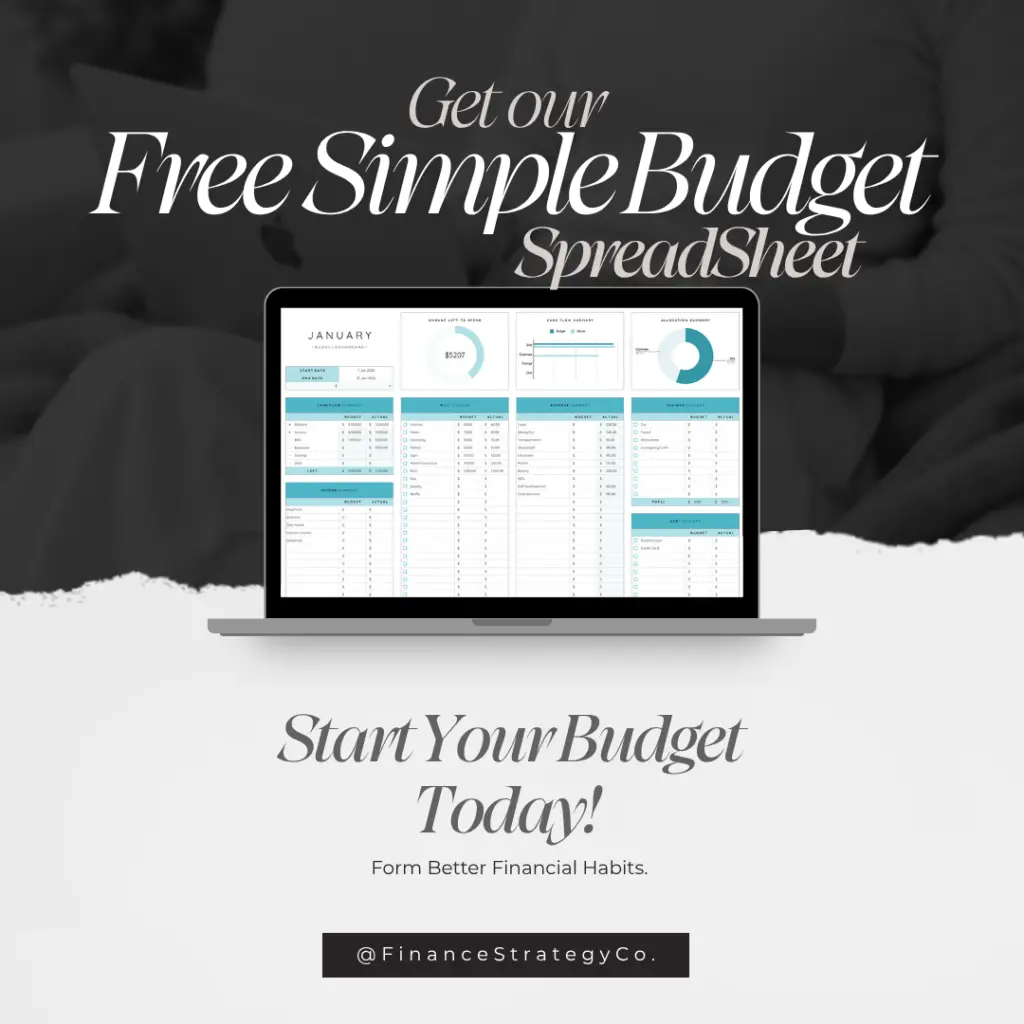
Finance Strategy Co. creates thoughtfully designed financial tools to help you organise your money, plan ahead, track your progress and build a financial system that fits your life.
Money management, elevated.